How to Run a Faster 10K: The Complete Training Guide

The 10K is one of my favourite race distances to coach. It's long enough to demand real endurance, short enough to reward genuine speed, and just brutal enough to separate those who've trained smart from those who've simply trained hard.
Over the past 20 years, I've worked with runners of every level chasing 10K personal bests. Nervous first-timers aiming to break 60 minutes. Competitive club runners targeting sub-35. The same principles apply across the board, regardless of where you're starting from.
Quick answer: To run a faster 10K, combine consistent easy running, threshold work, VO₂ max intervals, and race-specific speed sessions, all built around a clear goal pace. Add smart tapering and disciplined race-day pacing, and a new PB is well within reach.
Here's exactly how to do it.
What Makes the 10K So Demanding?
A 10K covers 6.2 miles. It sits right in the sweet spot between the raw speed of a 5K and the endurance demands of a half marathon, and that's precisely what makes it so interesting to train for. Most recreational runners finish somewhere between 45 and 70 minutes. Elite men run it in under 27 minutes; elite women in under 30.
From a physiological standpoint, you're racing at roughly 95 to 100% of your VO₂ max. That means you need a very high aerobic capacity and the ability to sustain pace when things start to hurt. Both qualities need training. And that's where most runners go wrong. They focus on one at the expense of the other.
Unlike a marathon, where mileage is king, the 10K rewards sharpness. Speed endurance, specifically the ability to hold a hard pace for 30 to 70 minutes without falling apart in the final few kilometres, is the thing to train for.
How Long Should You Train for a 10K?
My general recommendation is 8 weeks of focused training, assuming you already run regularly and can comfortably cover 30 minutes without stopping. If you're newer to running, give yourself 10 to 12 weeks. If you're returning after a break, my guide on how to start running after a long break will help you build the foundation before you chase speed.
More experienced runners targeting a big PB might benefit from a 12 to 16 week block, especially if they're adding serious strength work alongside their running. The key is arriving at race day fit, fresh, and confident. Eight weeks done properly beats sixteen weeks done chaotically every single time.
Set Your Goal Pace Before You Write a Single Session
I mean that literally. Before you plan anything else, you need a target time and a target pace to anchor every quality session around.
Here's a simple pace chart to help you find yours:
| Goal Time | Pace per Mile | Pace per Kilometre |
|---|---|---|
| 30:00 | 4:50 /mile | 3:00 /km |
| 35:00 | 5:38 /mile | 3:30 /km |
| 40:00 | 6:26 /mile | 4:00 /km |
| 45:00 | 7:14 /mile | 4:30 /km |
| 50:00 | 8:02 /mile | 5:00 /km |
| 55:00 | 8:51 /mile | 5:30 /km |
| 60:00 | 9:39 /mile | 6:00 /km |
| 65:00 | 10:27 /mile | 6:30 /km |
| 70:00 | 11:15 /mile | 7:00 /km |
| 75:00 | 12:04 /mile | 7:30 /km |
Not sure where to aim? Use your recent 5K time as a starting point. Double it, then add 10 to 15%. That gives you a solid estimate of your current 10K potential. A 25-minute 5K runner is probably capable of somewhere around 52 to 55 minutes for the 10K. There are other variables, but it's a decent ballpark.
Once you've got your goal pace, every quality session in your training should connect back to it. That's how race pace starts to feel familiar, not terrifying, when you step onto the start line.
The Four Training Pillars Every 10K Runner Needs
A well-structured 10K programme rests on four types of running. Get the balance right and you'll develop both the speed and the endurance you need, without burning yourself out in the process.
1. Easy Runs: The Foundation
Most runners don't run their easy runs easy enough. I see it constantly. They settle into a "comfortable but working" pace every single day, then wonder why their legs feel heavy when the sessions that actually matter come around.
Easy running should feel genuinely easy. Conversational pace. You could chat in full sentences without gasping. These runs build your aerobic base, improve fat-burning efficiency, and let your body recover properly between hard efforts. Aim for around 80% of your total weekly running to sit at this effort level. That's the 80/20 principle, and the evidence behind it is compelling.
If you want to run longer without getting tired, this aerobic base is where it starts. Everything else builds on top of it.
2. Threshold Runs: Your 10K Engine
Your lactate threshold, the pace at which lactic acid accumulates faster than your body can clear it, is one of the biggest predictors of 10K performance. Raise it, and you raise the ceiling on how fast you can race.
Threshold pace feels "comfortably hard." You can speak in short phrases, but not hold a proper conversation. It typically sits about 25 to 30 seconds per mile slower than your 10K goal pace. Classic threshold sessions include:
- 20 to 40 minute continuous tempo run at threshold pace
- Cruise intervals: 3 to 5 x 8 to 10 minutes at threshold with 90 seconds recovery
- Broken tempo: 2 x 15 minutes with 3 minutes easy between
I typically programme one threshold session per week for athletes building toward a 10K. It's the backbone of the training block. Not the flashiest session, but probably the most important one. My article on lactate threshold running workouts goes deeper if you want more options here.
3. VO₂ Max Intervals: The Speed Booster
VO₂ max is the maximum amount of oxygen your body can use during intense exercise. Higher VO₂ max means a faster 10K. Research consistently shows that VO₂ max training can improve running economy and race performance by meaningful margins, with some studies reporting improvements of 5 to 8% in trained runners over an 8 to 12 week block.
You develop it by running at roughly 95 to 100% of your maximum heart rate. Hard enough that you can't sustain the effort for more than 2 to 5 minutes at a time. Think of it as 3K to 5K effort. Effective sessions include:
- 6 x 1 mile at 5K effort, 3 minutes recovery
- 5 x 1000m at 5K pace, 90 seconds recovery
- 8 x 600m at slightly faster than 5K pace, 2 minutes recovery
These sessions are genuinely hard. Don't do them more than once a week, and always follow them with an easy day. The recovery is part of the session.
4. Race-Pace Work: The Sessions Most Guides Miss
Here's something that surprises a lot of runners. You need to actually practise running at your 10K goal pace. Not faster, not slower. That exact pace, in training, regularly enough that it starts to feel normal. Sounds obvious when you say it out loud, but loads of runners skip this entirely.
As your race approaches, longer intervals at goal 10K pace become your most important sessions. A workout like 3 x 2 miles at goal pace with 5 minutes recovery is one of the most powerful 10K-specific sessions you can do. It's something exercise physiologist Greg McMillan has long championed, and I've used it with great results with my own athletes.
Build into it gradually. Start with shorter reps at goal pace (6 x 1 mile) and progress to longer reps (3 x 2 miles) over 8 weeks. By race day, that pace should feel like an old friend. I've written more about this in my piece on the importance of practising target race pace.
The Fifth Element: Maximum Speed
Most 10K training guides stop at four training types. But here's one more that makes a real difference, especially for runners targeting sub-40 or sub-45.
Your maximum speed sets the ceiling for everything below it. If your top speed is slow, your 10K pace will be slow too. Short, fast efforts, think strides and short hill sprints, train your neuromuscular system to fire faster. That translates to better running economy at race pace, even though you're never actually racing at sprint speed.
Strides are my go-to tool here. Run 4 to 6 x 20 to 30 seconds at about 90% of your maximum effort, with full recovery (60 to 90 seconds walking) between each. Do them at the end of an easy run, two or three times per week. They take less than 10 minutes and the payoff is significant. I've seen runners drop 30 to 60 seconds off their 10K time simply by adding strides consistently over an 8-week block.
For more on the neuromuscular side of things, my guide on what strides are and how to use them is worth a read.
Ten Sessions That Will Make You a Faster 10K Runner
Here are ten specific workouts I use with athletes targeting a 10K PB. I've arranged them roughly from beginner-friendly to more advanced. Always warm up for 10 to 15 minutes before any of these, and cool down with 5 to 10 minutes of easy jogging after.
1. 10 x 1 Minute Efforts
Run hard for 1 minute, walk or jog for 1 minute. Don't stress about pace. Just run at a sustainable hard effort. Great entry point for runners new to speed work. Progress by extending the efforts to 2 minutes after a week or two.
2. 5 x 3 Minutes / 5 x 1 Minute
Run 5 x 3 minutes at 5K effort with 1 minute recovery, then take 3 minutes easy before running 5 x 1 minute slightly faster. This combination builds speed endurance while keeping your legs turning over quickly. A really satisfying session once you've got a few weeks of training under your belt.
3. 10 x 400m / 6 x 200m / 4 x 100m
A descending distance session that develops raw speed. Run the 400s at 5K pace with 1 minute recovery, then the 200s a touch faster, then the 100s at near-sprint effort. You don't need a track. Any flat stretch works fine.
4. 5-4-3-2-1 (x2)
Run 5 minutes, 4 minutes, 3 minutes, 2 minutes, 1 minute at increasing effort, starting at threshold and finishing at 5K pace, with equal time recovery between each. Then repeat the whole sequence. This session teaches you to push harder as you fatigue, which is exactly what race day demands.
5. 1K Repeats at 10K Pace
Run 6 to 8 x 1000m at your goal 10K pace with 90 seconds recovery. A staple for building race-pace confidence. The short recovery forces your body to adapt to clearing lactate quickly, which is precisely the physiological challenge of racing a 10K.
6. Mile Repeats at 10K Pace
Run 5 to 6 x 1 mile at goal 10K pace with 2 to 3 minutes recovery. Longer reps mean more time at race pace. Great for building the specific endurance you need to hold your target in the final kilometres when it starts to hurt.
7. 30-Minute Tempo Run
A continuous 30-minute run at threshold pace, about 25 to 30 seconds per mile slower than your 10K goal pace. Simple, effective, and a reliable indicator of fitness progress. If this feels easier than it did four weeks ago, you're heading in the right direction.
8. 4-3-2-1 Descending Intervals
Run 4 minutes, 3 minutes, 2 minutes, 1 minute at 10K pace or slightly faster, with 1 minute recovery between each. Rest for 3 minutes, then repeat. The descending structure means you're running your fastest when you're most fatigued. Brilliant race preparation.
9. 3 x 3K at 10K Pace
One of my personal favourites. Run 3 x 3000m at goal 10K pace with 3 minutes recovery. Totals 9K of race-pace running, close enough to the full distance that you build real confidence and specific fitness. Nail this session and you'll arrive at the start line knowing you're ready.
10. 3 x 2 Miles at Goal Pace: The Gold Standard
The toughest session on this list, and the one I save for the final 2 to 3 weeks before race day. Run 3 x 2 miles at goal 10K pace with 5 minutes recovery. If you can nail this in training, you're ready to race. It's that reliable as a fitness test.
How Many Days Per Week Do You Actually Need?
The honest answer: it depends on your current fitness and experience. But here's the framework I use:
- Beginners (aiming to finish or break 60 minutes): 3 to 4 runs per week, including 1 quality session and 1 longer easy run
- Intermediate runners (targeting 45 to 55 minutes): 4 to 5 runs per week, including 1 to 2 quality sessions
- Advanced runners (chasing sub-40): 5 to 6 runs per week, including 2 quality sessions and a long run
Whatever your level, consistency beats volume every time. Four steady runs per week for 10 weeks will do far more for your 10K time than six chaotic runs per week for four weeks. I've seen it over and over again. Runners who train less but train smarter consistently outperform those who just pile on the miles.
If you're working with limited training days, my article on training for a marathon with 3 runs per week covers the principles of doing more with less. Many of those principles apply directly to 10K training too.
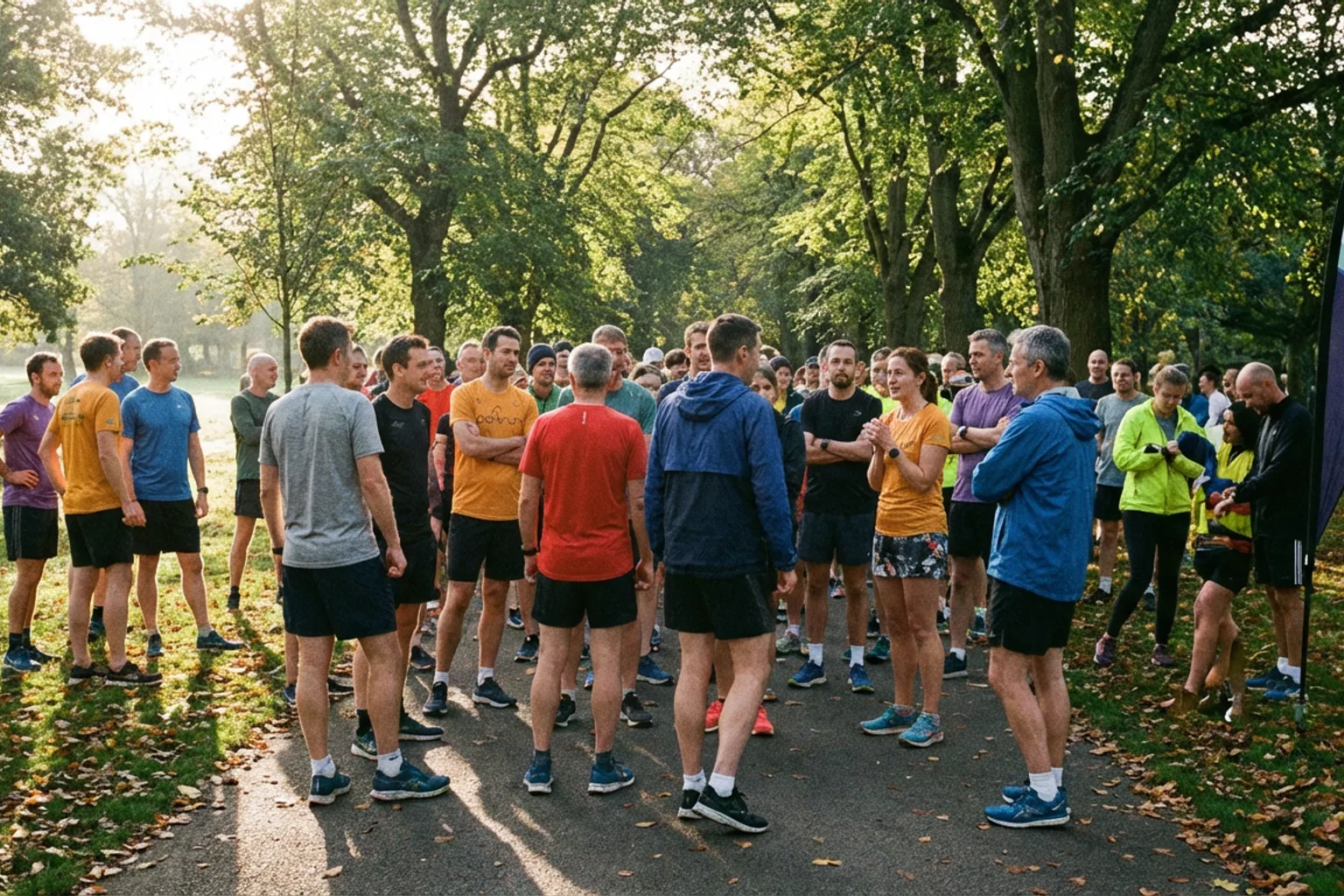
One more thing worth mentioning here: training with a group or a running club makes a real difference. Having people to share hard sessions with keeps you honest on pace, pushes you through the tough moments, and makes the whole process more enjoyable. If you've never tried it, I'd genuinely encourage you to give it a go.
The Training Element Most Runners Completely Ignore
Strength training. And it's one of the biggest missed opportunities I see, week in, week out.
Research shows that 6 to 12 weeks of heavy strength training can improve running economy by 2 to 8% in trained runners. That translates directly to faster race times without any extra miles on your legs. Genuinely one of the highest-return investments a 10K runner can make. And yet most runners treat it as optional. It isn't.
For 10K runners, I focus on:
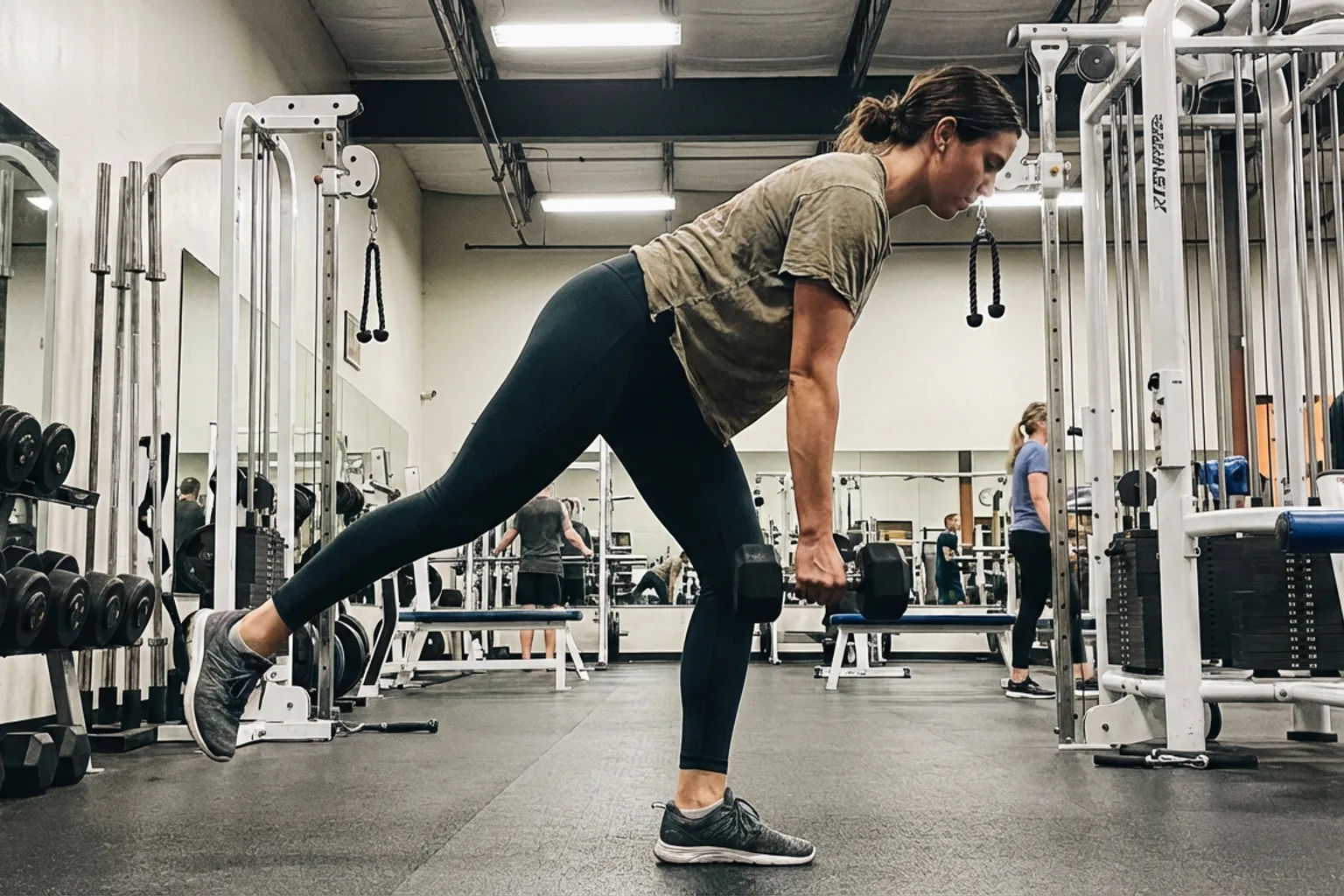
- Single-leg exercises: Single-leg deadlifts, Bulgarian split squats, single-leg squats. These build the strength and stability you need for powerful, efficient strides.
- Glute work: Glute exercises are non-negotiable for runners. Strong glutes drive propulsion and protect your knees and hips from injury.
- Core stability: A solid core keeps your running posture efficient even when you're exhausted. My 10-minute core workout for runners is a great starting point. It takes almost no time and pays real dividends over a training block.
- Calf and ankle work: Your calves and ankles absorb and generate enormous forces with every stride. Soleus strengthening in particular is something most runners completely overlook.
Aim for 2 strength sessions per week during your 10K build. Keep them short. 30 to 40 minutes is plenty. Schedule them on easy running days or rest days, not after hard sessions. My full guide on strength training for distance runners covers the programming side in detail.
Running Form: You Don't Need a Complete Overhaul
I want to be straight with you here, because there's a lot of noise around running technique. You don't need to rebuild your form from the ground up to run faster. I'd actively discourage most runners from trying to overhaul everything at once. It rarely ends well. But a few targeted tweaks can make a real difference, especially in the final kilometres when fatigue creeps in and form starts to unravel.
Here's what I look for when coaching 10K runners:
Cadence
Most recreational runners overstride, landing with their foot too far in front of their body, which acts like a brake with every step. Increasing your cadence by just 5 to 10% can reduce overstriding and improve efficiency significantly. Aim for around 170 to 180 steps per minute at race pace. My guide on how to increase your running cadence walks you through exactly how to do this.
Posture
Run tall. Imagine a string pulling the crown of your head upward. Avoid hunching forward, especially when you're tired. It compresses your breathing and reduces stride power. Sounds obvious, I know. But you'd be amazed how many runners are practically folded in half by kilometre 8.
Arm Drive
Your arms counterbalance your legs. Drive your elbows back, not across your body. Keep your hands relaxed and let your arm swing help propel you forward. Watch how Eliud Kipchoge uses his arms. It's a masterclass in efficiency at race pace. My guide on efficient running arm swing covers the key cues in detail.
Foot Strike
There's no single "correct" foot strike, but landing close to beneath your centre of mass matters. I've written in detail about proper running foot strike if you want to explore this further. It's more nuanced than most people realise.
Why Training Easy Makes You Race Fast
Here's the thing most runners get wrong. They train too hard, too often. Every run ends up at the same medium-hard effort. Too slow to develop speed, too fast to build aerobic base. It's a bit of a no-man's-land, to be honest.
The 80/20 rule, running 80% of your weekly mileage at easy conversational effort and only 20% at harder intensities, is one of the most well-supported principles in endurance sport. Elite runners follow it religiously. And yet most recreational runners flip it completely, grinding through the majority of their miles at that grey-zone effort that doesn't really develop anything.
The result? They plateau. They get injured. They feel perpetually tired and can't work out why they're not improving.
Protect your easy days. They're not junk miles. They're where your aerobic engine gets built. The hard sessions only work if the easy ones are genuinely easy. That's the deal.
Hill Running: Speed Work in Disguise
Hills are one of my favourite tools in the early phase of a 10K training block. Running uphill forces you to drive your knees, pump your arms, and engage your glutes. All of that translates directly to faster, more powerful running on flat ground. And because you're working against gravity rather than chasing a number on a watch, there's less temptation to overdo it.
A simple session: find a moderate hill (6 to 8% gradient), run hard uphill for 60 to 90 seconds, jog back down, repeat 8 to 10 times. Do this once a week in the early weeks of your training block before you introduce track-style intervals.
I've put together a detailed guide on how to run uphill easier and faster with a full example session if you want to dig into this further.
Tapering: Getting the Final Two Weeks Right
Tapering, reducing your training load in the final 1 to 2 weeks before your race, is where a surprising number of runners make costly mistakes. Either they don't taper at all and arrive at the start line exhausted, or they back off too aggressively and spend race week convinced their fitness has evaporated overnight. Neither is ideal.
For a 10K, the taper is much shorter than for a marathon. Here's what I recommend:
- 2 weeks out: Reduce total mileage by 20 to 25%. Keep your quality sessions but shorten them slightly.
- 1 week out: Reduce mileage by a further 30 to 40%. Include one short, sharp session mid-week (e.g. 4 to 5 x 400m at race pace) to keep your legs feeling fast.
- 2 to 3 days out: Easy running only. Short, relaxed, no pressure whatsoever.
- Day before: Rest or a very easy 20-minute jog.
You might feel restless or even a bit flat during the taper. That's completely normal. Trust the process. Your body is storing energy and repairing tissue. The freshness will be there on race day, even if it doesn't feel like it on Thursday evening.
Race Day Pacing: The Mistake That Kills More PB Attempts Than Anything Else
All the training in the world won't help if you get your pacing wrong. And the most common mistake? Going out too fast in the first kilometre. Every time.
I've watched it happen at almost every race I've attended. The gun goes, adrenaline spikes, and runners surge off the line at a pace they simply can't sustain. By kilometre 7 or 8, they're hanging on for dear life, watching their goal time disappear up the road.
Option 1: Even Splits
Run every kilometre at the same pace. The most reliable approach for most runners. It requires real discipline in the first half when you feel fresh and the temptation to push is strong, but it pays off enormously in the final 2K.
Option 2: Negative Split
Run the second half slightly faster than the first, typically 5 to 10 seconds per kilometre faster. This is how elite runners race, and it's the approach I coach most of my athletes toward. It feels conservative early on, but you'll be passing people in the final 2K rather than being passed. That's a huge psychological boost when you need it most.
The First Kilometre Rule
Whatever your goal pace, run your first kilometre 5 to 10 seconds per kilometre slower than target. The adrenaline and crowd energy will make it feel ridiculously easy. That's the trap. Rein it in, settle into your rhythm, and let the race come to you.
Use a Pacer or a Pack
If your race has pacers, use them. Running with a group at your goal pace reduces perceived effort and takes the mental load off your pacing decisions. No official pacer? Find someone running your target pace in the first kilometre and tuck in behind them. Works a treat.
Choosing the Right Race for a PB Attempt
Not all 10K races are created equal. If you're chasing a PB, the course and conditions matter more than you might think.
- Flat courses: Look for races with minimal elevation gain. Even 50 to 100m of climbing across a 10K can add 2 to 4 minutes to your time.
- Temperature: Research consistently shows performance drops when temperature rises above 10 to 15°C. A cool morning race is worth seeking out.
- Road vs trail: Road races are faster. Save trail events for enjoyment, not PBs.
- Large field: A bigger field means more runners at your pace, which makes it easier to find a group and run evenly.
Should You Race a 5K During Your Training Block?
Yes, absolutely. A 5K race or parkrun during your 10K build serves multiple purposes. It gives you a fitness benchmark, sharpens your race-day instincts, and delivers a fast quality effort that boosts your VO₂ max. It also reminds you what it actually feels like to race, which matters more than people give it credit for.
I typically schedule a 5K race 3 to 4 weeks out from a target 10K. Close enough to be meaningful, far enough away to recover properly. Use your 5K result to recalibrate your 10K goal pace if needed. Sometimes it confirms you're on track. Sometimes it tells you to be a little more ambitious. Either way, useful information.
The Mistakes I See Runners Make Again and Again
In over two decades of coaching, the same errors come up repeatedly. Here are the big ones, and how to avoid them:
- Running all your miles at the same pace: Vary your efforts. Easy runs should be easy, hard sessions should be hard. Grey-zone running builds neither speed nor base effectively. It just accumulates fatigue.
- Skipping strength work: Runners who lift get faster and get injured less. It's not optional. It's part of the programme.
- Ignoring recovery: Sleep, nutrition, and rest days are where adaptation happens. Train hard, recover harder.
- Going out too fast on race day: Covered this already, but it bears repeating. The first kilometre feels easy for a reason. Don't trust it.
- No race-specific training: If you never practise running at goal 10K pace, it'll feel shocking on race day. Rehearse it in training until it feels normal.
- Ramping up too quickly: Increase your weekly mileage by no more than 10% per week to keep injury risk in check.
- Making the 10K a tune-up for a marathon: If your real goal is a 10K PB, make it the main event. Marathon training and 10K sharpening don't mix well. The fatigue from high marathon mileage blunts the speed work you need.
Keeping Yourself Injury-Free Through the Build
Faster training means more stress on your body, and that means a higher injury risk if you're not careful. The most common injuries I see in 10K training blocks are:
- Knee pain (here's how to prevent it)
- Shin splints (recovery time guide here)
- Calf strains (can you run with a calf strain?)
- Achilles problems (running with Achilles tendinopathy)
The best injury prevention strategy? Don't get injured in the first place. That means warming up properly before every quality session, not skipping rest days, and actually listening to your body. Niggles that persist beyond 2 to 3 days need attention, not ignorance. My guide on how to prevent running injuries covers the seven steps I use with every athlete I coach.
Building strength alongside your running is also one of the most effective protective measures you can take. And yet it's still the first thing runners drop when they feel pressed for time. Don't let that be you.
Nutrition for a 10K: Keep It Simple
The 10K is short enough that you don't need to worry about mid-race fuelling. No gels, no energy drinks. Just good preparation beforehand.
Race Morning
Eat a familiar, easily digestible meal 2 to 3 hours before your race. Porridge with banana, toast with peanut butter, a bagel. All work well. Don't try anything new on race morning. This is genuinely not the time for experimentation.
Hydration
Arrive at the start line well hydrated. Drink 400 to 600ml of water in the 2 hours before your race. During the race itself, take water at any available stations. Even a few sips helps, particularly in warmer conditions.
Day-to-Day Nutrition During Your Training Block
Prioritise carbohydrates around your hard sessions. Before for fuel, after for recovery. Make sure you're eating enough protein to support muscle repair. Roughly 1.6 to 2g per kilogram of bodyweight per day is a solid target for runners in training. Get this right and you'll recover faster between sessions, which means you can train more consistently over the full block.
An 8-Week Framework to Get You There
Here's a template for an 8-week 10K training block, suitable for intermediate runners currently running 3 to 4 times per week and targeting a time of 45 to 55 minutes:
| Week | Focus | Key Sessions |
|---|---|---|
| 1 to 2 | Base building and introducing speed | Hill repeats, 10 x 1 min efforts, easy long run, strides x3 per week |
| 3 to 4 | Speed endurance | 5 x 3 min / 5 x 1 min, 20-min tempo, easy long run |
| 5 to 6 | VO₂ max and threshold | 6 x 1 mile at 5K effort, 30-min tempo, 5K race or parkrun |
| 7 | Race-specific sharpening | 3 x 3K at goal pace, 4-3-2-1 session |
| 8 | Taper and race | 4 x 400m at race pace mid-week, race on weekend |
This is a template, not a rigid prescription. Adjust based on how you're responding to training. Carrying fatigue into week 3? Dial back the intensity. Feeling strong? Add a sixth kilometre to your 1K repeats. The plan serves you, not the other way around.
How to Track Whether It's Working
Keep a simple training log. Even just a note on your phone. Record the distance and time of every run, paces achieved in quality sessions, how you felt (energy, legs, breathing), and any niggles or soreness.
Review it weekly. Are your interval paces improving? Is your easy-pace heart rate dropping? Are you recovering faster between sessions? These are all signs your fitness is heading in the right direction.
A GPS watch with heart rate monitoring is genuinely useful here. Not to obsess over data, but to keep your easy runs honest and your hard sessions on target. Using your breathing to gauge effort is another reliable low-tech method I teach all my athletes, and one that works particularly well if you're just getting started with structured training.
Frequently Asked Questions
How long does it take to improve your 10K time?
Most runners see meaningful improvement in 8 to 12 weeks of focused training. If you're relatively new to structured training, you might drop 2 to 5 minutes in a single block. More experienced runners might gain 30 to 90 seconds. Consistent training over multiple cycles compounds these gains significantly. It's a long game, but absolutely worth playing.
What is a good 10K time for a beginner?
Any 10K finish is a great achievement for a beginner. That said, most beginner runners complete a 10K in 60 to 75 minutes. Breaking 60 minutes is a common first goal, and it's very achievable with 8 to 10 weeks of consistent training. The average recreational 10K time for men sits around 56 minutes; for women, around 64 minutes.
Should I run every day when training for a 10K?
Not necessarily. Most runners improve on 4 to 5 runs per week with proper rest days built in. Running every day without adequate recovery leads to accumulated fatigue and raises injury risk significantly. Rest days are part of the training. They're when your body actually adapts to the work you've done.
How do I avoid blowing up in a 10K?
The 10K is too short to truly "hit the wall" the way marathon runners do. But you can absolutely blow up from going out too fast. The fix is disciplined pacing: start conservatively, run even splits, and trust that you'll have something left for the final 2K push. Practising race pace in training is the single best way to make this feel natural on race day.
Can strength training really make me a faster 10K runner?
Absolutely. Multiple studies show that heavy strength training improves running economy, meaning you use less energy to run at the same pace. For 10K runners, this translates directly to faster race times. Even two 30-minute strength sessions per week can make a noticeable difference over an 8 to 12 week block. Start with these essential glute exercises and build from there.
The Bottom Line on Running a Faster 10K
Running a faster 10K comes down to a handful of non-negotiable principles. Build a solid aerobic base. Sharpen your speed with targeted intervals. Practise your goal pace until it feels familiar. Stay consistent. And race with discipline.
No magic shortcut exists. But there is a clear path, and if you follow it, a new personal best is genuinely within reach, whatever your current level.
Pick your goal time from the pace chart above. Build your 8-week programme around the four training pillars. Add strength work twice a week. And on race day, start slower than you think you should. Every single time.
That's how you run a faster 10K. Now go make it happen.
If you're just getting started with running or returning after time off, my guide on how to start running after a long break will help you build the foundation before you start chasing speed. And if you want to understand more about the elite technique that underpins fast distance running, take a look at my analysis of Kenenisa Bekele's running technique. There's a lot to learn from watching the best in the world do what they do.