How to Prevent Running Injuries: 7 Steps That Actually Work

If you want to prevent running injuries for good, here's the hard truth: resting until the pain goes away is not the answer. I've worked with hundreds of runners over the past two decades, and the ones who keep getting hurt aren't unlucky. They're treating the symptom and ignoring the cause.
You rest. The pain fades. You run again. Three weeks later, it's back. Sound familiar?
Research published in Sports Medicine shows that between 20% and 70% of runners who return from injury will re-injure themselves, often within just a few months. That's a staggering number. But it makes complete sense once you understand why injuries keep coming back in the first place.
Quick answer: Recurring running injuries happen because the root cause, whether that's weak links in your body, poor movement patterns, or training load errors, never gets fixed. To prevent running injuries long-term, you need to identify your specific root cause, build targeted strength, manage your training load intelligently, and address your running mechanics. This article walks you through exactly how to do all of that, step by step.
I've structured this as a practical, sequential process. Work through it in order. Don't skip ahead to the strength exercises if you haven't done the root cause analysis first. That's how you end up doing the wrong work and wondering why nothing changes.
Most Common Running Injuries (And Why They Keep Coming Back)
Before we get into prevention, it helps to know what you're up against. The most common running injuries I see in my coaching practice are:
- Runner's knee (patellofemoral pain syndrome): pain around or behind the kneecap, often worse going downstairs or after sitting
- Shin splints (medial tibial stress syndrome): pain along the inner shin, common in runners who ramp up mileage too quickly
- Achilles tendinopathy: stiffness and pain in the Achilles tendon, especially in the morning or after rest
- IT band syndrome: sharp pain on the outer knee, often appearing mid-run at a predictable distance
- Plantar fasciitis: heel pain that's worst with the first steps in the morning
- Proximal hamstring tendinopathy: deep buttock pain that worsens with sitting and running hills
- Stress fractures: bone pain that builds gradually, usually in the shin, foot, or metatarsals
What do all of these have in common? They're almost all overuse injuries. They don't happen in a single moment. They build up slowly, driven by the same handful of root causes I'm about to explain.

Why Recurring Running Injuries Keep Happening
Most runners go through the same cycle repeatedly:
- Feel a niggle. Ignore it.
- Pain gets bad enough to stop running.
- Rest for a few weeks, sometimes months.
- Pain disappears. Feel great.
- Return to running too fast, too soon.
- Injury returns, sometimes in the exact same spot, sometimes somewhere new.
That last point matters. When the injury migrates, your knee pain settles, then your Achilles flares up, then your shin starts aching, you're playing whack-a-mole. One problem gets suppressed, another pops up. That's a classic sign of a systemic issue rather than a single isolated injury.
The conventional approach focuses on pain management: rest, ice, maybe some physio. But pain relief is not the same as fixing the underlying problem. Your tissue heals enough to stop hurting, but the weakness, the movement fault, or the training error that caused it? Still there. Waiting.
Here's the thing: your cardiovascular fitness adapts to training much faster than your tendons, bones, and connective tissue. You can feel aerobically ready to run 50 miles a week while your Achilles tendon is nowhere near ready to handle that load. That mismatch is where most running injuries are born.
The Three Root Causes of Running Injuries
In my experience coaching runners, almost every recurring injury traces back to one of three root causes, or a combination of all three.
Root Cause 1: Structural Weakness and Muscle Imbalances
Your body is a kinetic chain. Every link affects the ones above and below it. When one link is weak, something else compensates. That compensation is where injury lives.
Weak hip abductors? Your IT band takes extra load. Poor glute medius activation? Your knee caves inward and takes a battering on every stride. Inadequate calf strength? Your Achilles absorbs forces it can't handle. I see this every single week with the runners I work with.
Research consistently shows that hip weakness strongly correlates with running knee injuries. A 2019 study in the Journal of Orthopaedic and Sports Physical Therapy found that hip abductor and external rotator strength deficits are common in runners with patellofemoral pain. You can read more about this in my guide to running gait re-education for patellofemoral pain.
The cruel irony is that you can be aerobically fit enough to run a marathon while being structurally unprepared to run a single mile without breaking down. Fitness and structural resilience are not the same thing.
Root Cause 2: Training Load Errors
This is the most common cause I see, and the most preventable. Running injuries happen when the load you place on your body exceeds its capacity to adapt. Simple as that.
The tricky part? Injuries tend to peak three to six weeks after a training error. So when your knee flares up in week eight of your marathon build, the cause was probably the big mileage jump you made in week five. You'll blame week eight. The real culprit is week five.
Common training load errors include:
- Increasing weekly mileage by more than 10% per week
- Adding speed work and mileage simultaneously
- Returning to full training too quickly after illness or time off
- Ignoring accumulated fatigue over a multi-week block
- Doing too many hard sessions in a single week
Root Cause 3: Biomechanical Faults and Poor Running Mechanics
How you move matters enormously. Overstriding, excessive hip drop, cross-over gait, poor posture: these movement patterns place repetitive stress on specific tissues with every single stride. At easy paces, you take roughly 160 to 180 steps per minute. Over a 10-mile run, that's close to 15,000 foot strikes. A small mechanical fault, repeated 15,000 times, adds up fast.
The important nuance here is that not all biomechanical faults need fixing. Some are irrelevant. Some are actually adaptive. The ones that matter are those directly loading the injured tissue. That's why a proper running gait analysis is worth its weight in gold for a runner with recurring injuries.
Step 1: Conduct Your Own Root Cause Analysis
Before you do anything else, you need to figure out which root cause applies to you. Jumping straight into random hip strengthening exercises without knowing why you keep getting hurt is just guesswork.
Work through these questions honestly:
Question 1: What's the pattern?
Look back at your injury history. Is it always the same structure, same tendon, same knee, same shin? Or does it migrate? The same structure repeatedly points strongly to a local weakness or mechanical issue. Migrating injuries suggest a training load problem or a systemic movement fault.
Question 2: When in your training cycle does it happen?
Early in a build (weeks one to four) suggests you returned to running too soon and your tissue wasn't ready. Mid-build (weeks five to ten) suggests a load spike. Late in a build suggests cumulative fatigue and insufficient recovery. Each timing pattern points to a different solution.
Question 3: What changed before the injury appeared?
Think back four to six weeks before the injury, not just the week it happened. Did you add a new session? Switch shoes? Start running on different terrain? Come back from a holiday? Changes in load, surface, or footwear are common triggers that runners miss because they're looking in the wrong time window.
Question 4: Does the pain change with speed or terrain?
Pain that gets worse going downhill often points to patellofemoral issues or IT band problems. Pain that worsens with speed suggests tendon overload. Pain that improves as you warm up but returns after you stop is a classic tendinopathy pattern. These clues help you identify the tissue involved and the likely mechanism.
Once you've worked through these questions, you'll have a much clearer picture of where to focus your energy. If you're still unsure, a session with a good sports physio or a running technique assessment can shortcut this process considerably.
Step 2: Get a Proper Strength Assessment
Once you know your root cause, you need to know specifically where you're weak. "Do more strength training" is not a plan. Knowing that your left glute medius fires 30% less than your right, or that your single-leg calf raise endurance is well below the threshold for your weekly mileage: that's a plan.
Here are the key tests I use with runners in my coaching practice:
Single-Leg Calf Raise Test
Stand on one leg on a step, heel dropped below the edge. Perform slow, controlled calf raises. You should complete 25 repetitions on each leg without pain or significant fatigue. If you can't hit 20, your calf and Achilles are under-conditioned for running. Most recreational runners fail this test on at least one side. I cover it in detail in my Achilles tendon warning signs guide.
Single-Leg Squat Test
Stand on one leg and perform a slow, controlled squat to about 60 degrees of knee bend. Watch in a mirror or video yourself. Does your knee cave inward? Does your hip drop on the opposite side? Either fault indicates hip abductor or glute weakness. This test alone identifies the root cause for a huge proportion of knee and IT band injuries. See my guide on single-leg squat variations for progressions.
Hip Abductor Strength Test
Lie on your side, legs straight. Lift your top leg to about 45 degrees and hold for 30 seconds. It should feel easy. If your hip flexor takes over, or you can't hold the position cleanly, your glute medius needs work. My guide on how to engage your glutes when running explains why this matters so much for your running mechanics.
Core Stability Test
Perform a standard plank. You should hold a solid, neutral spine position for at least 60 seconds without your hips sagging or your lower back arching. If you can't, your core stability is likely contributing to poor running posture and excessive load on your lower back and hips. My 10-minute core workout for runners is a good starting point.
Note down your results. These become your baseline. Retest every four weeks to track progress.
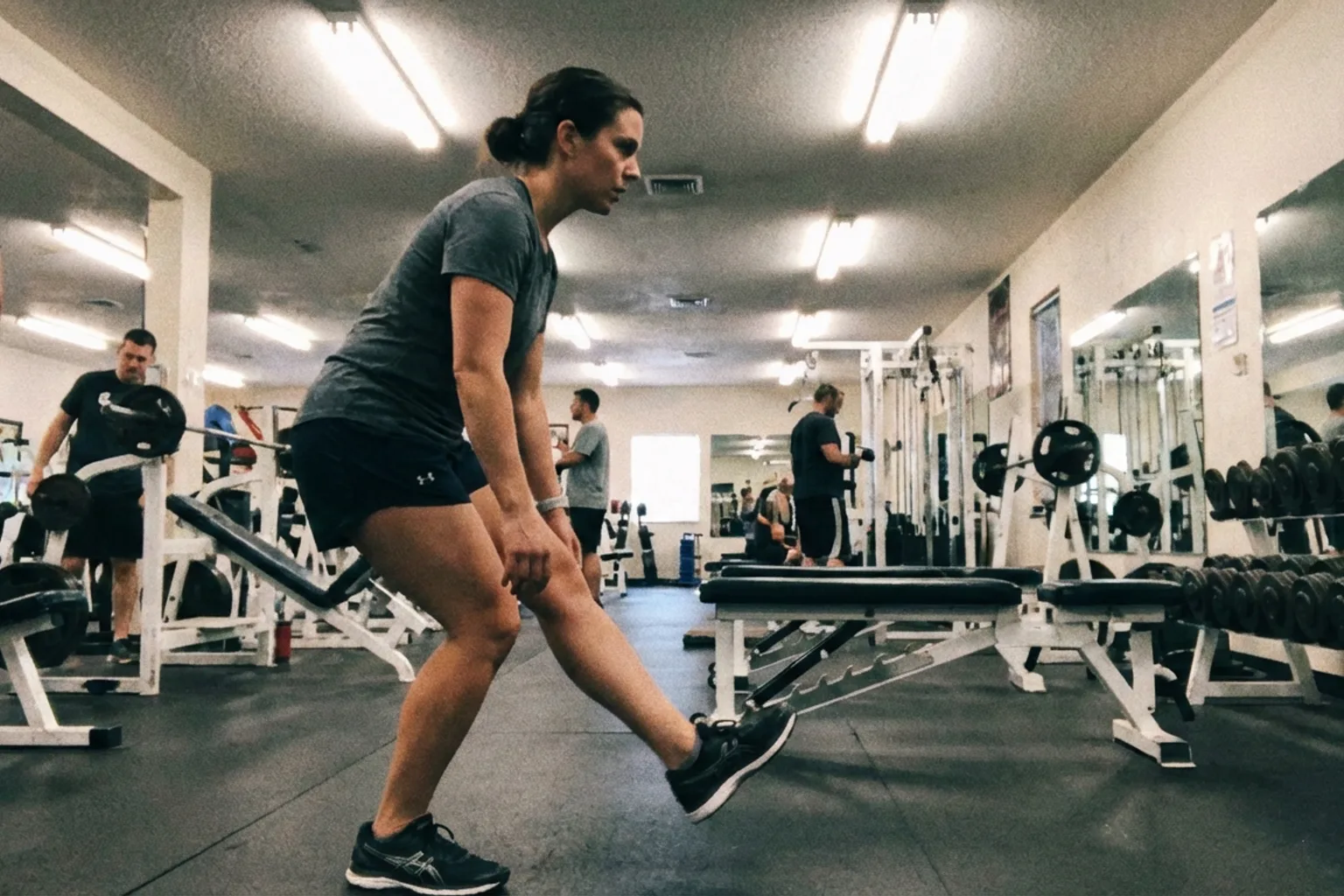
Step 3: Build Targeted Strength to Prevent Running Injuries
Now we get to the work. Based on your assessment, focus on your specific weak links. Here's a practical programme organised by the most common deficits I see in runners with recurring injuries.
For Hip and Glute Weakness (the most common weak link)
Exercise 1: Side-Lying Hip Abduction
3 sets of 15 reps each side. Slow and controlled: 3 seconds up, 2 seconds hold, 3 seconds down. Progress to a resistance band above the knee after two weeks.
Exercise 2: Single-Leg Glute Bridge
3 sets of 10 reps each side. Drive through your heel, squeeze your glute at the top. Hold for 2 seconds. Progress to a weighted barbell hip thrust after four weeks. See my single-leg bridge guide for technique tips.
Exercise 3: Lateral Band Walk
3 sets of 15 steps each direction. Band just above the knees. Keep your torso upright and your toes pointing forward. Don't let your knees cave inward.
Exercise 4: Step-Up with Hip Drive
3 sets of 10 reps each side. Use a step that brings your knee to 90 degrees. Drive your opposite knee up at the top. This transfers hip strength into a more running-specific movement pattern.
For more detail on correcting hip drop in your running gait, read my article on hip drop running gait causes and fixes. And for a complete glute routine, my guide to four essential glute exercises for runners is a great companion resource.
For Calf and Achilles Weakness
Exercise 1: Double-Leg Calf Raise
3 sets of 20 reps. Slow and controlled. Start on flat ground, then progress to a step with a heel drop. 3 seconds up, 2 seconds hold, 3 seconds down.
Exercise 2: Single-Leg Calf Raise
3 sets of 15 reps each side. Work up to 3 sets of 25 over eight weeks. This is the single most important calf exercise for runners prone to Achilles and calf injuries. See my calf strength ankling drill for a complementary exercise, and my soleus strength exercises to target the deeper calf muscle too.
Exercise 3: Eccentric Heel Drop
3 sets of 15 reps. Rise up on two legs, lower slowly on one. This eccentric loading is particularly effective for tendinopathy rehab and prevention.
For Core and Pelvic Stability
Exercise 1: Dead Bug
3 sets of 8 reps each side. Lower opposite arm and leg simultaneously while keeping your lower back pressed into the floor. This is far more running-specific than a standard plank.
Exercise 2: Copenhagen Plank
3 sets of 20-second holds each side. This targets the adductors and pelvic stabilisers in a way most runners never train. It's excellent for hip and groin injury prevention.
Exercise 3: Single-Leg Romanian Deadlift
3 sets of 8 reps each side. Hinge at the hip, keep your back flat, reach towards the floor. This builds posterior chain strength in a single-leg position that mirrors the demands of running. Check out my pelvic control exercises for running technique for more options.
The bottom line? Do this strength work at least twice a week, every week, not just when you're injured. Strength training done only during rehab is like wearing a seatbelt only after you've already had a crash.
Don't Forget Ankle Strength and Mobility
Most runners obsess over hips and glutes and completely ignore their ankles. That's a mistake. Restricted ankle dorsiflexion (the ability to bring your toes towards your shin) changes how load travels up through your knee and hip on every stride. My 10-minute ankle strengthening routine and ankle mobility exercises take less than 15 minutes combined and make a real difference, especially for runners prone to shin splints and knee pain.
Step 4: Master Training Load Management
This step prevents more injuries than any single exercise. Get this wrong and nothing else matters.
The 10% Rule and Why It's Just a Starting Point
You've probably heard the advice to increase weekly mileage by no more than 10% per week. It's a reasonable starting point, but it's not the whole story. The 10% rule doesn't account for intensity. You can't add 10% more mileage and introduce speed sessions in the same week. That's a double load spike.
A better framework is to think about total training stress, not just mileage. A 30-minute tempo run creates far more physiological stress than a 30-minute easy run. Track your hard sessions separately from your easy sessions.
The 80/20 Rule: Run Easy More Than You Think
Research on elite runners consistently shows they do roughly 80% of their training at easy, conversational effort, and only 20% at harder intensities. Most recreational runners do the opposite. They run their easy days too hard, which means they're never fully recovered for their hard days, and they accumulate fatigue faster than they can absorb it.
If you can't hold a full conversation on your easy runs, you're going too hard. Slow down. I know it feels counterintuitive, but running easier on easy days is one of the most effective ways to prevent running injuries and improve performance at the same time.
The Acute:Chronic Workload Ratio
This is the most useful load management concept I've come across in 20 years of coaching. Here's how it works:
- Acute load: your training load over the past 7 days
- Chronic load: your average weekly training load over the past 28 days
- Ratio: acute load divided by chronic load
Research suggests that an acute:chronic ratio between 0.8 and 1.3 represents a safe training zone. When the ratio spikes above 1.5, injury risk increases significantly. This happens when you suddenly ramp up training after a rest period, or when you add a big race or long run without adequate preparation.
In practical terms: if you've been averaging 30 miles a week for the past month, don't suddenly jump to 45 miles in a single week. That ratio of 1.5 puts you right at the danger zone.
Build Recovery Into Your Plan, Not Just Your Instinct
Most runners treat recovery as something they do when they're forced to. That's backwards. Recovery is where adaptation happens. The training is just the stimulus.
Here's a simple structure that works for most recreational runners:
- 3 weeks of progressive load, 1 week of reduced load (roughly 60-70% of your peak week)
- No more than 2 hard sessions per week (tempo, intervals, long run with quality)
- At least 1 full rest day per week
- Easy runs genuinely easy
If you're over 40, consider a 2:1 structure: two weeks of building, one week of recovery. Tissue recovery takes longer as we age. I cover this in much more detail in my article on running injuries over 40.
Track More Than Just Mileage
Stress is cumulative. A high-pressure week at work, poor sleep, and a big training week at the same time is a recipe for injury. Your body doesn't distinguish between physical and psychological stress. It just knows it's under load.
Keep a simple training diary that includes:
- Weekly mileage and intensity
- Sleep quality (even just a 1-10 score)
- Stress levels outside of training
- Any niggles, even minor ones
- Resting heart rate or HRV if you use a device
Patterns in that diary will tell you when you're heading for trouble before your body does.
Step 5: Address Your Running Mechanics
Here's where I'd push back slightly on some of the other advice you'll find online. Not every runner needs a complete gait overhaul. In fact, making too many changes to your running form too quickly is itself a common cause of injury.
The approach I use with athletes is what I call "minimum effective change." Identify the one or two mechanical faults that are most directly loading the injured tissue, and address those first. Ignore everything else for now. I've written a whole article on this approach: running form minimum effective change.
The Most Common Mechanical Faults Worth Fixing
Overstriding: Landing with your foot well ahead of your centre of mass creates a braking force on every stride and loads your knee and shin excessively. The fix is to increase your cadence slightly. Even a 5-10% increase reduces overstriding significantly. Aim for 170-180 steps per minute at easy paces. My guide on using a metronome to improve running cadence shows you exactly how to do this.
Cross-over gait: When your feet land on or across your midline, your IT band and hip stabilisers take a hammering. The fix is to widen your step slightly so each foot lands under the corresponding hip. Read my full guide on correcting cross-over running gait for a detailed breakdown.
Hip drop (Trendelenburg): If your pelvis drops on the side of your swing leg with every stride, your IT band, knee, and hip are taking excess load. This is usually a glute medius issue, addressed by the strength work in Step 3. But there's also a real-time cue that helps: focus on running tall and keeping your hips level. My hip drop guide covers both the strength fix and the technique cue.
Forward lean from the waist: Bending forward at the hips rather than leaning from the ankles compresses your lumbar spine and overloads your hip flexors. Think about running tall with a slight forward lean from your ankles, not your waist. My article on running with lower back pain explains this in more detail.
How to Change Your Mechanics Safely
Change one thing at a time. Introduce the new movement pattern in short blocks: 30 to 60 seconds of focused running, then back to your natural gait. Gradually increase the proportion of your run where you apply the cue. Expect it to feel awkward for four to six weeks before it becomes automatic.
Critically: reduce your overall training load by 10-20% while you're making form changes. Your body is learning a new motor pattern, which is itself a form of stress. Give it space to adapt.
Step 6: Choose the Right Running Shoes
I'll be honest with you: shoes get far too much attention in the injury prevention conversation. They're rarely the sole cause of a recurring injury. But they can absolutely be a contributing factor, and choosing the wrong shoe for your foot type and running style can tip a borderline situation into a full-blown injury.
Here's my practical advice on running shoes and injury prevention:
- Get fitted properly. Visit a specialist running shop where staff can watch you move. Don't buy online based on what worked for someone else.
- Replace shoes regularly. Most running shoes lose meaningful cushioning and support between 400 and 600 miles. If you're running 30 miles a week, that's roughly every four to five months.
- Don't change too much at once. Switching from a heavily cushioned shoe to a minimal shoe overnight is a classic cause of calf and Achilles injuries. Any shoe transition should happen gradually over several weeks.
- If you've had the same injury across multiple pairs of shoes, the problem is almost certainly in your body, not on your feet. Don't keep buying new shoes hoping to fix a strength or mechanics problem.
My guide to choosing running shoes goes into much more detail if you want to dig into this topic.
Step 7: Return to Running the Right Way After Injury
This step is where most runners undo all their good work. You've rested. You've done the strength work. The pain is gone. Now you want to run. I get it. But how you return to running after injury is just as important as everything that comes before it.
The key principle: pain-free in daily life does not mean ready to run. Tissue healing is not the same as tissue strength. A tendon that's pain-free at rest may still be only 60% of its pre-injury strength. Push it too hard too soon and you're back to square one.
The Return-to-Running Framework I Use
Before you start running again, you should be able to:
- Walk for 30 minutes without pain
- Complete single-leg calf raises (15 reps) without pain
- Perform a single-leg squat (10 reps) without pain or significant compensation
- Jog on the spot for 1 minute without pain
If you can tick all four boxes, you're ready to start a structured return-to-running programme. I've written a full guide on how to return to running after injury. Read it before you lace up.
Walk-Run Progression (Weeks 1-4)
| Week | Session Structure | Frequency | Total Running Time |
|---|---|---|---|
| Week 1 | 1 min run / 2 min walk x 8 | 3 sessions | 8 min running per session |
| Week 2 | 2 min run / 1 min walk x 8 | 3 sessions | 16 min running per session |
| Week 3 | 5 min run / 1 min walk x 5 | 3 sessions | 25 min running per session |
| Week 4 | Continuous 20-25 min easy run | 3 sessions | 20-25 min running per session |
Run at a genuinely easy pace throughout. No speed work, no hills, no back-to-back days until you've completed at least four weeks of consistent, pain-free running.
If you need to maintain fitness during this period, aqua running is one of the best tools available. It lets you maintain cardiovascular fitness and running-specific neuromuscular patterns with zero impact load. Genuinely underrated.
Build Long-Term Resilience: Breaking the Cycle for Good
Getting back to running is one thing. Staying there is another. Here's how to make recurring injuries a thing of the past.
Maintain Strength Training Year-Round
The biggest mistake I see is runners who do their physio exercises religiously during rehab, then stop completely once they're running again. Within six to eight weeks, the strength gains start to fade. Within three months, they're back to the same weakness that caused the injury in the first place.
Two strength sessions per week, every week, is the standard I hold my runners to. Not two hours per session. Thirty to forty minutes of focused, targeted work. That's enough to maintain the structural resilience you've built. My guide on how often runners should do strength and mobility work explains the reasoning in full.
Add Plyometrics When You're Ready
Once you've built a solid strength base, plyometric training (jumping and bounding exercises) is one of the most effective tools for injury prevention. It improves tendon stiffness and leg spring, which means your tendons and muscles absorb and return energy more efficiently with every stride. Less wasted force means less tissue stress.
Start simple: small hops on the spot, progressing to single-leg hops, then bounding. My guide to plyometrics for distance runners gives you a safe, progressive approach. Don't rush into this. Plyometrics on an unprepared body can cause the very injuries you're trying to prevent.
Warm Up Properly Before Every Run
A proper warm-up is not a five-minute jog. It's a structured sequence of dynamic movements that prepare your joints, activate your glutes and hips, and prime your neuromuscular system for the demands of running. My five-minute running warm-up routine gives you a practical template you can use before every session.
Use a Traffic Light Pain System
This is a simple framework for monitoring niggles before they become injuries. I teach it to every runner I coach:
- Green (0-3/10 pain): Pain that disappears within the first 10 minutes of running and doesn't return after. Continue training, but monitor closely.
- Amber (4-5/10 pain): Pain that persists through a run but doesn't worsen. Reduce intensity and volume by 30%. No speed work. Reassess after 48 hours.
- Red (6+/10 pain, or any pain that worsens during a run): Stop. Do not run through this. Rest, seek assessment, and address the cause before returning.
Most runners only pay attention when they're in the red zone. The goal is to catch amber signals early and act on them before they escalate. A niggle caught at amber costs you a few easy days. Ignored until red, it costs you months.
Fuel Your Body to Prevent Injury
This one doesn't get enough attention. Under-fuelling is a major and underappreciated driver of stress fractures and tendon injuries. If you're running high mileage and restricting calories, you're asking for trouble.
Key nutritional factors for injury prevention:
- Protein: Aim for at least 1.6g per kg of body weight per day to support tissue repair and adaptation.
- Carbohydrates: Don't run long or hard sessions in a fasted state. Glycogen-depleted muscles fatigue faster and lose their protective function.
- Calcium and Vitamin D: Critical for bone health. Runners with low Vitamin D have significantly higher stress fracture risk.
- Total energy: Low energy availability (eating too little for the amount you train) is the primary driver of Relative Energy Deficiency in Sport (RED-S), which impairs bone density, hormonal function, and tissue repair.
Prioritise Sleep
Less than 7 hours of sleep per night consistently impairs tissue repair and increases injury risk. A 2019 study found that athletes sleeping fewer than 8 hours were 1.7 times more likely to get injured than those sleeping 8 or more. Sleep is when your body actually repairs the damage from training. Cut it short and you're accumulating debt you'll eventually pay back in injury time.
My guide to sleeping for athletic performance and recovery is worth a read if you're regularly getting less than 7 hours.
Address Lifestyle Factors That Drive Injury Risk
Your injury risk doesn't start and end at the track. High life stress impairs recovery and increases injury risk. It's not just a mental thing: cortisol affects tissue healing at a physiological level. Long periods of sitting tighten your hip flexors and switch off your glutes. If you sit at a desk all day and then try to run, your glutes won't fire properly. Even standing up for two minutes every 30 minutes makes a measurable difference.
Periodise Your Training Across the Year
Running the same volume and intensity month after month is a recipe for cumulative overload. Build planned down periods into your annual training calendar. After a goal race, take two to three weeks of significantly reduced training, not because you're injured, but because you're recovering from the accumulated stress of a training block.
Think of it as maintenance on your car. You don't wait for the engine to break down before you service it.
When to See a Professional
This process covers the vast majority of recurring running injuries. But some situations need professional assessment. See a sports physio or sports medicine doctor if:
- Pain is 6/10 or higher during running
- Pain doesn't improve after two weeks of reduced load
- You have localised bone tenderness (possible stress fracture)
- Pain is worse in the morning and improves through the day (possible inflammatory condition)
- You have swelling, significant bruising, or sudden acute pain during a run
- You've had the same injury three or more times and self-management hasn't worked
A good sports physio won't just treat your symptoms. They'll help you identify the root cause and give you a specific plan. If you've been seeing someone who just gives you massage and ultrasound without addressing why you keep getting hurt, find someone else. You deserve better than that.
For runners with a history of specific complex injuries, I'd also point you to some of my more detailed guides: proximal hamstring tendinopathy, running with sciatica, and metatarsal stress fracture rehab are three of the most commonly mismanaged recurring injuries I encounter.
Frequently Asked Questions
Why do my running injuries keep coming back in the same spot?
Recurring injuries in the same location almost always mean the underlying weakness or mechanical fault was never fully resolved. The tissue healed enough to stop hurting, but the root cause remained. You need to identify and fix that specific weak link through targeted strength work and, if needed, a gait assessment. Don't just wait for the pain to go away. Fix what caused it.
How long does it take to prevent running injuries through strength training?
Expect a minimum of 12 weeks of consistent strength work and load management before you see a meaningful reduction in injury recurrence. Tendons and connective tissue adapt slowly. They need at least 8 to 12 weeks of consistent loading before structural changes occur. Most runners see significant improvement within three to four months of following a structured programme.
Is it okay to run through minor pain?
It depends on the pain level. Pain at 0-3 out of 10 that disappears within the first 10 minutes of running and doesn't return after is generally safe to run through, with close monitoring. Any pain above 4 out of 10, pain that worsens during a run, or pain that persists after running should prompt you to reduce load immediately and investigate the cause.
Should I stretch more to prevent running injuries?
Stretching alone won't stop recurring running injuries. Static stretching before running can actually temporarily reduce muscle force production. What helps more is dynamic warm-up, targeted strength work, and load management. Post-run stretching has a role in recovery, but it's not the injury prevention tool most runners think it is. See my guide on how to stretch after running for a sensible approach.
Can changing my running shoes prevent injuries?
Shoes can contribute to injury, but they're rarely the sole cause. If you've recently changed shoes and developed a new injury, that's worth investigating. But if you've had the same recurring injury across multiple pairs of shoes, the problem is almost certainly in your body, not on your feet. Shoes are the last thing to change, not the first.
Your Action Plan: Where to Start Today
Here's what I want you to do right now, not next week:
- Write down your injury history. Every injury, when it happened, where in your training cycle it occurred. Look for the pattern.
- Do the four strength tests from Step 2. Single-leg calf raise, single-leg squat, side-lying hip abduction, plank. Note where you fail or struggle.
- Start two strength sessions this week targeting your identified weak links. Use the exercises in Step 3.
- Calculate your acute:chronic workload ratio using the last four weeks of training data. If it's above 1.3, reduce your load this week.
- Pick one mechanical fault to address, just one. Ideally the one most directly linked to your recurring injury.
That's it. Five actions. None of them require a gym membership or expensive equipment. All of them are evidence-based and practical.
The runners I've coached who break the cycle of recurring injuries aren't the most talented or the most genetically gifted. They're the ones who stop treating symptoms and start addressing causes. They do the unglamorous strength work. They manage their load intelligently. They catch amber signals before they turn red.
You can absolutely prevent running injuries for the long term, but it requires a different approach than just resting and hoping for the best. Start with the root cause analysis, build the structural resilience your running demands, and manage your training load with the same care you give to your long runs. Do that consistently, and staying healthy stops being a lucky break and starts being the norm.
For a deeper look at getting your return to running right after a specific injury, my guide on successful return from running injury is the natural next step.