Running With Bad Knees: 12 Tips to Run Pain-Free
If you've been told that running with bad knees is a bad idea, I want to challenge that assumption right now. In over 20 years of coaching runners, I've worked with hundreds of people who were convinced their knees were too damaged to run. Most of them were wrong.
The truth is, running doesn't cause knee arthritis. Research consistently shows that recreational runners actually have lower rates of knee osteoarthritis than non-runners. A 2023 meta-analysis in the Orthopedic Journal of Sports Medicine looked at over 7,000 runners and 6,900 non-runners and found that runners had a lower prevalence of knee pain overall.
So why do so many runners struggle with sore, achy knees? Usually it comes down to a handful of fixable problems: training errors, weak supporting muscles, poor movement patterns, or footwear that isn't doing its job.
That's exactly what this guide covers. These 12 tips are what I share with my own athletes when knee pain threatens to derail their training. Work through them, and you'll give yourself the best possible chance of running pain-free for years to come.
If you want a complete, structured programme built specifically around keeping runners like you healthy and strong, take a look at Bulletproof Runners. It's the programme I built to solve exactly this problem, and it's helped thousands of runners get back to doing what they love.
Quick Answer: The most important things you can do when running with bad knees are build hip and glute strength, reduce your training load temporarily, improve your running cadence, and choose appropriate surfaces. Most knee pain in runners is manageable without stopping running entirely.
Is Running With Bad Knees Actually Safe?
This is the question I get asked most often. And the honest answer is: it depends on what's causing your knee pain.
For most runners, "bad knees" means one of a handful of common conditions. Patellofemoral pain syndrome (runner's knee) is probably the most common. Then there's iliotibial band syndrome, patellar tendinopathy, and knee osteoarthritis. Each of these responds differently to running, but none of them automatically means you have to stop.
The key distinction is between sharp, acute pain and dull, manageable discomfort. Sharp pain during a run, pain that gets progressively worse as you run, or pain that causes you to limp, these are signs to stop and get assessed. A dull ache that settles quickly after running is usually something you can work with.
If you're unsure, get a proper assessment from a sports physio or a running coach who understands biomechanics before pushing on.
Running With Bad Knees: 12 Tips That Actually Work
1. Build Hip and Glute Strength First
Weak hips are the hidden driver behind most running knee pain. I've assessed hundreds of runners with knee complaints, and the single most consistent finding is poor glute and hip strength.
Here's why it matters. When your glutes aren't doing their job, your knee takes the hit. Your femur (thigh bone) drops inward with every stride, increasing stress on the inside and front of the knee joint. This is the root cause of a huge proportion of patellofemoral pain and IT band issues in runners.
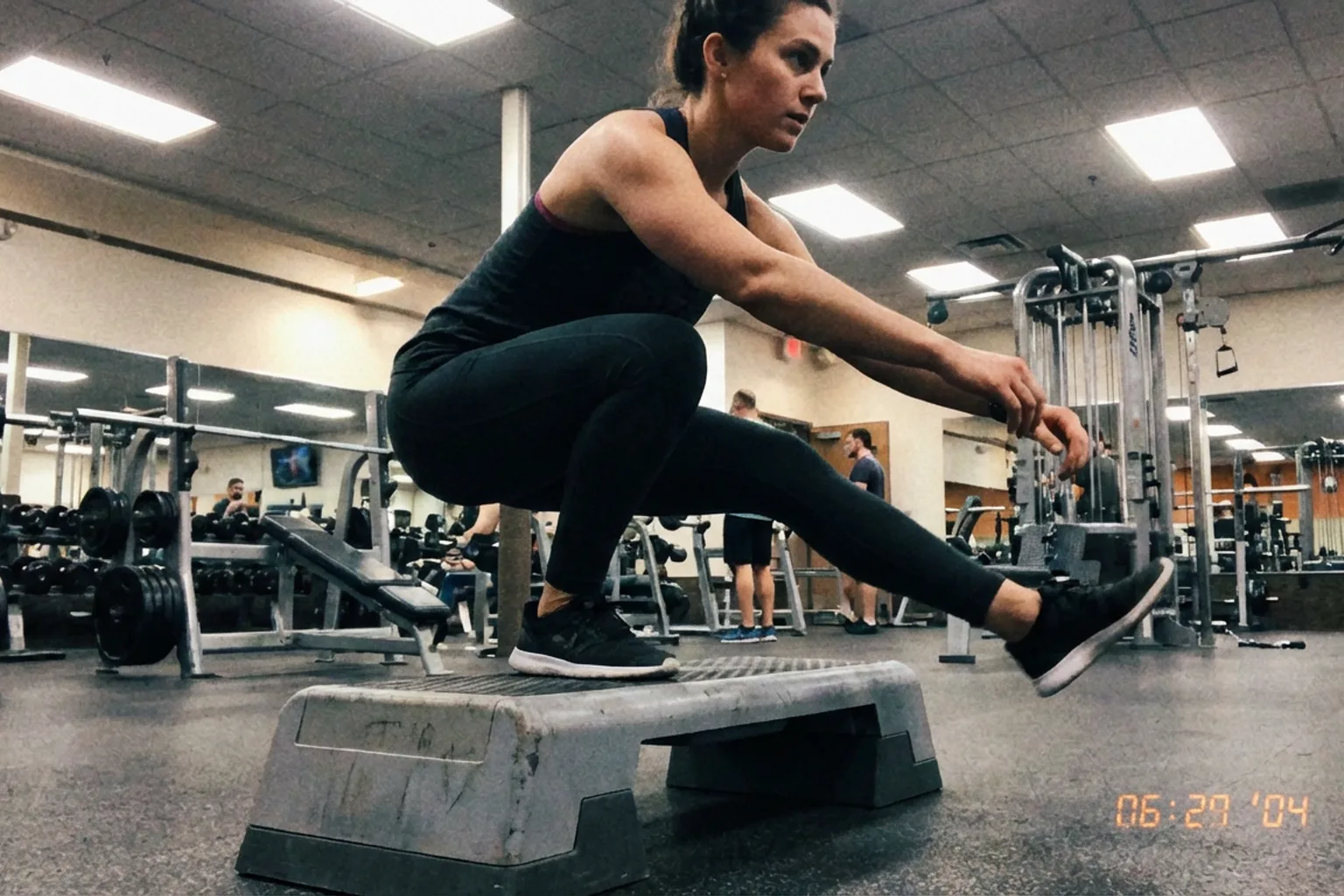
Exercises like single-leg squats, lateral band walks, and hip thrusts are your best friends here. I'd prioritise these above almost everything else on this list. Check out my guide on how to engage your glutes when running for a deeper dive into this.
Two or three focused strength sessions per week will make a noticeable difference within four to six weeks.
2. Increase Your Running Cadence
A higher cadence reduces the load going through your knee with every single step. This is one of the most powerful and underused tools for runners with knee pain.
Most recreational runners take between 150 and 160 steps per minute. Research suggests that increasing cadence by just 5-10% can significantly reduce peak forces at the knee. You don't need to make a huge change to feel the benefit.
Try running to a metronome app set at 170-175 steps per minute and see how it feels. Your stride will naturally shorten, your foot will land closer to your body, and the impact stress on your knee will drop. My guide on using a metronome to improve running technique walks you through exactly how to do this.
It feels odd at first. Stick with it for a few weeks and it becomes second nature.
3. Don't Ignore Overstriding
Landing your foot too far in front of your body dramatically increases knee stress. This is called overstriding, and it's one of the most common technique faults I see in recreational runners.
When you overstride, your heel strikes the ground well ahead of your centre of mass. This creates a braking force that sends a shockwave straight up through your knee. Over thousands of steps in a single run, that adds up fast.
The fix is simpler than you might think. Focus on landing your foot beneath your hips rather than in front of them. Increasing your cadence (tip 2) naturally helps with this. Read more about what overstriding is and how to fix it.
4. Wear the Right Running Shoes
The wrong shoes can turn a manageable knee problem into a serious one. But I want to be clear: there's no single "best" shoe for bad knees. The right shoe depends on your foot type, your gait, and your specific knee issue.
Here's what I'd recommend. Get a proper gait assessment at a specialist running shop. Don't just grab the most cushioned shoe on the shelf and assume more padding means less pain. Some runners with knee pain do better in a more responsive, lower-drop shoe. Others genuinely benefit from extra cushioning.
What I'd avoid: worn-out shoes. If your trainers have more than 500-600 miles on them, the midsole foam has likely compressed significantly, and you're not getting the support you think you are. Replace them.
Also worth considering: if you've been a heel striker and you're thinking about switching to forefoot running to protect your knees, read that article first. It's not a simple fix, and making the switch too quickly can cause new problems.
5. Choose Smarter Running Surfaces
Softer surfaces reduce peak impact forces on your knee, and this does make a real difference when you're managing pain.
Grass, trail, and synthetic track surfaces are all more forgiving than concrete or tarmac. Concrete is particularly unforgiving because it has virtually no give. If you're currently running most of your miles on pavements, shifting even 50% of your runs to grass or trail can noticeably reduce knee irritation.
That said, don't obsess over surface to the point where it stops you running. Tarmac roads are fine for most runners most of the time. The surface matters less than your training load, your strength, and your technique.
One thing to watch with trail running: uneven ground can challenge knee stability in a different way. Build up gradually if you're new to it.
6. Manage Your Training Load Properly
The number one cause of knee pain in runners is doing too much, too soon. I see this constantly. Someone gets motivated, ramps up their mileage quickly, and within a few weeks their knees are complaining.
The 10% rule (never increase weekly mileage by more than 10% per week) is a useful starting point, but it's not perfect. What matters more is the total stress load on your body, which includes mileage, intensity, elevation, and how much recovery you're getting.
If your knees are currently painful, I'd suggest dropping your total weekly mileage by 20-30% and cutting out speed sessions temporarily. Rebuild slowly. Boring advice, I know. But it works every time.
7. Strengthen Your Quads
Strong quadriceps act as shock absorbers for your knee joint. Every time your foot hits the ground, your quads are working hard to control the bend in your knee and protect the joint from excessive load.
Weak quads mean your knee has to absorb forces it's not equipped to handle. This is especially relevant for runners with patellofemoral pain, where the kneecap tracks poorly due in part to quad weakness and imbalance.
Terminal knee extensions, wall sits, and slow eccentric squats (lowering for 4-5 seconds) are all excellent options. If single-leg squats are currently painful, start with double-leg variations and progress gradually.
The lateral step-down exercise is one I use with almost every runner I work with who has knee pain. Stand on a step, lower your other foot slowly toward the floor using only the standing leg, then return. Three sets of 10 on each side, two to three times a week.
8. Address Your Hip Drop
Excessive hip drop (also called Trendelenburg gait) puts enormous rotational stress on the knee with every stride.
You can check for this yourself. Run on a treadmill and film yourself from behind. If your pelvis drops noticeably to one side each time a foot lifts off the ground, that's hip drop. It means your hip abductors (particularly your glute medius) aren't strong enough to stabilise your pelvis during the single-leg stance phase of running.
The result? Your knee collapses inward, increasing stress on the joint. My full guide on hip drop running gait covers the causes and fixes in detail.
9. Use Running-Specific Downhill Technique
Downhill running places significantly more stress on the knee than flat or uphill running. The quadriceps work eccentrically (lengthening under load) to control your descent, and the compressive forces on the kneecap increase substantially.
If your knees are currently sore, avoid long downhill sections until things settle. When you do run downhill, shorten your stride, keep your knees slightly bent, and lean forward slightly from the ankles rather than leaning back. My guide on downhill running technique goes into much more detail on this.
Uphill running, by contrast, is often easier on the knee. It's worth shifting more of your runs to routes with uphill sections while you're managing knee pain.
10. Warm Up Properly Before Every Run
A proper dynamic warm-up prepares your joints and muscles for the demands of running and reduces injury risk significantly.
Cold, stiff muscles and joints are less able to absorb impact. Five minutes of dynamic movement before you run makes a genuine difference. I'm not talking about static stretching (holding a stretch for 30 seconds), which research suggests doesn't reduce injury risk and may actually impair performance if done before running.
Instead, do leg swings, hip circles, walking lunges, high knees, and butt kicks. Get the blood moving and the joints warm before you ask them to run. My running warm-up structure guide gives you a full routine you can follow.
11. Cross-Train to Maintain Fitness Without the Load
When knee pain flares up, cross-training lets you maintain cardiovascular fitness while giving your knee a break from impact.
Cycling (especially on a stationary bike) is excellent because it keeps the quads and glutes working without the impact stress of running. Swimming and pool running are also brilliant options. I've had athletes maintain remarkable fitness through injury using aqua jogging, which mimics the running movement in water with zero impact.
Cross-training isn't giving up. It's smart training. The athletes I've coached who handle knee pain best are the ones who stay active through alternative means rather than sitting on the sofa waiting to recover.
12. Get a Running Gait Analysis
A professional running gait analysis can identify the specific movement faults driving your knee pain. This is the most targeted thing you can do.
Generic advice (like most of what you'll find online, including parts of this article) can only take you so far. Your knee pain has a specific cause, and that cause shows up in how you move. A trained eye watching you run in slow motion can spot things you'd never notice yourself.
Things like crossover gait (where your feet land across your midline), excessive internal hip rotation, or poor ankle mobility can all drive knee pain in ways that are hard to identify without video analysis. My guide on running gait analysis explains what the process involves and what to look for.
If you want personalised guidance rather than working through this alone, a proper gait assessment is worth every penny.
Common Causes of Knee Pain in Runners
Understanding what's actually going on in your knee helps you apply the right fixes. Here are the most common culprits I see in the runners I coach.
| Condition | Where It Hurts | Most Common Cause |
|---|---|---|
| Patellofemoral Pain Syndrome | Front of knee, around kneecap | Weak glutes/quads, overstriding |
| IT Band Syndrome | Outside of knee | Weak hip abductors, high mileage |
| Patellar Tendinopathy | Below kneecap | Training load spike, weak quads |
| Knee Osteoarthritis | Inside or all around knee | Cartilage wear, age, genetics |
| Pes Anserine Bursitis | Inside of knee, below joint | Overuse, tight hamstrings |
If you're not sure which of these applies to you, a sports physio assessment is the right first step. Don't self-diagnose based on a quick Google search.
What About Running With Knee Arthritis Specifically?
Knee arthritis deserves its own mention because it's one of the most misunderstood conditions in running.
Here's the thing: running doesn't cause knee osteoarthritis. A 2017 study in Arthritis Care and Research involving 2,637 people found that runners had no increased risk of symptomatic knee osteoarthritis compared to non-runners. In fact, some evidence suggests running may actually be protective, because the compression and release of cartilage during running helps pump nutrients into the joint.
If you have diagnosed knee arthritis and want to keep running, the tips in this article all apply. The most important additions are: keep your weight in a healthy range (every kilogram of body weight adds roughly four kilograms of force through the knee), and consider working with a physio who specialises in osteoarthritis management.
Read my full guide on running with knee osteoarthritis for a much deeper look at this topic.
Should You Run Through Knee Pain?
This is the question I get asked most often, and the honest answer is: sometimes yes, sometimes no.
Here's a simple framework I use with my athletes. Rate your pain on a scale of 0-10 before, during, and after your run.
0-3/10: Generally safe to run. Monitor carefully and don't push the intensity.
4-5/10: Consider reducing distance and pace. If pain increases during the run, stop.
6+/10: Don't run. Rest, ice, and get assessed.
Pain that gets worse as you run is always a signal to stop. Pain that stays the same or slightly improves as you warm up is usually manageable.
And remember: rest alone rarely fixes the underlying problem. If you stop running for two weeks and come back without addressing the cause, the pain will return within days. You need to fix what's driving it.
Frequently Asked Questions About Running With Bad Knees
Can I run with bad knees if I've been told to stop?
In many cases, yes. The advice to "stop running" is often overly cautious and doesn't address the root cause. Get a second opinion from a sports medicine specialist or physio who works with runners. Many conditions that seem to rule out running can be managed with the right approach to strength, load, and technique. That said, always follow medical advice specific to your diagnosis.
Is running on a treadmill better for bad knees than running outside?
Treadmills offer a slightly more cushioned surface than concrete, which can reduce impact forces modestly. The bigger factor is that treadmill running often encourages a slightly shorter stride, which can be helpful. However, the difference isn't dramatic. If you enjoy outdoor running, don't feel you have to switch to a treadmill. Focus on the other tips in this article instead.
How long does it take for runner's knee to heal?
Patellofemoral pain syndrome typically improves significantly within six to twelve weeks with the right approach, which means strength work, load management, and technique correction. Some runners see improvement in as little as four weeks. Others take longer, particularly if they've been dealing with it for months before addressing it. The sooner you start the right rehab, the faster you'll recover.
Do knee braces help when running with bad knees?
Knee braces can provide short-term symptom relief by improving proprioception (your knee's sense of position) and providing mild compression. A patellar tracking brace can help with patellofemoral pain specifically. However, braces treat the symptom, not the cause. Use them as a short-term tool while you address the underlying weakness and movement issues, not as a permanent solution.
Is cycling better than running for bad knees?
Cycling is lower impact and puts less compressive load through the kneecap than running. It's an excellent cross-training option when knee pain flares up. However, cycling doesn't replace running for bone density, and it works your muscles in a different pattern. Use it as a supplement, not a permanent replacement, unless your medical team specifically advises otherwise.
The Bottom Line on Running With Bad Knees
Running with bad knees is absolutely possible for the vast majority of people. The key is understanding what's causing your pain and addressing it systematically, rather than just hoping it goes away or giving up running altogether.
To summarise the 12 tips:
Build hip and glute strength
Increase your running cadence
Fix your overstriding
Wear appropriate running shoes
Choose softer surfaces where possible
Manage your training load carefully
Strengthen your quads
Address hip drop
Use good downhill running technique
Warm up properly before every run
Cross-train during flare-ups
Get a professional gait analysis
Work through these consistently and you'll give your knees the best possible chance of holding up for the long term.
If you want a structured, progressive programme that pulls all of this together, including strength work, mobility, and running technique coaching designed specifically for runners who want to stay injury-free, I'd love for you to check out Bulletproof Runners. It's built around exactly the principles in this article, and it's the most complete resource I've put together for runners who want to run strong for life.