Running with Patellofemoral Pain Syndrome: Complete Guide
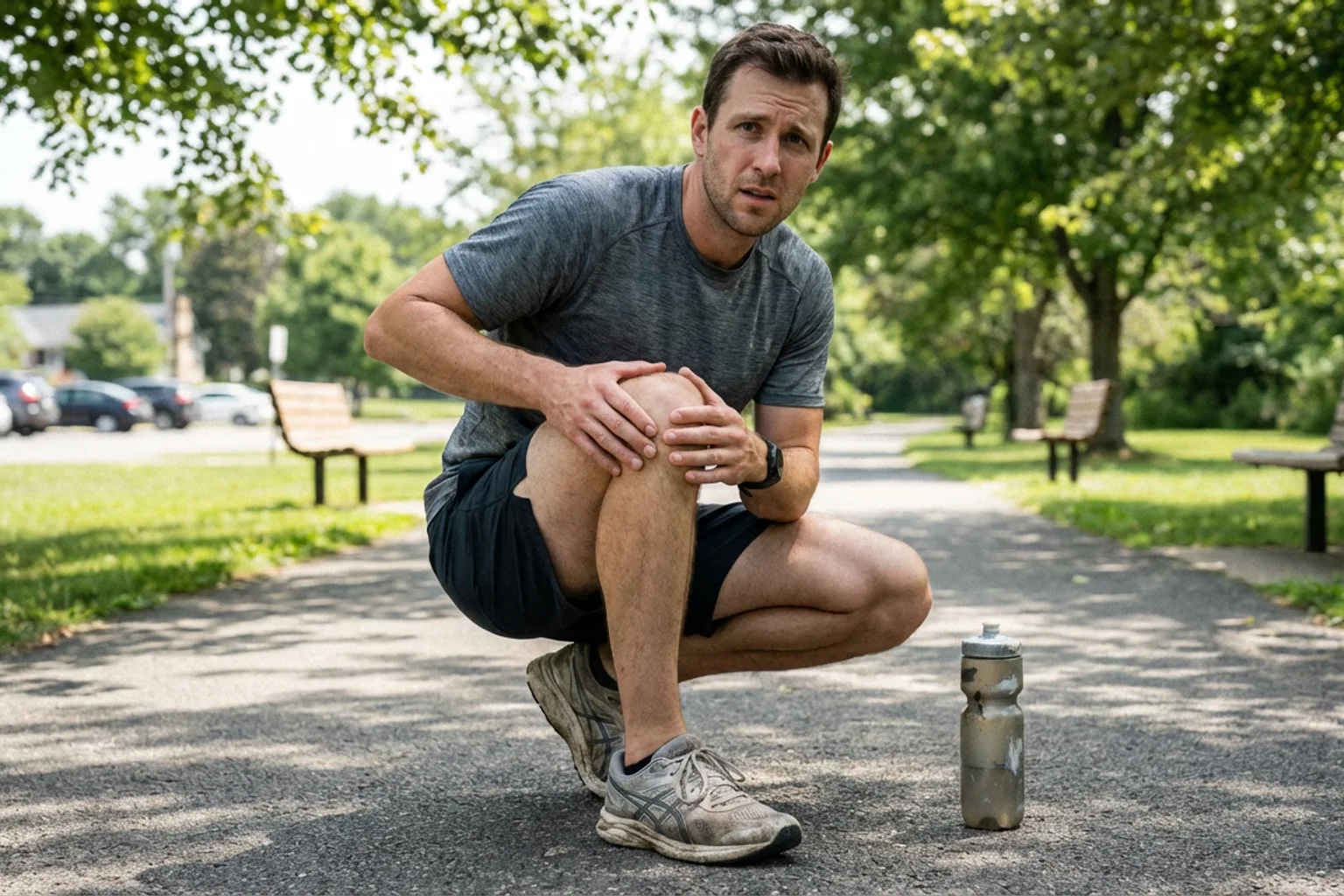
If you're reading this, there's a good chance your knee is talking to you right now. That dull, nagging ache at the front of the knee, maybe a grinding feeling when you squat or climb stairs, and the sinking worry that your next race might be slipping away. I hear you. Running with patellofemoral pain syndrome is one of the most frustrating experiences a runner can go through, and I've coached hundreds of athletes through exactly this.
Here's the good news: it doesn't have to mean stopping. In most cases, with the right approach, you can keep running, fix the underlying problem, and come out the other side stronger than before.
Quick answer: Most runners can continue running with patellofemoral pain syndrome at a reduced load, provided pain stays below a 3 out of 10 during and after runs. The key is addressing the root cause, not just managing symptoms. Expect meaningful improvement within 4 to 8 weeks with a structured plan.
I've put together a complete guide here, but if you want a fully structured, coach-led programme that takes you from pain to performance, check out Bulletproof Runners. It's designed specifically for runners dealing with exactly this kind of injury, with strength work, gait coaching, and a clear return-to-running plan built in.
Now, let's get into it.
What is Patellofemoral Pain Syndrome?
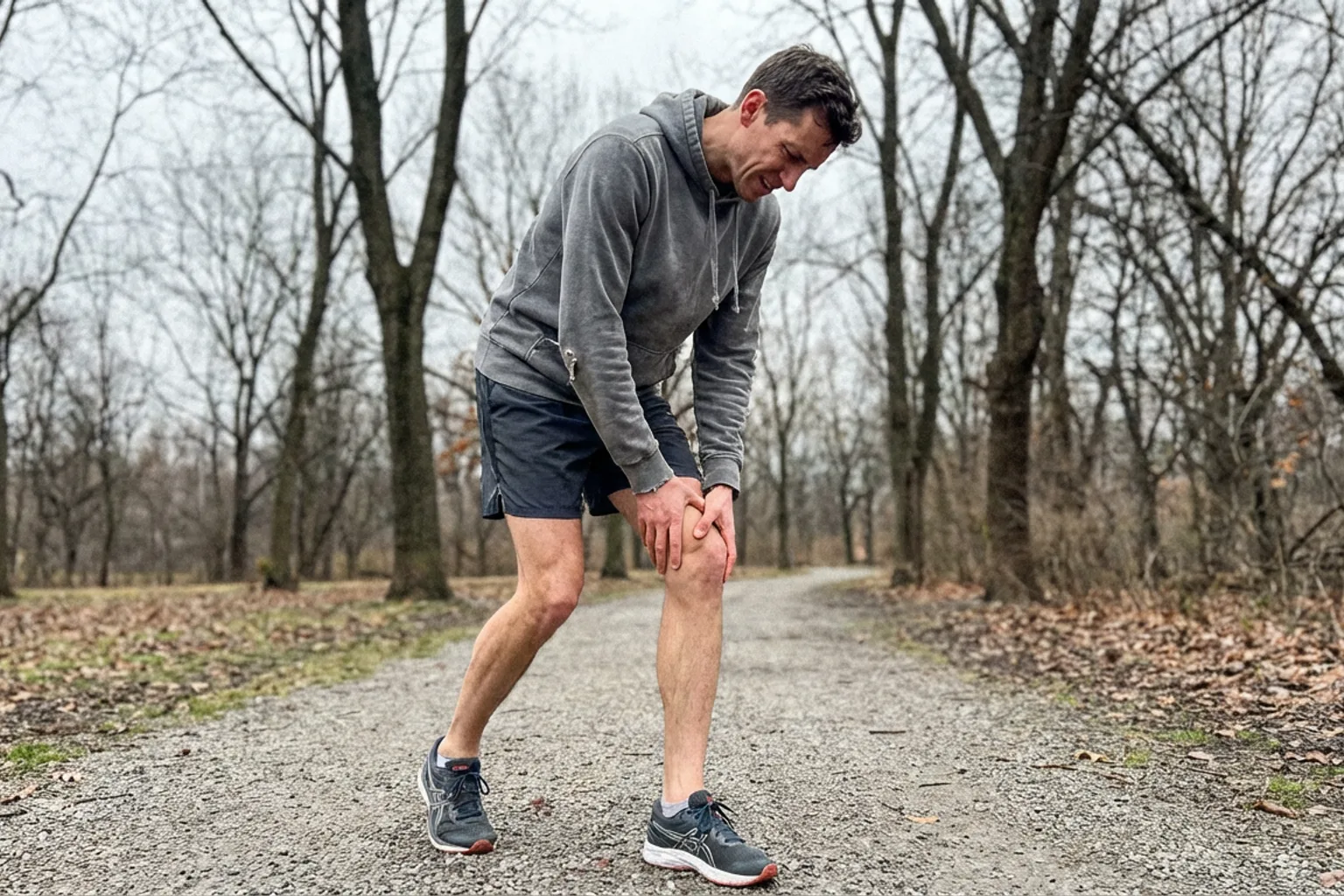
Patellofemoral pain syndrome (PFPS) is the clinical name for what most runners call runner's knee. It describes pain around or behind the kneecap (the patella) where it meets the thigh bone (the femur). That meeting point is your patellofemoral joint, and when it's irritated, you know about it.
The patella sits in a groove on the femur called the trochlear groove. As your knee bends and straightens, the patella glides up and down through this groove. When everything is working well, this movement is smooth and pain-free. When it isn't, you get friction, irritation, and pain.
Want to understand exactly what patellofemoral pain syndrome feels like from a runner's perspective? I've written a detailed breakdown of the symptoms that's worth reading alongside this guide.
PFPS is the most common overuse running injury. Research suggests it affects between 19 and 30 percent of female runners and 13 to 25 percent of male runners. So if you're dealing with it, you're in very large company.
How Can You Tell if You Have Runner's Knee?
The symptoms of patellofemoral pain syndrome are pretty recognisable once you know what to look for:
- A dull, aching pain at the front of the knee, around or behind the kneecap
- Pain that spreads across the knee rather than sitting in one sharp point
- Discomfort that gets worse going downstairs or downhill
- Pain after sitting for a long time with bent knees (the "cinema sign")
- A grinding, clicking, or crunching sensation when you bend the knee
- Pain that comes on during longer runs, when your quads fatigue
- Stiffness after rest that eases once you start moving
It's worth noting that not all knee pain is PFPS. If you have pain on the outside of the knee, that's more likely to be iliotibial band syndrome. Pain directly below the kneecap points more towards patellar tendinopathy. And if you're unsure, my guide on knee pain when running will help you narrow it down.
What Causes Patellofemoral Pain Syndrome in Runners?
This is where things get interesting. For years, the main theory was that the kneecap was "tracking wrong" due to tight structures on the outside of the knee pulling it laterally. That's still part of the picture, but the research has moved on significantly.
The reality is that PFPS is almost always a load management problem combined with biomechanical deficits. Here are the main contributing factors:
Muscle Weakness
Weak hip abductors and external rotators are one of the biggest drivers of PFPS. When your glutes can't control the inward collapse of your thigh during the stance phase of running, your knee caves inward. This changes how the patella tracks through the groove and increases stress on the joint. I see this constantly in gait analysis sessions. You can read more about the common deficits associated with patellofemoral pain in detail.
Weak quadriceps also play a role, particularly the VMO (the teardrop-shaped muscle on the inner side of your quad). The VMO helps pull the patella medially, so when it's underactive, the patella can drift outward under load.
Training Load Spikes
Too much, too soon. I say it all the time, and PFPS is one of the clearest examples of what happens when you ramp mileage or intensity too fast. Your tissues simply can't adapt quickly enough to the load being placed on them.
Running Biomechanics
Certain movement patterns increase patellofemoral joint stress. These include overstriding (landing with your foot too far in front of your body), excessive hip drop, and a wide crossover stride. All of these can be corrected with targeted running gait re-education.
Tight Tissues
Tight hip flexors, a tight iliotibial band, and tight lateral retinaculum can all pull the patella out of its groove. Tight calves and limited ankle dorsiflexion can also increase knee flexion stress during running.
Footwear and Surfaces
Worn-out shoes, sudden changes in running surface, or footwear that doesn't suit your foot type can all contribute. This doesn't mean you need a specific "type" of shoe, but it does mean your footwear needs to be appropriate and in good condition.
Can You Keep Running with Patellofemoral Pain Syndrome?
This is the question I get asked most. And the honest answer is: it depends, but usually yes.
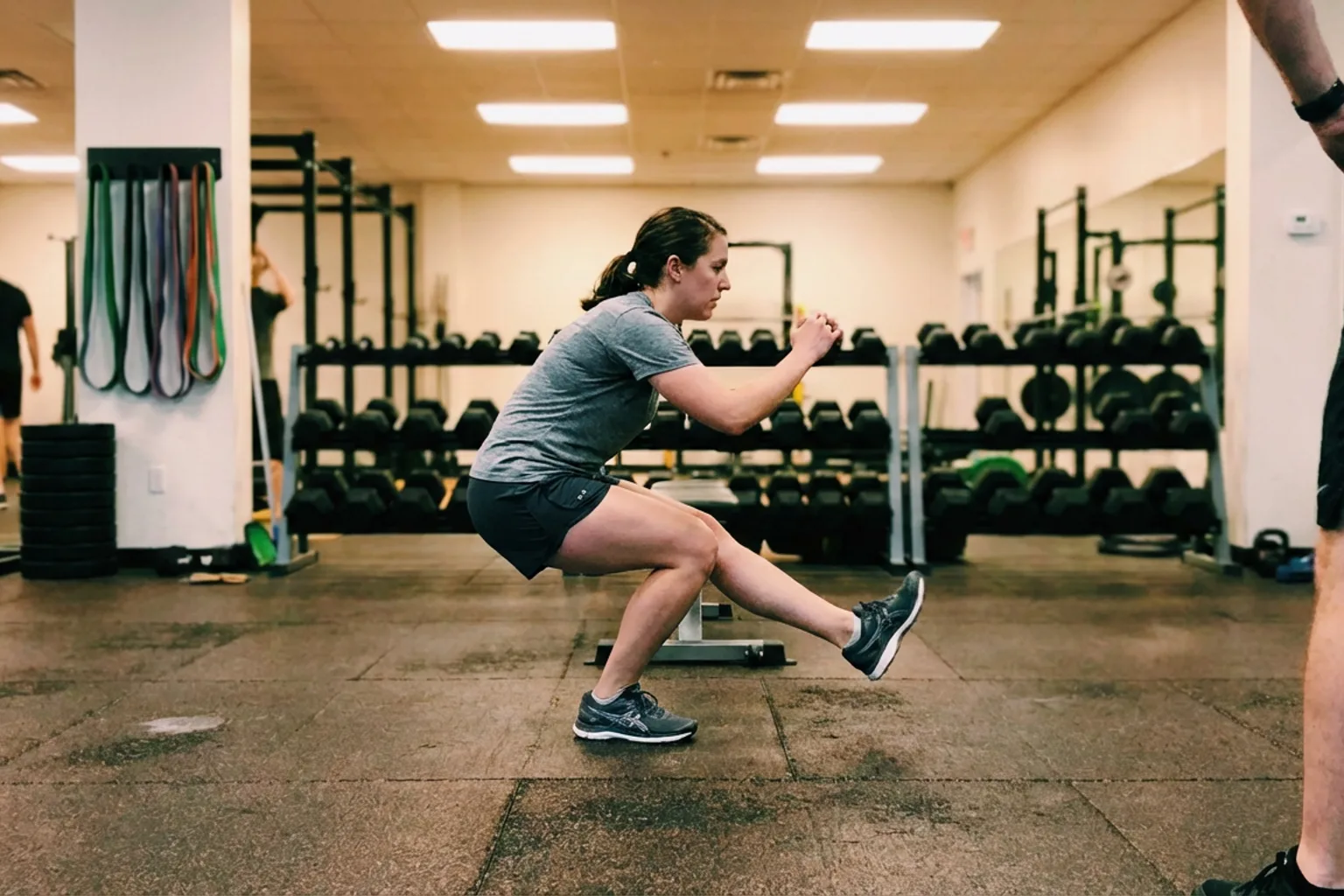
The key principle is this: pain during or after running that scores above 3 out of 10 is a signal to back off. A mild ache that stays at 2 to 3 out of 10 and doesn't worsen during the run or spike in the 24 hours afterwards is generally acceptable while you work on the underlying causes.
Complete rest is rarely the answer. In fact, research increasingly shows that maintaining appropriate load while addressing the root cause leads to better outcomes than stopping altogether. The goal is to find the right level of load, not zero load.
Here's a simple traffic light guide I use with my athletes:
- Green (run as planned): Pain is 0 to 2 out of 10, no change during or after the run
- Amber (modify the run): Pain is 3 out of 10, reduce pace and distance by 30 to 50 percent
- Red (don't run today): Pain is 4 or above, or you're limping, or pain spiked after your last run
If you're consistently in the amber or red zone, that's a clear sign you need a structured rehabilitation plan. This is exactly what I built Bulletproof Runners for. It takes the guesswork out of the process and gives you a week-by-week plan to reduce pain, rebuild strength, and return to full training confidently.
Immediate Steps: What to Do Right Now
If your knee is painful today, here's what to do before anything else:
1. Apply Ice or a Cold Pack
Apply ice wrapped in a cloth to the front of the knee for 15 to 20 minutes. Do this two to three times today. It won't fix the problem, but it will reduce local inflammation and make the next few days more comfortable.
2. Avoid the Movements That Aggravate It Most
Deep squats, stairs with heavy loading, kneeling, and prolonged sitting with bent knees all increase patellofemoral joint stress. Temporarily reduce these while things calm down.
3. Try Patellofemoral Taping
McConnell taping, which involves applying rigid sports tape to gently shift the kneecap medially, can provide significant short-term pain relief. It doesn't fix the problem, but it can make exercise more comfortable while you work on strength. I've written a full guide on runner's knee taping techniques that walks you through the process step by step.
4. Reduce Your Running Load
Cut your weekly mileage by 30 to 50 percent and drop any speed sessions or hill work for now. Flat, easy running at a comfortable pace is far kinder to the patellofemoral joint than tempo runs or downhill efforts.
5. Start Gentle Strengthening Today
I know it sounds counterintuitive, but gentle loading of the knee is one of the best things you can do. Isometric quad exercises (pushing your knee flat against the floor while lying down, holding for 30 to 45 seconds) can reduce pain significantly within a few days.
Running Technique Adjustments That Reduce Patellofemoral Stress
This section is where I can offer you something the other guides often miss. Technique changes can make a meaningful difference to how much load goes through your patellofemoral joint on every single step. And when you're running 150 steps per minute, even small changes add up fast.
Increase Your Running Cadence
Increasing your cadence by just 5 to 10 percent reduces patellofemoral joint stress significantly. A higher cadence means shorter stride length, less overstriding, and a lower peak knee flexion angle at initial contact. All of this reduces the compressive load on the patellofemoral joint. My guide on using a metronome to improve running cadence will help you make this change safely.
Reduce Your Step Width (Crossover Gait)
Many runners with PFPS have a crossover gait, where their feet land close to or across the midline. This increases hip adduction and internal rotation, which in turn increases patellofemoral stress. Running with a slightly wider step width corrects this. It's a subtle change, but the research behind it is solid. I've covered this in detail in my article on stride width and running technique.
Focus on Hip Control
If your hip drops on the opposite side when your foot strikes the ground (known as hip drop), your knee will collapse inward. This is a glute weakness issue as much as a technique issue, but consciously thinking about running tall and keeping your hips level can help while you build the strength to do it automatically.
Avoid Overstriding
Landing with your foot well in front of your body creates a braking force and increases the knee flexion angle at contact, both of which load the patellofemoral joint heavily. Aim to land with your foot closer to beneath your centre of mass. My article on what overstriding actually means explains this clearly.
Be Careful on Downhills
Downhill running dramatically increases patellofemoral joint stress. The knee has to work hard eccentrically to control your descent, and the joint contact forces spike. During your recovery phase, avoid steep downhills or use a short, controlled shuffle technique. My guide on downhill running technique is worth reading here.
Strength Training for Patellofemoral Pain Syndrome
Here's the thing: you cannot stretch your way out of PFPS. Strengthening is the cornerstone of recovery, and the research is unambiguous on this.
The most effective approach targets both the hip and the knee simultaneously. Here are the exercises I prescribe most often:
Phase 1: Pain Control (Weeks 1 to 2)
These exercises are low-load and focus on activating the right muscles without aggravating the joint.
- Isometric quad sets: Sit with your leg straight. Push the back of your knee into the floor and hold for 30 to 45 seconds. Do 3 sets, 3 times per day.
- Clamshells: Lie on your side with knees bent. Keeping your feet together, rotate your top knee up toward the ceiling. 3 sets of 15 to 20 reps.
- Glute bridges: Lie on your back, feet flat on the floor. Drive your hips up and hold for 2 seconds at the top. 3 sets of 15 reps.
- Seated straight leg raises: Sit on a chair. Straighten one knee and hold for 5 seconds. Lower slowly. 3 sets of 12 reps each side.
Phase 2: Building Strength (Weeks 3 to 6)
Once pain is consistently below 3 out of 10, progress to these exercises.
- wall sit: Slide down a wall until your knees are at 45 to 60 degrees (not 90 degrees initially). Hold for 30 to 60 seconds. 3 sets.
- Step-ups: Step up onto a low step (10 to 15cm) leading with the affected leg. Control the descent. 3 sets of 10 to 12 reps each side.
- Single-leg glute bridge: As with the standard bridge, but with one leg raised. 3 sets of 12 reps each side.
- Side-lying hip abduction: Lie on your side with legs straight. Raise the top leg to 30 to 40 degrees. Hold 1 second. Lower slowly. 3 sets of 15 reps.
- Terminal knee extension (TKE): Using a resistance band around the back of your knee, stand and straighten your knee against the resistance. Excellent for VMO activation. 3 sets of 15 reps.
Phase 3: Running-Specific Strength (Weeks 6 to 10)
This is where you bridge the gap between rehab and running performance.
- bulgarian split squat: Rear foot elevated, lower into a lunge. Control the descent. 3 sets of 8 to 10 reps each side.
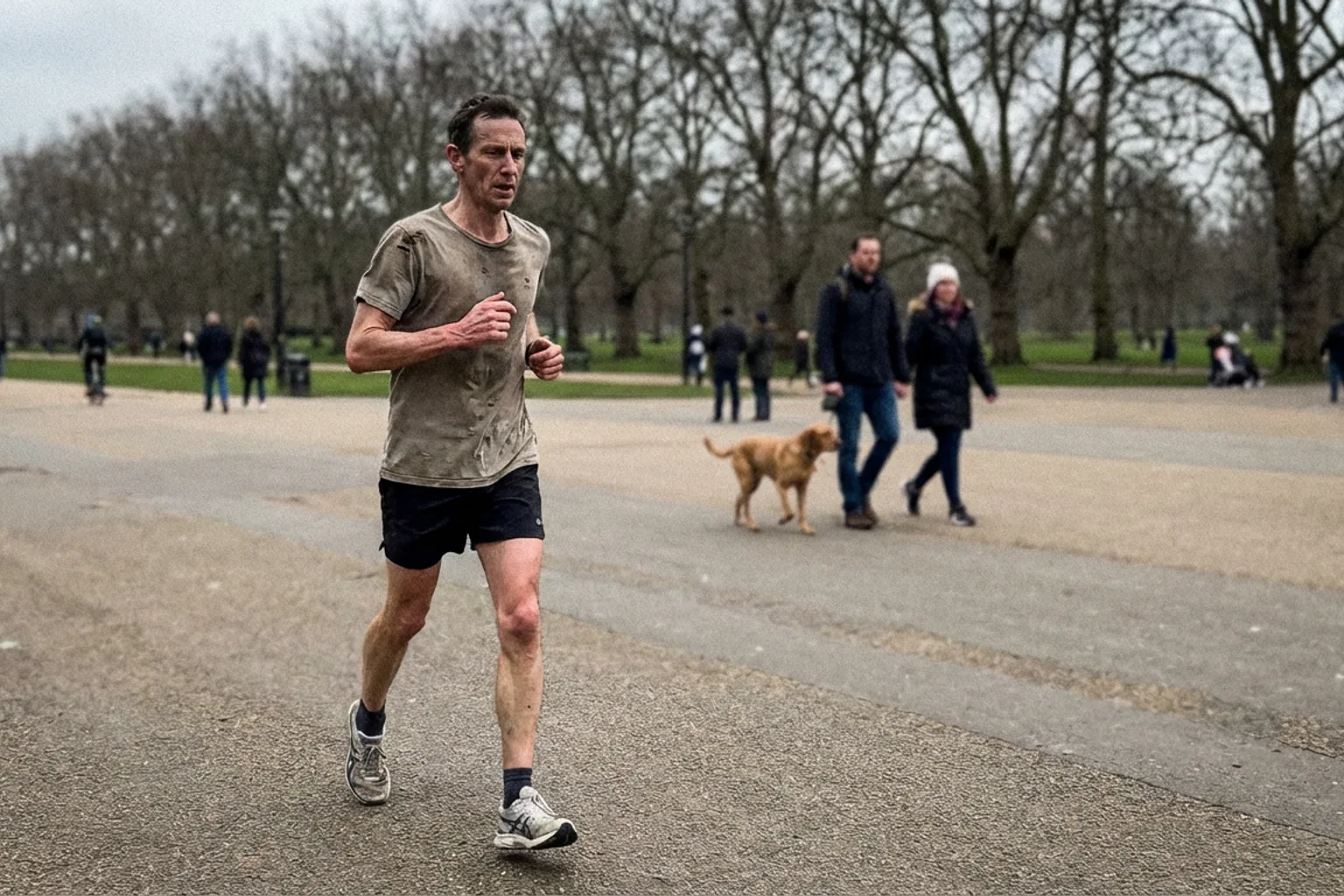
- Single-leg squat: Stand on one leg and lower slowly to about 45 degrees. Focus on keeping the knee tracking over the second toe. 3 sets of 8 reps each side.
- Nordic hamstring curls: Kneel with feet anchored. Lower your body forward slowly. These are challenging but highly effective for hamstring strength in runners with knee pain.
- Lateral band walks: With a resistance band around your ankles, step sideways with control. 3 sets of 15 steps each direction.
Learning to properly engage your glutes when running is a game-changer for patellofemoral pain. Weak glutes are at the root of so many running injuries, and PFPS is no exception.
Cross-Training Options While You Recover
Maintaining cardiovascular fitness while your knee settles down is completely achievable. The key is choosing activities that don't load the patellofemoral joint in the same way as running.
- Swimming: Excellent. Non-weight bearing and no patellofemoral stress. Avoid breaststroke if it aggravates the knee.
- Cycling: Generally well-tolerated, especially at lower resistance and higher cadence. Ensure your saddle height is correct (a low saddle increases knee flexion and patellofemoral stress).
- Aqua running: My personal favourite for keeping runners fit during injury. You mimic your running gait in the pool with zero impact. Aqua running is underused and underrated.
- Elliptical trainer: A reasonable option, but avoid high resistance settings which increase knee flexion loading.
- Rowing: Good cardiovascular workout with minimal knee stress, provided you maintain good form.
Runner's Knee Recovery Timeline: What to Expect
I want to be honest with you here, because I think some guides are overly optimistic. Recovery time varies enormously depending on how long you've had the problem, how severe it is, and how consistently you address it.
| Severity | Typical Recovery Time | What to Expect |
|---|---|---|
| Mild (recent onset, pain 2 to 3/10) | 2 to 4 weeks | Reduce load, start strengthening, return to full running |
| Moderate (several weeks of symptoms, pain 4 to 6/10) | 6 to 12 weeks | Structured rehab programme, modified running, gradual return |
| Severe (chronic, pain 7+/10, affecting daily life) | 3 to 6 months | Physiotherapy essential, possible imaging, full programme required |
The runners I see recover fastest are those who address the root cause rather than just managing symptoms. That means doing the strength work consistently, making the technique adjustments, and not rushing back to full mileage too soon.
A good rule for returning to full training: increase your weekly mileage by no more than 10 percent per week, and don't add intensity back in until you've been pain-free for at least two weeks at your current mileage.
The Role of Footwear in Managing PFPS
Footwear won't fix patellofemoral pain syndrome on its own, but it can be a contributing factor worth addressing.
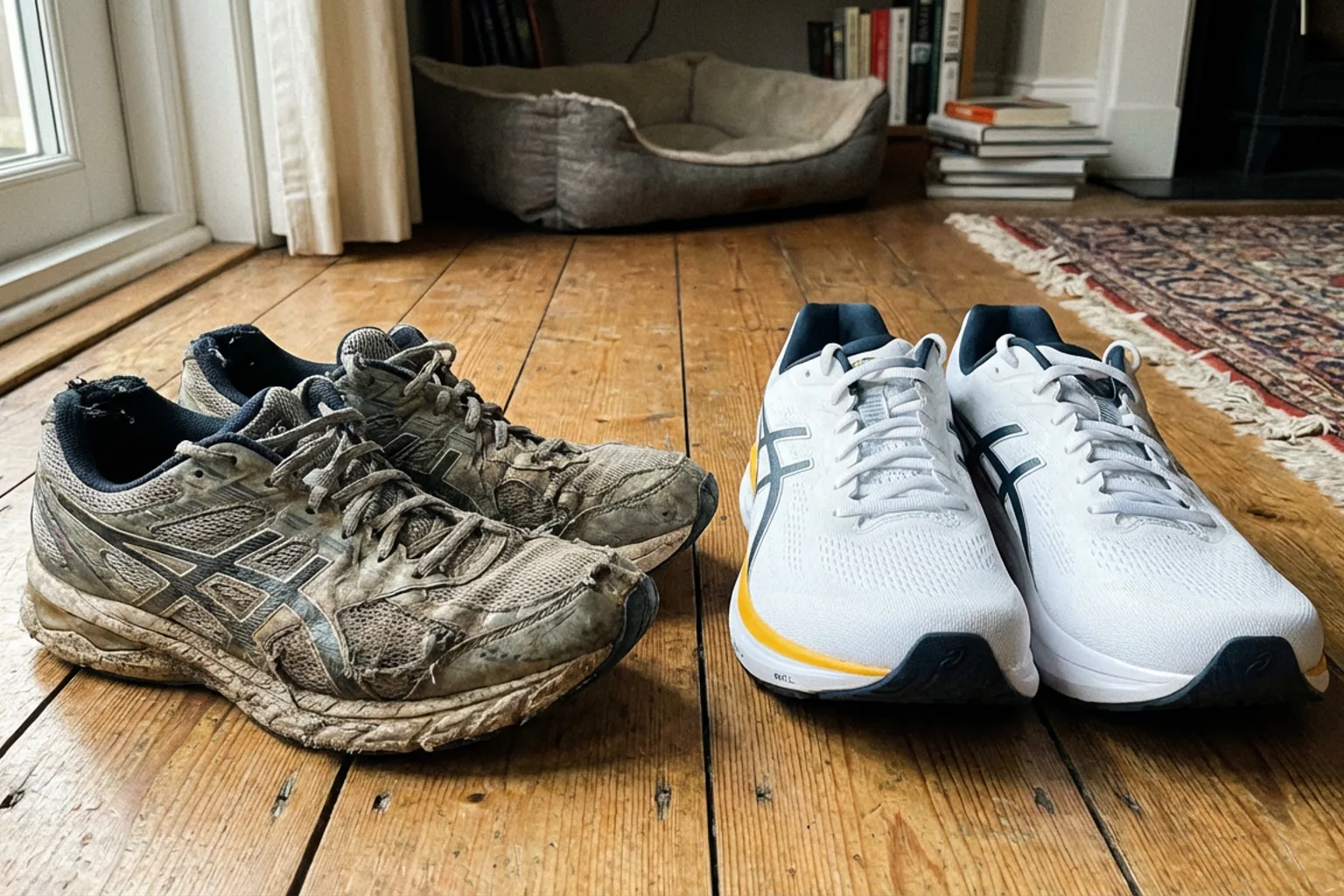
Worn-out shoes lose their ability to manage impact forces effectively. Most running shoes need replacing every 500 to 800 kilometres. If yours are older than that, it's worth considering a new pair.
The evidence on specific shoe types for PFPS is mixed. What I look for in clinic is whether a runner's footwear is appropriate for their foot type and running style, and whether it's in good condition. A gait analysis at a specialist running shop can be helpful here, but don't let anyone sell you a shoe based purely on arch type without considering your full movement picture.
Some runners find that a small heel lift or orthotics help in the short term by reducing the range of knee flexion during running. This can be useful as a temporary measure, but it's not a substitute for addressing the underlying strength and movement deficits.
Stretching and Mobility Work for Runner's Knee
Stretching alone won't resolve PFPS, but targeted mobility work supports your strength training and can reduce some of the contributing factors.
hip flexor stretch
Kneel in a lunge position. Push your hips forward gently until you feel a stretch at the front of the back leg's hip. Hold 30 to 45 seconds, 3 times each side. Tight hip flexors contribute to anterior pelvic tilt, which changes how the patella tracks.
Quad Stretch
Stand on one leg and pull the opposite foot toward your glutes. Keep your knees together and stand tall. Hold 30 seconds, 3 times each side. Tight quads increase the compressive force on the patellofemoral joint.
Calf and ankle mobility
Tight calves limit ankle dorsiflexion, which forces the knee to compensate during the stance phase of running. A simple calf stretch against a wall and ankle circles can help. I've seen this make a surprisingly large difference in some runners.
IT Band and Lateral Hip Mobility
A tight lateral retinaculum (connected to the IT band) can pull the patella outward. foam rolling the lateral quad and IT band, combined with hip mobility work, can help reduce this tension. My guide on ITB syndrome prevention covers the lateral hip mobility work in detail.
When to See a Physiotherapist
Self-management works well for mild to moderate PFPS, but there are situations where you need professional assessment. See a physiotherapist if:
- Pain is consistently above 5 out of 10 despite two weeks of modified training and strengthening
- You're limping during or after runs
- Pain woke you from sleep
- The knee is swollen, hot, or locked
- You've had symptoms for more than 12 weeks without improvement
- You have pain at rest that doesn't ease with ice or elevation
- You're unsure whether it's actually PFPS or something else
A good physio will assess your movement patterns, identify your specific deficits, and give you a targeted programme. They may also use techniques like patellar mobilisation or dry needling alongside your exercise programme.
If you're not sure what you're dealing with, my article on warning signs for runner's knee will help you decide whether you need professional input.
Preventing Patellofemoral Pain Syndrome from Coming Back
This is the part most guides skip over, and it's arguably the most important section. PFPS has a frustrating habit of recurring if you go back to doing exactly what caused it in the first place.
Here's how to make sure it doesn't come back:
Keep Doing the Strength Work
Once you're pain-free, don't stop the strength training. Move into a maintenance phase of two sessions per week. Glute strength, quad strength, and hip control need to be ongoing priorities for any runner who's had PFPS.
Follow the 10 Percent Rule
Never increase your weekly mileage by more than 10 percent from one week to the next. This applies to intensity too. Sudden spikes in load are the most common trigger for PFPS recurrence. My guide on preventing running knee pain covers load management in detail.
Address Technique Permanently
The gait changes I described earlier (cadence, step width, hip control) shouldn't just be temporary fixes. Build them into your regular running. A running gait analysis every six to twelve months is a worthwhile investment for any runner who's had a history of knee problems.
Build Running-Specific Strength Year-Round
Single-leg squats, hip hinges, and glute work should be part of your training all year, not just when something hurts. Runners who strength train consistently have significantly lower injury rates across the board.
Don't Ignore Early Warning Signs
If you notice the familiar ache starting to creep back in, act immediately. Reduce mileage by 20 to 30 percent, revisit your strengthening routine, and check your technique. Catching it early means a much shorter recovery than waiting until it becomes a full-blown flare-up.
Frequently Asked Questions
Can I run with patellofemoral pain syndrome?
Yes, in most cases. The rule of thumb is to keep pain below 3 out of 10 during and after running. If pain stays at that level or below and doesn't spike in the 24 hours after a run, you can usually continue running at a reduced load while you address the underlying cause with strengthening and technique work.
How long does runner's knee take to heal?
Mild cases can resolve in 2 to 4 weeks with the right approach. Moderate cases typically take 6 to 12 weeks. Chronic or severe PFPS can take 3 to 6 months. Early intervention and consistent rehabilitation significantly speed up recovery.
Does patellofemoral pain syndrome go away on its own?
Rarely, if the underlying causes aren't addressed. Simply resting and then returning to running as before usually leads to the pain coming back. The most reliable path to lasting recovery is identifying and fixing the root cause, whether that's muscle weakness, gait issues, or training load.
Is cycling OK with runner's knee?
Generally yes, especially at a higher cadence and lower resistance. Make sure your saddle height is correct. A saddle that's too low forces more knee flexion, which increases patellofemoral stress. Cycling is a great way to maintain fitness while your knee recovers.
Should I use a knee brace for patellofemoral pain syndrome?
A patellar tracking brace or sleeve can provide short-term comfort and proprioceptive feedback, but it doesn't fix the underlying problem. I tend to recommend taping over bracing for most runners, as it's more specific and easier to adjust. Use a brace as a short-term support tool, not a long-term solution.
The Bottom Line on Running with Patellofemoral Pain Syndrome
Runner's knee is common, it's frustrating, and it's very fixable. The runners I see struggle most are those who either push through without changing anything, or stop completely and hope rest alone will solve it. Neither approach works well.
The approach that works is this: manage your running load intelligently, start strengthening your hips and quads immediately, make the technique adjustments that reduce patellofemoral stress, and be patient with the process. Most runners see meaningful improvement within 4 to 6 weeks, and full resolution within 8 to 12 weeks, when they follow a structured plan consistently.
If you want that structured plan built for you, that's exactly what Bulletproof Runners delivers. It's a comprehensive strength and conditioning programme designed specifically for runners, with targeted work for common injury patterns like PFPS, a progressive return-to-running framework, and the kind of coaching detail that makes the difference between guessing and actually getting better. If you're serious about running pain-free and staying that way, I'd love to see you inside.
You can also explore more on knee pain after running and the full picture of gait re-education for patellofemoral pain to keep building your understanding. The more you know about what's driving your pain, the better equipped you are to fix it for good.