Why Does My Shin Hurt When Running: Causes, Fixes & Prevention

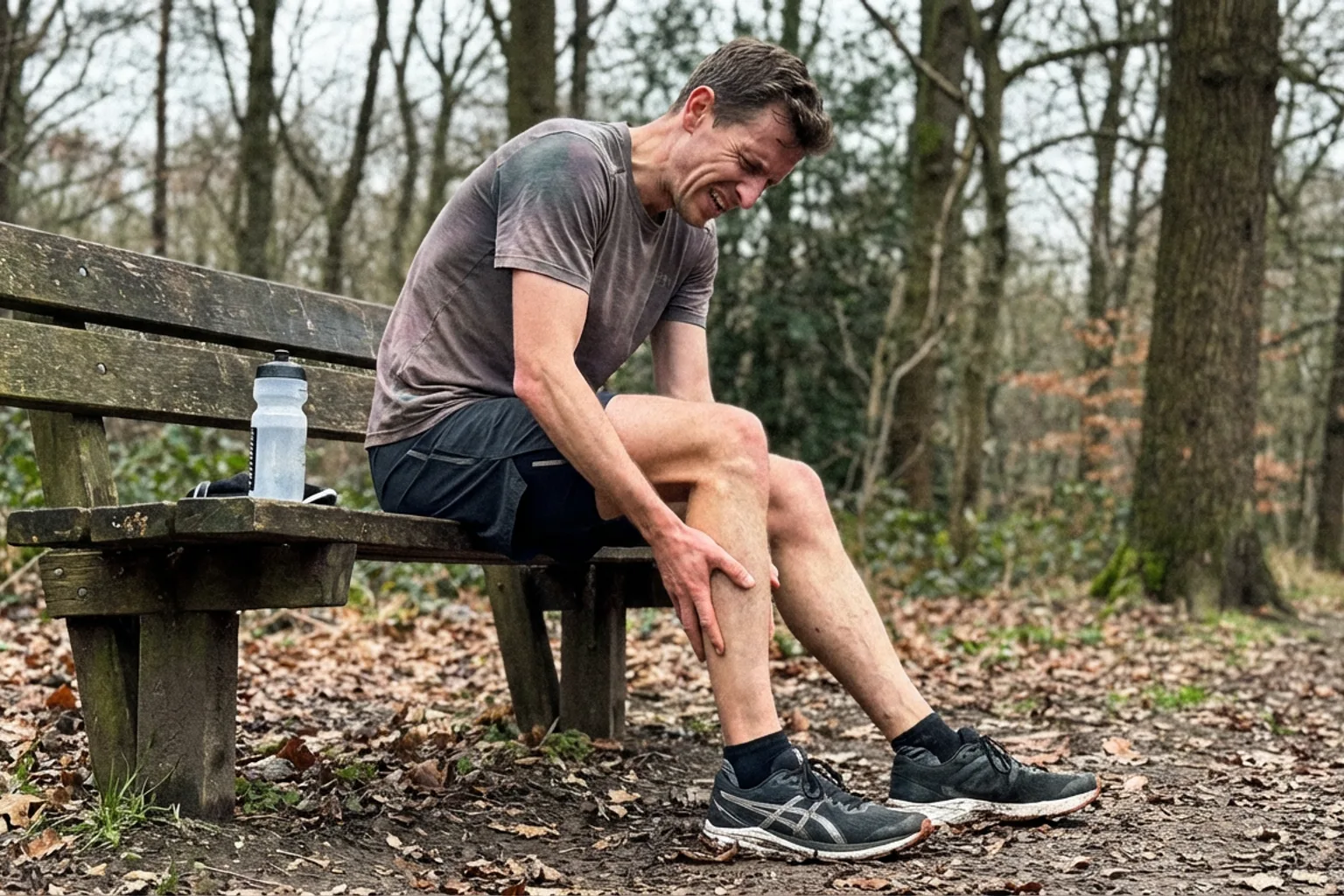
If you're asking "why does my shin hurt when running," you're in good company. Shin pain is one of the most common complaints I hear from runners at every level, from complete beginners to people training for their first marathon. It's frustrating, it's distracting, and if you ignore it, it can turn into something much more serious.
The good news? In most cases, shin pain is very fixable. Once you understand what's causing it, you can take clear, practical steps to get on top of it quickly.
Quick Answer: Shin pain when running is most often caused by medial tibial stress syndrome (shin splints), which is inflammation along the shin bone due to overuse, poor running form, or inadequate recovery. Treatment involves rest, ice, load management, and targeted strengthening. Most runners recover within 2 to 6 weeks with the right approach.
I've worked with hundreds of runners dealing with this exact problem through my Bulletproof Runners programme, and the pattern is almost always the same. They've done too much too soon, or there's a biomechanical issue quietly loading the shin with every step. Either way, there's a clear path back to pain-free running. Let me walk you through it.
What Is Shin Pain in Runners?
When runners talk about shin pain, they usually mean one of a few different things. The catch-all term most people use is "shin splints," but that's actually a loose label for several distinct conditions. Understanding which one you're dealing with matters, because the treatment approach varies.
Here are the main causes of shin pain in runners:
- Medial tibial stress syndrome (MTSS): The most common. Pain along the inner edge of the shin bone, typically felt during and after running. Caused by inflammation of the periosteum, the connective tissue that wraps around the tibia.
- Anterior shin splints: Pain along the front of the shin, often in the tibialis anterior muscle. Common in newer runners and those who heel strike heavily.
- Tibial stress reaction or stress fracture: A more serious bony injury caused by repeated loading without adequate recovery. Needs proper assessment and a longer rest period.
- Chronic exertional compartment syndrome (CECS): A less common but important condition where pressure builds up inside the muscle compartments of the lower leg during exercise. Pain typically comes on at a predictable point in a run and eases quickly with rest.
- Muscle tightness or overuse: Sometimes the shin area just gets tight and overworked, particularly the tibialis anterior, without progressing to a full stress injury.
For the rest of this article, I'll focus primarily on MTSS and anterior shin splints, as these account for the vast majority of cases. But I'll flag the warning signs for the more serious conditions too.
Why Does My Shin Hurt When Running? The Main Causes
Here's the thing: shin pain rarely comes from one single cause. It's usually a combination of factors that together tip the balance from "manageable load" to "too much stress." Let me break down the most common culprits.
1. Doing Too Much Too Soon
This is the number one cause, full stop. I see it constantly. A runner gets motivated, jumps into training, and adds mileage or intensity faster than their body can adapt. Bone and connective tissue adapt more slowly than cardiovascular fitness. So your lungs say "I can do this," but your shins say "please, no more."
The general rule is to increase your weekly mileage by no more than 10% per week. Even that can be too aggressive if you're coming back from a break or just starting out.
2. Running on Hard Surfaces
Concrete is significantly harder than tarmac, and tarmac is harder than trail. Every foot strike on a hard surface sends more force back up through your lower leg. Over time, that repeated impact adds up. If you've recently switched from trail to road, or started doing more pavement running, that could easily explain your shin pain.
3. Worn-Out or Poorly Fitted Running Shoes
Most running shoes lose their cushioning and support well before they look worn out. The general guidance is to replace them every 400 to 500 miles (roughly 640 to 800 kilometres). If your shoes are older than that, the midsole foam may be compressed and offering far less protection than you think.
Shoe fit matters too. A shoe that doesn't suit your foot mechanics can alter how load is distributed through your lower leg with every step.
4. Heel Striking with an Overstriding Gait
This one is close to my heart as a running technique coach. When you overstride, your foot lands well ahead of your centre of mass, usually on the heel. This creates a braking force and sends a sharp impact up through the lower leg. The tibialis anterior, the muscle running down the front of your shin, has to work extremely hard to control that foot as it slaps down.
Over time, that repeated eccentric load on the tibialis anterior leads to anterior shin pain. Stride mechanics play a huge role in shin splints and ITB syndrome, and fixing your gait is often the missing piece in long-term recovery.
5. Overpronation
Overpronation means your foot rolls inward excessively when it lands. This twists the tibia slightly with each step, pulling on the muscles and connective tissue along the inside of the shin. Over hundreds of steps per mile, that adds up to a lot of irritation. Overpronation is a key factor in shin splints and is worth addressing through footwear, strengthening, or gait retraining.
6. Tight Calves
Tight calf muscles restrict ankle mobility. When your ankle can't dorsiflex (bend upward) freely, your foot mechanics change and more stress ends up going through the shin. I'd say at least half the runners I work with who have shin pain also have noticeably restricted ankle dorsiflexion. These two things are closely linked.
7. Weak Hips and Glutes
This surprises a lot of runners. Weak hip abductors and glutes mean your pelvis drops and your leg rotates inward when you run. That inward rotation increases the load on the medial (inner) shin with every step. Learning to properly engage your glutes when running can reduce shin stress significantly, even before you change anything else.
8. Running on Cambered Roads
Most roads are slightly angled (cambered) to allow water to drain. If you always run on the same side of the road, one leg is effectively running on a slight slope. That asymmetry loads the inner shin of the lower leg unevenly and can trigger MTSS over time. Swap sides of the road regularly, or choose flatter paths where possible.
9. Returning After a Break
If you've had time off, your bone density and tissue resilience will have reduced somewhat, even if your fitness returns quickly. This makes returning runners particularly vulnerable to shin pain. Your body needs time to rebuild its tolerance to impact, and that process takes weeks, not days.
How to Tell If It's Shin Splints or Something More Serious
Most shin pain in runners is MTSS or anterior shin splints, but it's important to rule out a stress fracture before you push on with training.
Here's a simple way to tell the difference:
- Shin splints (MTSS): Pain spread over a 5cm or more area along the inner shin. Hurts at the start of a run, may ease as you warm up, then returns after. Tender to touch over a broad area.
- Stress fracture: Pain is very localised, often at a specific point you can press with one finger. Doesn't ease as you warm up. May hurt at rest or at night. Gets progressively worse with continued running.
If you suspect a stress fracture, stop running and see a physiotherapist or sports medicine doctor. A stress fracture needs proper diagnosis (often an MRI) and typically 6 to 8 weeks of no impact activity. Pushing through it risks a complete fracture, which is a much longer setback.
Similarly, if your shin pain comes on at a very predictable point in your run (say, always at the 20-minute mark) and disappears quickly when you stop, mention this to a physio. That pattern is characteristic of chronic exertional compartment syndrome, which has a different treatment pathway entirely.
Shin Pain When Running: Do This Right Now
If your shin is hurting today, here are the immediate steps to take.
Step 1: Reduce Your Training Load
You don't necessarily need to stop running completely, but you do need to back off. Cut your mileage by 50% and avoid any speed work, hills, or long runs for now. Running through sharp shin pain is a fast track to a stress fracture.
If the pain is severe or present at rest, take a full break from running for at least a week. Find out more about whether you can run through shin splints here.
Step 2: Ice the Area
Apply an ice pack wrapped in a thin cloth to the painful area for 15 to 20 minutes, several times a day. Do this after any activity and before bed. Don't apply ice directly to the skin. This helps manage inflammation and reduces pain in the short term.
Step 3: Elevate When Resting
Keep your leg elevated when you're sitting or lying down. It's a simple step but it helps reduce swelling and speeds up tissue recovery.
Step 4: Consider Compression
Compression socks or sleeves can help manage swelling and discomfort during the day. Some runners find them useful during easy runs too, though they're not a substitute for addressing the root cause.
Step 5: Switch to Low-Impact Cross-Training
You can maintain your fitness while your shins recover. Swimming, cycling, and aqua jogging are all excellent options that keep your cardiovascular fitness up without loading the shin. Aqua jogging is particularly good for runners because it mimics the running movement without any impact.
Shin Splints Treatment: The Full Recovery Plan
Once you've got the acute pain under control, here's how to build a proper recovery plan.
Manage Load Carefully
The key to recovering from shin splints is progressive load management. You need enough stimulus to encourage the bone and tissue to adapt, but not so much that you re-irritate it. A good starting point is to run every other day on soft surfaces, keeping each run short (15 to 20 minutes) and easy. Increase duration by no more than 10% per week. Learn more about realistic shin splints recovery timelines here.
Most runners with mild to moderate MTSS see meaningful improvement within 2 to 4 weeks of proper load management. More significant cases can take 6 to 8 weeks. Be patient. Rushing back is the most common reason runners end up back at square one.
Strengthen the Tibialis Anterior
The tibialis anterior is the muscle running down the front of your shin. Strengthening it helps it absorb more of the impact load, taking stress off the bone. Here are two exercises to start with:
Heel walks: Stand tall and lift your toes off the ground so you're balancing on your heels. Walk forward for 20 to 30 metres. This is a deceptively simple but highly effective exercise. Here's a full guide to the heel walk drill for runners.
Toe raises (seated or standing): Sit in a chair with feet flat on the floor. Lift your toes and forefoot off the ground, keeping your heels down. Hold for 2 seconds, lower slowly. Do 3 sets of 15 to 20 reps. Progress to standing toe raises against a wall as you get stronger.
I also love the secret shin strengthening exercise I use with many of my coached runners. It targets the tibialis anterior in a way that most standard exercises miss.
Strengthen Your Calves
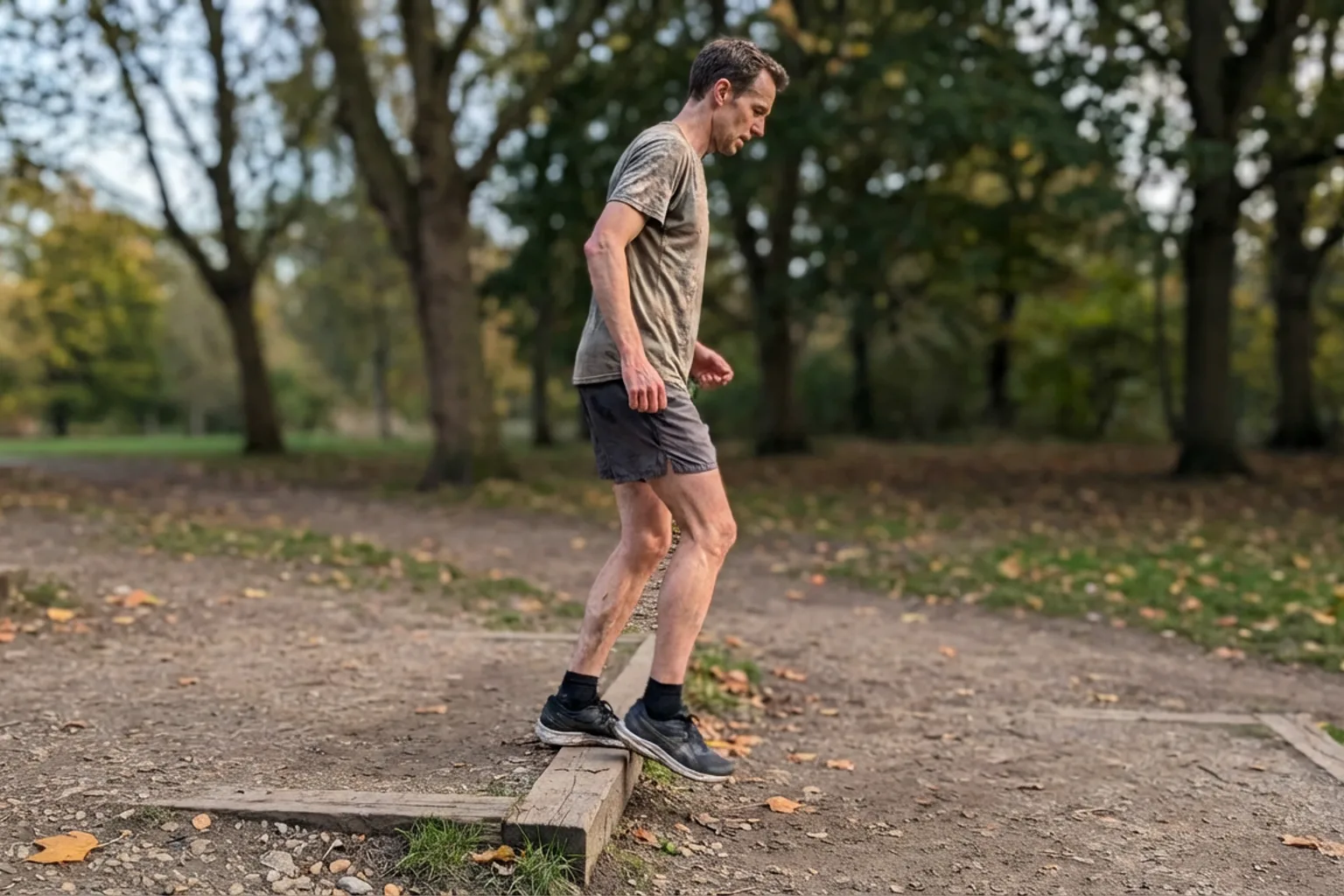
Strong calves help absorb ground reaction forces before they reach the shin. Single-leg calf raises are the gold standard here. Stand on one leg on the edge of a step, lower your heel below the step level, then rise up onto your toes. Do 3 sets of 15 reps on each leg. Add weight (hold a dumbbell) as you get stronger.
Stretch and Mobilise Your Calves and Ankles
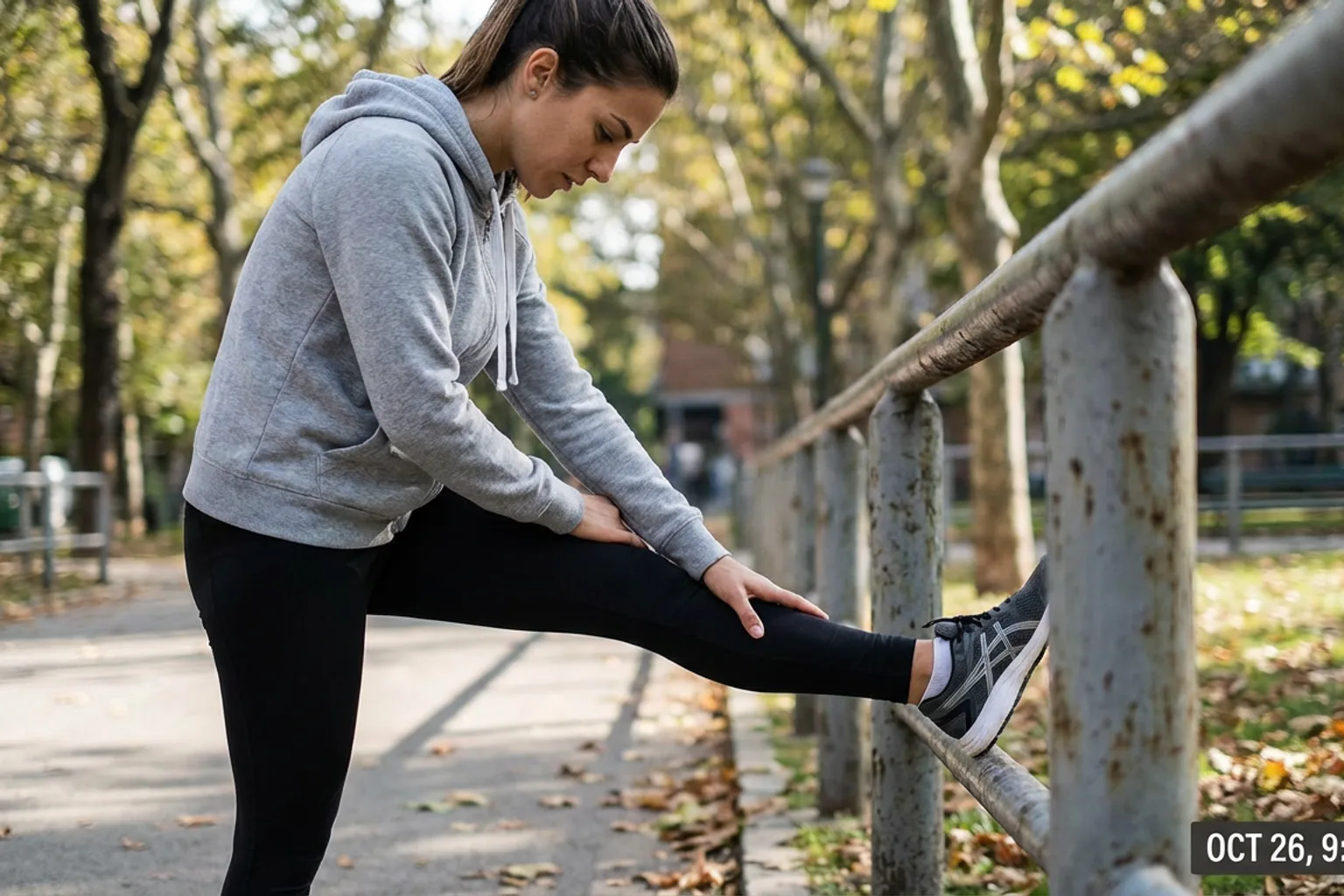
Tight calves restrict ankle dorsiflexion and increase shin stress. Spend time stretching both the gastrocnemius (straight-leg calf stretch) and the soleus (bent-knee calf stretch) daily. Hold each stretch for 30 to 45 seconds, two to three times per side.
Ankle mobility drills, like ankle circles and wall ankle dorsiflexion stretches, are also worth adding to your warm-up routine. Here's the real evidence on stretching and running injury prevention.
Strengthen Your Hips and Glutes
This is often the missing piece. If your hips aren't doing their job, your lower leg takes more stress than it should. Add these to your weekly routine:
- Clamshells: Lie on your side with knees bent. Keep feet together and rotate your top knee upward like a clamshell opening. 3 sets of 20 reps per side.
- Single-leg glute bridges: Lie on your back, one knee bent, one leg straight. Drive through the bent leg to lift your hips. 3 sets of 12 to 15 per side.
- Side-lying leg raises: Lie on your side, leg straight. Lift the top leg to about 45 degrees and lower slowly. 3 sets of 15 per side.
If you want a complete, structured approach to building the strength that protects your shins and the rest of your body, my Bulletproof Runners programme covers exactly this. It's built around the specific strength work runners need to stay injury-free and run stronger for longer.
Fix Your Running Form to Reduce Shin Stress
This is where I see some of the biggest long-term gains. Changing how you run can dramatically reduce the load going through your shins with every step.
Increase Your Cadence
Running cadence is the number of steps you take per minute. Most recreational runners run at around 160 to 165 steps per minute. Research suggests that increasing cadence by around 5 to 10% reduces impact forces significantly and encourages a foot strike closer to your centre of mass.
Try running to a metronome app set at 170 to 175 steps per minute and notice how your stride naturally shortens and your foot lands closer to your body. Here's how to use a metronome to improve your running technique.
Avoid Overstriding
Overstriding, where your foot lands well ahead of your hips, is a major driver of shin pain. It creates a braking force and forces the tibialis anterior to work overtime. Focus on landing with your foot roughly beneath your hips, not out in front. Learn more about overstriding and how to fix it here.
Check Your Stride Width
Running with a very narrow stride (where your feet cross the midline) increases tibial rotation and can worsen medial shin pain. Aim for a slight gap between your feet as you run, roughly hip-width apart. Stride width has a direct effect on shin splints and ITB syndrome, and it's an easy thing to adjust once you're aware of it.
Work on Your Foot Strike
I'm not going to tell you that forefoot striking is the answer to all your problems, because it isn't. But landing with a heavy heel strike and an overstriding gait does put more stress on the anterior shin. A midfoot strike, combined with a higher cadence, tends to reduce this. Make changes gradually. Shifting your foot strike too quickly can transfer stress to the calf and Achilles instead. Here's a balanced look at forefoot running and its effects.
How to Prevent Shin Pain from Coming Back
Once you're pain-free, the goal is to make sure it doesn't happen again. Here's what I recommend to all my runners coming back from shin splints.
Follow the 10% Rule for Mileage Increases
Never increase your weekly mileage by more than 10% from one week to the next. And build in a cutback week every 3 to 4 weeks where you drop mileage by 20 to 30%. This gives your body time to consolidate the adaptations you've been building.
Rotate Your Running Shoes
Having two pairs of running shoes and alternating between them gives the foam more time to decompress between runs. Research has actually shown that runners who rotate shoes have a lower injury rate. It also means you're never suddenly switching from a well-worn shoe to a brand new one, which can be a shock to the system.
Run on Varied Surfaces
Mix up your running surfaces. Include some trail or grass running alongside your road miles. Softer surfaces reduce peak impact forces and give your shins a break. If you live in a city, even choosing a tarmac road over concrete pavement makes a difference.
Warm Up Properly
Don't just step out the door and start running. Spend 5 to 10 minutes on a dynamic warm-up that includes leg swings, ankle circles, and some easy walking before you pick up the pace. Here's a structured running warm-up routine that takes less than 10 minutes and makes a real difference.
Keep Up the Strength Work
The biggest mistake runners make is stopping their strength exercises the moment they feel better. The strength work needs to become part of your ongoing routine, not just a rehab phase. These three exercises for shin splints are worth keeping in your weekly programme permanently.
Get a Gait Analysis
If you keep getting shin pain despite doing everything right, a proper running gait analysis can identify the specific mechanical issue that's driving it. Understanding your running gait cycle is the first step to making targeted, effective changes.
When to See a Physiotherapist
Most cases of shin pain respond well to self-management. But there are clear signs that you need professional input:
- Pain that is very localised (you can point to it with one finger) and doesn't ease as you warm up
- Pain that is present at rest or wakes you at night
- Shin pain that gets progressively worse despite 2 to 3 weeks of reduced training
- Swelling or visible deformity over the shin
- Pain that comes on at a very predictable point in your run and disappears immediately when you stop (possible compartment syndrome)
- Any history of bone stress injuries or low bone density
A physiotherapist or sports medicine doctor can confirm the diagnosis, rule out a stress fracture, and give you a specific rehab plan. Don't wait too long if you're unsure. Getting the right diagnosis early saves a lot of time in the long run.
Shin Pain When Running: FAQ
Should I stop running if my shin hurts?
It depends on the severity. Mild discomfort that eases as you warm up and doesn't get worse during the run can often be managed with reduced mileage and softer surfaces. Sharp or worsening pain during a run is a clear signal to stop. If you suspect a stress fracture based on the signs above, stop running immediately and seek assessment.
How long does shin pain from running take to heal?
Mild shin splints typically improve within 2 to 3 weeks with proper rest and management. Moderate cases take 4 to 6 weeks. A tibial stress fracture needs 6 to 12 weeks of no impact activity. The key variable is how quickly you catch it and how well you manage the load. Here's a detailed breakdown of shin splints recovery time.
Can I run through shin splints?
Running through mild shin splints is possible if you reduce your mileage and intensity significantly, run on softer surfaces, and the pain doesn't worsen during or after your run. Running through moderate to severe shin splints risks progressing to a stress fracture, which means a much longer time off. When in doubt, rest. Read more on running with shin splints here.
Do shin splints go away on their own?
They can, but only if you reduce the load that caused them in the first place. Simply resting without addressing the underlying causes (weak hips, tight calves, poor running form, too-rapid mileage increases) means they'll come back the moment you ramp up training again. Use the recovery period to fix the root cause.
Are shin splints the same as a stress fracture?
No, though they exist on the same continuum. Shin splints involve inflammation of the periosteum (the tissue around the bone). A stress fracture is a small crack in the bone itself. Stress fractures are more serious, take longer to heal, and require proper diagnosis. The key distinguishing signs are very localised point tenderness and pain that doesn't ease with warm-up.
The Bottom Line
Shin pain when running is extremely common, but it's not something you have to just put up with. In my experience coaching runners over the past two decades, the vast majority of cases come down to the same handful of causes: too much too fast, poor running mechanics, weak supporting muscles, and inadequate recovery. Address those things, and most runners are back to full training within a few weeks.
The runners who struggle most are the ones who try to push through it without changing anything, or who rest until it feels better and then go straight back to the same training that caused it. Don't be that runner.
If you want a structured, coach-led approach to building the strength and resilience you need to run without constantly battling injuries, I'd love for you to check out my Bulletproof Runners programme. It's designed specifically for runners who want to train consistently, stay injury-free, and actually enjoy their running without the constant worry of what's going to hurt next. That's the goal. Let's get you there.