Stretches for Runners: 15 Best Stretches to Run Strong
If you've been running for any length of time, you've probably wondered whether stretching actually matters. The short answer? Yes, but only if you do the right stretches at the right time. After 20+ years coaching runners, I've seen more injuries caused by poor stretching habits than by no stretching at all. So let's fix that.
Quick answer: The best stretches for runners target the calves, hamstrings, hip flexors, glutes, quads, and IT band. Do dynamic stretches before you run to warm up, and static stretches after your run to improve flexibility and aid recovery. Hold static stretches for 30 to 45 seconds per side.
This guide covers 15 of the most effective stretches for runners, ordered from the most critical muscle groups to the ones that often get overlooked. Whether you're a beginner building your first routine or an experienced runner dealing with recurring tightness, there's something here for you.
Why Stretches for Runners Actually Matter
I'll be honest with you. The research on stretching is messier than most coaches let on. Some studies show that static stretching before a run can actually reduce power output. Others show no significant injury prevention benefit from stretching alone. I've written about this in more depth over on my does stretching work article if you want the full picture.
But here's what I know from coaching real runners over two decades:
- Tight hip flexors shorten your stride and overload your lower back
- Stiff calves increase your risk of Achilles tendinopathy and plantar fasciitis
- Restricted hip rotation forces compensations up and down the kinetic chain
- Runners who stretch consistently after runs report less soreness and recover faster between sessions
The evidence may be mixed, but the clinical picture I see every week is not. Mobility matters. Stretching, done correctly and at the right time, is worth your time.
Dynamic vs Static Stretches: Which Should You Do?
This is the single most important thing to understand about stretching as a runner.
Dynamic Stretches (Before Your Run)
Dynamic stretches involve controlled movement through a range of motion. They raise your muscle temperature, wake up your nervous system, and prepare your joints for the demands of running. Do dynamic stretches before every run. They're not optional if you want to perform well and stay healthy.
Good examples include leg swings, walking lunges, hip circles, and high knees. I've got a full breakdown of these in my dynamic calf and Achilles warm-up guide and my dynamic quads stretch article.
Static Stretches (After Your Run)
Static stretches involve holding a position to lengthen a muscle. Your muscles are warm after a run, which makes this the ideal time to work on flexibility. Never do prolonged static stretches on cold muscles before a run. Save them for afterwards.
Hold each stretch for 30 to 45 seconds. Breathe slowly. Don't force it. You should feel a gentle pull, not pain.
How Often Should Runners Stretch?
After every run, ideally. I know that's not always realistic. But even 10 minutes of targeted stretching after your harder sessions will make a noticeable difference over time. If you're short on time, prioritise the areas that feel tightest for you personally.
For a more detailed look at how to structure your mobility work alongside your training, read my guide on how often runners should do strength and mobility exercises.
Key Muscle Groups Every Runner Needs to Stretch
Before we get into the stretches themselves, here's a quick overview of the areas we're targeting and why:
- Calves and Achilles: Take enormous load with every footstrike
- Hamstrings: Commonly tight in runners, affecting stride length and lower back health
- Hip flexors: Shortened by sitting and by running itself, restricting your stride
- Glutes: Critical for propulsion and knee stability
- Quads: Absorb huge forces on downhill running and during the landing phase
- IT band and TFL: A major source of lateral knee pain in runners
- Adductors and groin: Often neglected but important for hip stability
- Lower back and thoracic spine: Affect your posture and arm drive
- Shins and ankles: Frequently overlooked until something goes wrong
The 15 Best Stretches for Runners
1. Standing Calf Stretch (Gastrocnemius)
Why it matters: Your calves absorb roughly 2.5 times your body weight with every stride. Tight calves are one of the leading contributors to Achilles tendinopathy, plantar fasciitis, and even knee pain. This is the stretch I recommend to almost every runner I work with.

How to do it:
- Stand facing a wall with both hands on it for balance
- Step one foot back so your heel is flat on the floor
- Keep your back knee straight and lean gently into the wall
- You'll feel the stretch through the back of your lower leg
- Hold for 30 to 45 seconds, then switch sides
I've put together a more detailed guide with multiple variations in my 3D calf and soleus stretches article, which is well worth reading if calf tightness is a recurring issue for you.
2. Bent-Knee Calf Stretch (Soleus)
Why it matters: Most runners only stretch the gastrocnemius (the big upper calf muscle). But the soleus sits underneath it and is just as important. Tight soleus is a key driver of Achilles pain, particularly the insertional type at the heel bone.

How to do it:
- Start in the same position as the standing calf stretch
- This time, bend your back knee slightly while keeping your heel on the floor
- Lean gently forward to increase the stretch lower in the calf
- Hold for 30 to 45 seconds per side
If you want to build strength here too, check out my soleus strength exercises for runners.
3. Kneeling hip flexor stretch
Why it matters: This is probably the most important stretch for runners who sit at a desk. Tight hip flexors pull your pelvis into an anterior tilt, which compresses your lower back and shortens your running stride. I've seen this pattern cause problems from lower back pain all the way down to knee issues.
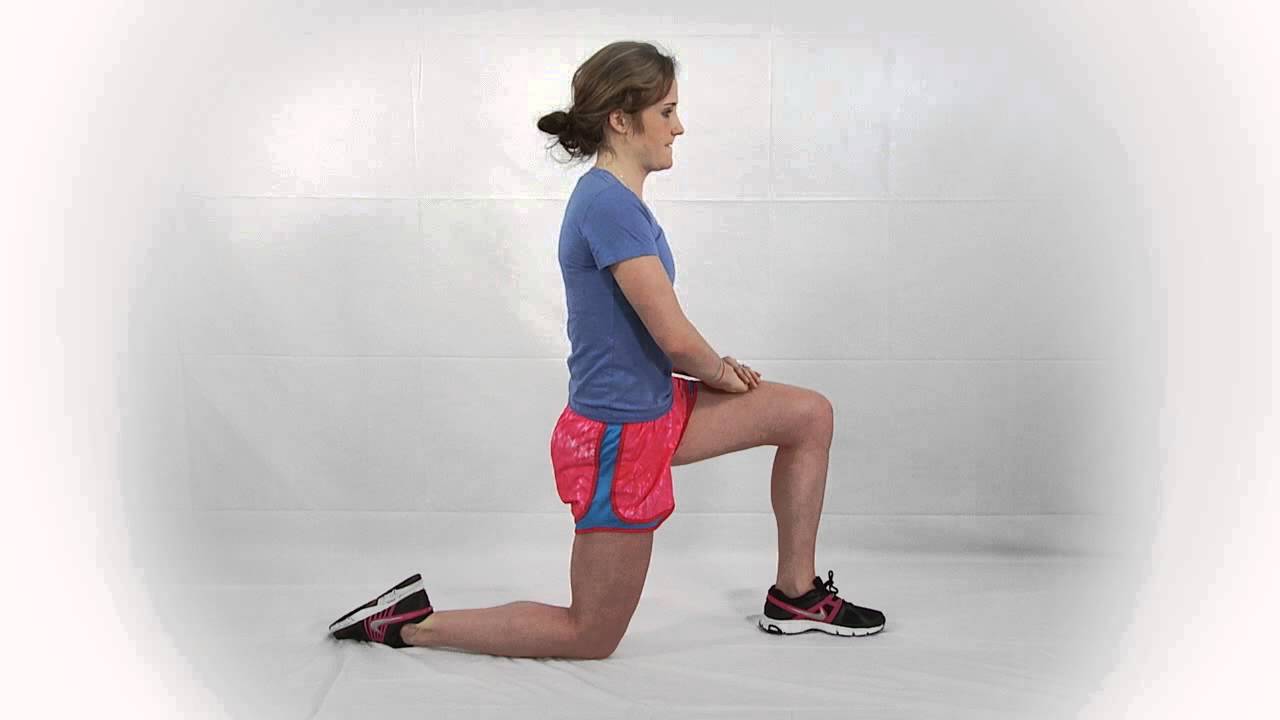
How to do it:
- Kneel on one knee with the other foot forward (like a lunge position)
- Keep your torso upright and gently push your hips forward
- You should feel a stretch through the front of the hip on the kneeling leg
- To deepen it, raise the arm on the same side as your kneeling knee overhead
- Hold for 30 to 45 seconds, then switch sides
The key mistake I see here is letting the lower back arch. Keep your core lightly engaged and tuck your pelvis slightly under. Read more about this in my hip flexor stretching guide.
4. Supine Hamstring Stretch
Why it matters: Tight hamstrings are almost universal in runners. They limit your stride length, increase your risk of hamstring strains, and contribute to lower back pain. The lying version is my preferred option because it removes the risk of rounding your lower back, which is a very common mistake in standing hamstring stretches.

How to do it:
- Lie on your back with both knees bent
- Lift one leg and hold behind the thigh (or use a resistance band or towel around your foot)
- Slowly straighten the knee until you feel a stretch through the back of the thigh
- Keep your lower back flat on the floor throughout
- Hold for 30 to 45 seconds, then switch sides
There's a very common mistake runners make with this stretch that actually makes it less effective. I've covered it in detail in my hamstring stretch for runners article.
5. Standing Quad Stretch
Why it matters: Your quadriceps work hard to control knee flexion during landing, especially on downhill terrain. Tight quads pull on the kneecap and can contribute to runner's knee (patellofemoral pain). This stretch is particularly important after hilly runs or races with significant descent.

How to do it:
- Stand on one leg (use a wall for balance if needed)
- Bend the other knee and hold your ankle behind you
- Keep your knees together and stand tall
- Gently push your hip forward to increase the stretch
- Hold for 30 to 45 seconds per side
6. Figure-Four Glute Stretch
Why it matters: The glutes are the engine of your running stride. When they're tight, you'll feel it in your hips, your lower back, and often down into the back of your leg. This stretch targets the gluteus maximus and the deep hip rotators simultaneously.
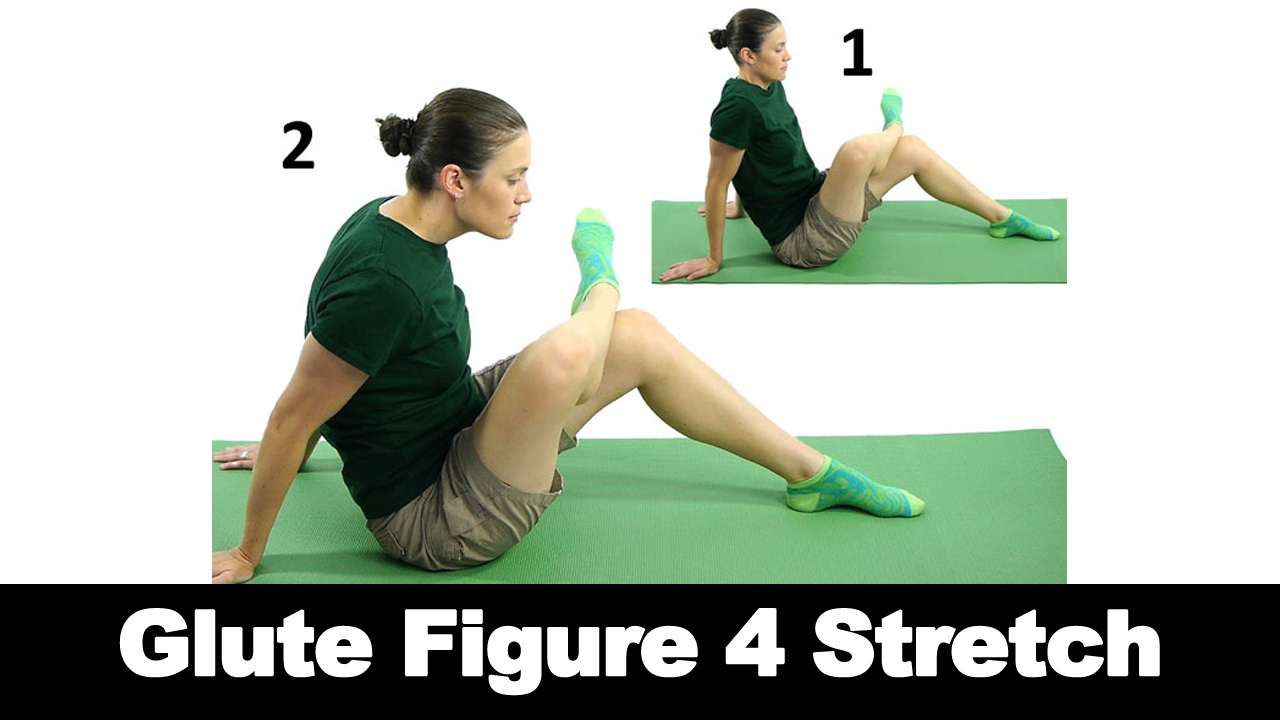
How to do it:
- Lie on your back with both knees bent and feet flat on the floor
- Cross one ankle over the opposite knee to form a figure-four shape
- Either stay here, or lift the bottom foot off the floor and draw both legs towards your chest
- Hold for 30 to 45 seconds, then switch sides
For a more advanced version of this, try the figure-four piriformis stretch, which also targets the deep hip rotators more specifically.
7. Pigeon Pose (Hip Rotator Stretch)
Why it matters: If you deal with sciatica-type symptoms, a deep ache in the buttock, or lateral hip tightness, pigeon pose is often the most effective stretch you can do. It targets the piriformis and other deep hip rotators that are notoriously difficult to reach.
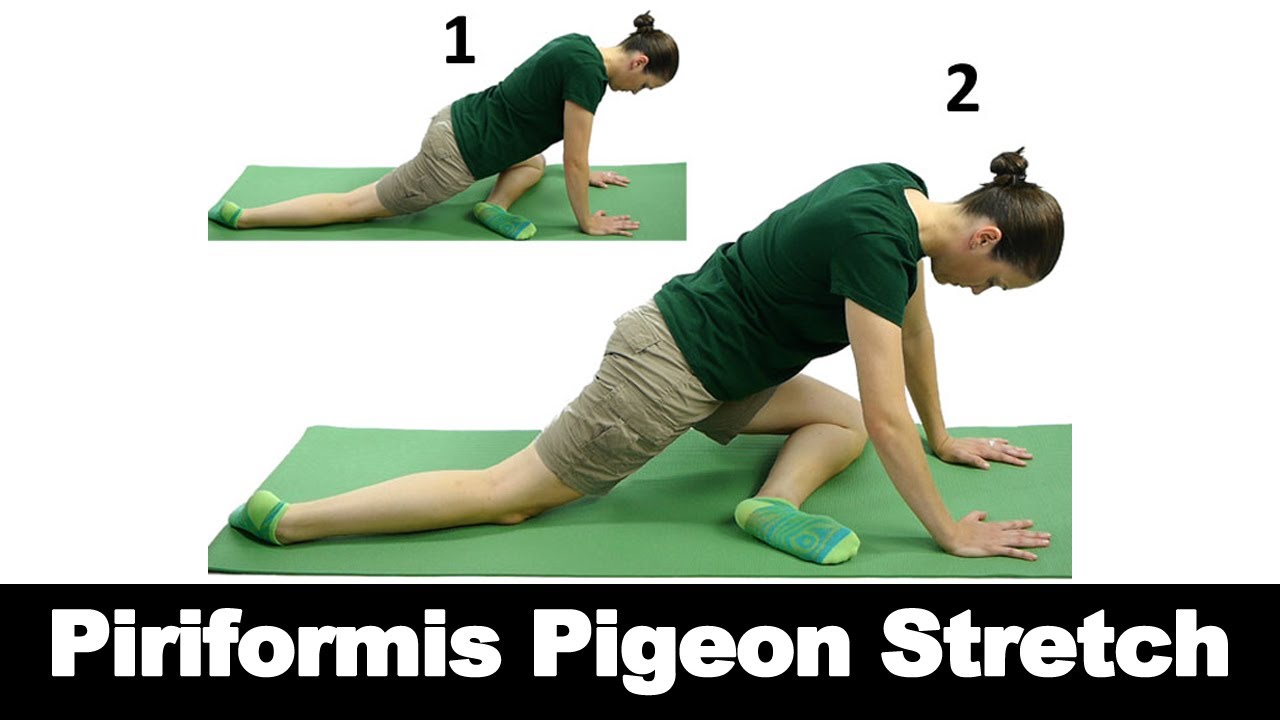
How to do it:
- Start in a press-up position
- Bring one knee forward and place it behind your wrist, with your shin angled across your body
- Extend the other leg straight back behind you
- Lower your hips towards the floor and, if comfortable, fold forward over your front shin
- Hold for 45 to 60 seconds per side
If this feels too intense, the figure-four stretch above is a great alternative. I've also written a specific guide to the active piriformis stretch for runners if you want a more targeted approach.
8. TFL Stretch
Why it matters: IT band syndrome is one of the most common running injuries I see in clinic. The IT band itself isn't really a muscle you can stretch, but the tensor fascia latae (TFL) at the top of it absolutely responds to stretching. Releasing the TFL is the most effective way to reduce tension through the lateral line.
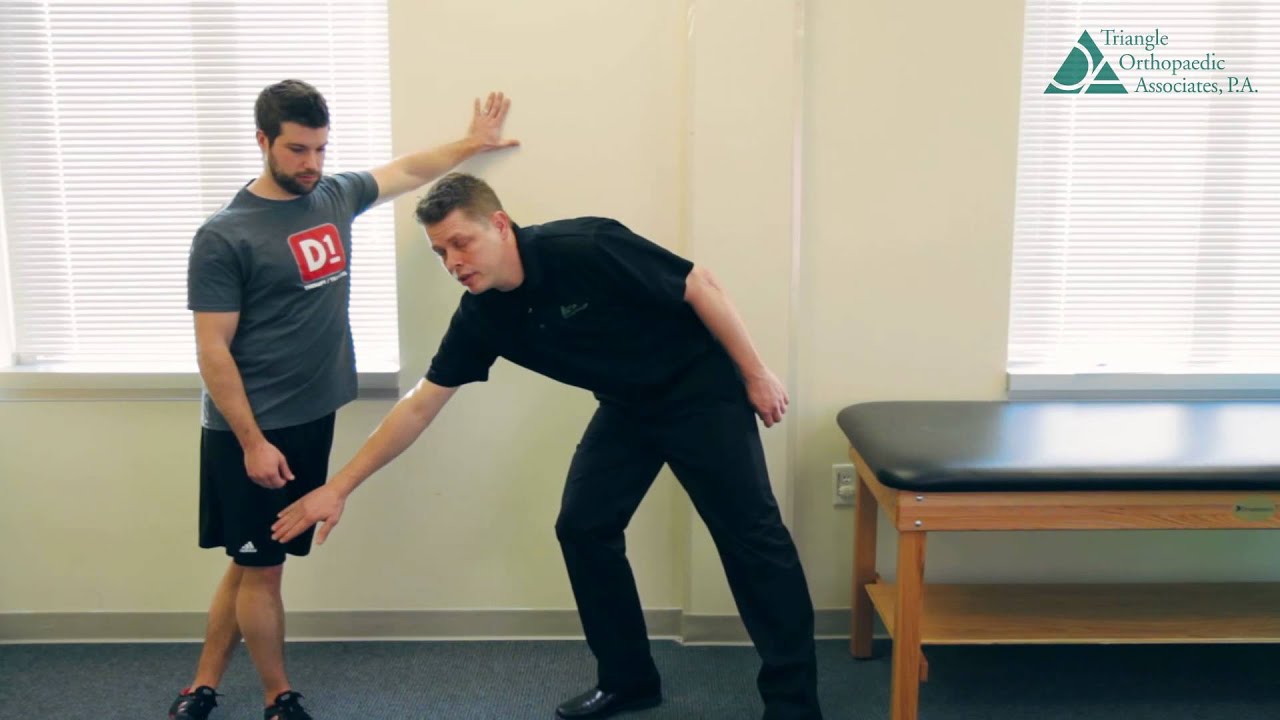
How to do it:
- Stand with your feet together
- Cross one foot behind the other
- Reach the arm on the same side as the back foot up and over to the opposite side
- Lean gently to feel a stretch along the outer hip and thigh
- Hold for 30 to 45 seconds, then switch sides
For more on managing this area, read my full guide on TFL stretches for runners and my IT band syndrome treatment article.
9. Adductor (Groin) Stretch
Why it matters: The adductors are massively underappreciated in runners. They work hard to stabilise your pelvis during the single-leg stance phase of running. Tight adductors contribute to groin strains, medial knee pain, and even lower back problems.
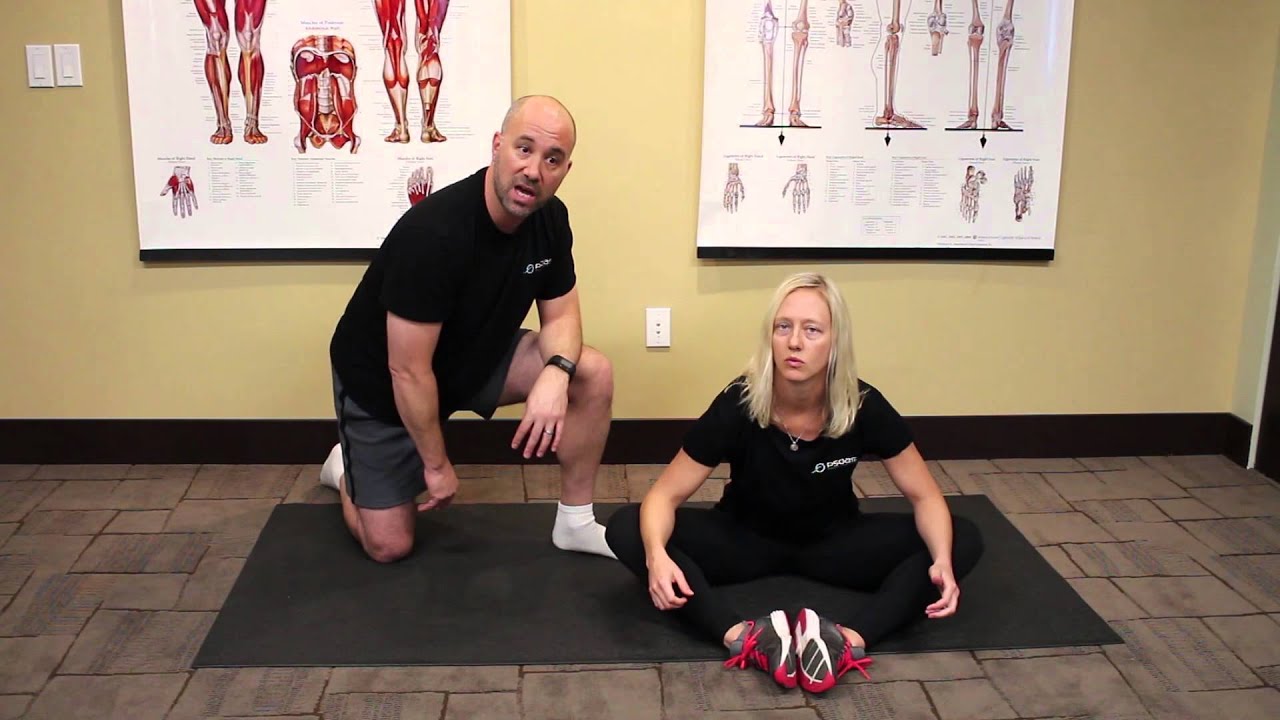
How to do it:
- Sit on the floor and bring the soles of your feet together in front of you (cobbler's pose)
- Hold your feet with your hands and sit tall
- Gently press your knees towards the floor using your elbows
- Hold for 30 to 45 seconds
For a deeper variation and more adductor mobility work, try the frog stretch or visit my full adductor stretch guide for runners.
10. Lying Glute and Lower Back Stretch (Knee Crossover)
Why it matters: Lower back tightness is incredibly common in runners, especially those who run high mileage or sit for long periods. This stretch targets both the glutes and the lower back in one movement and is one of the most satisfying stretches you can do at the end of a long run.
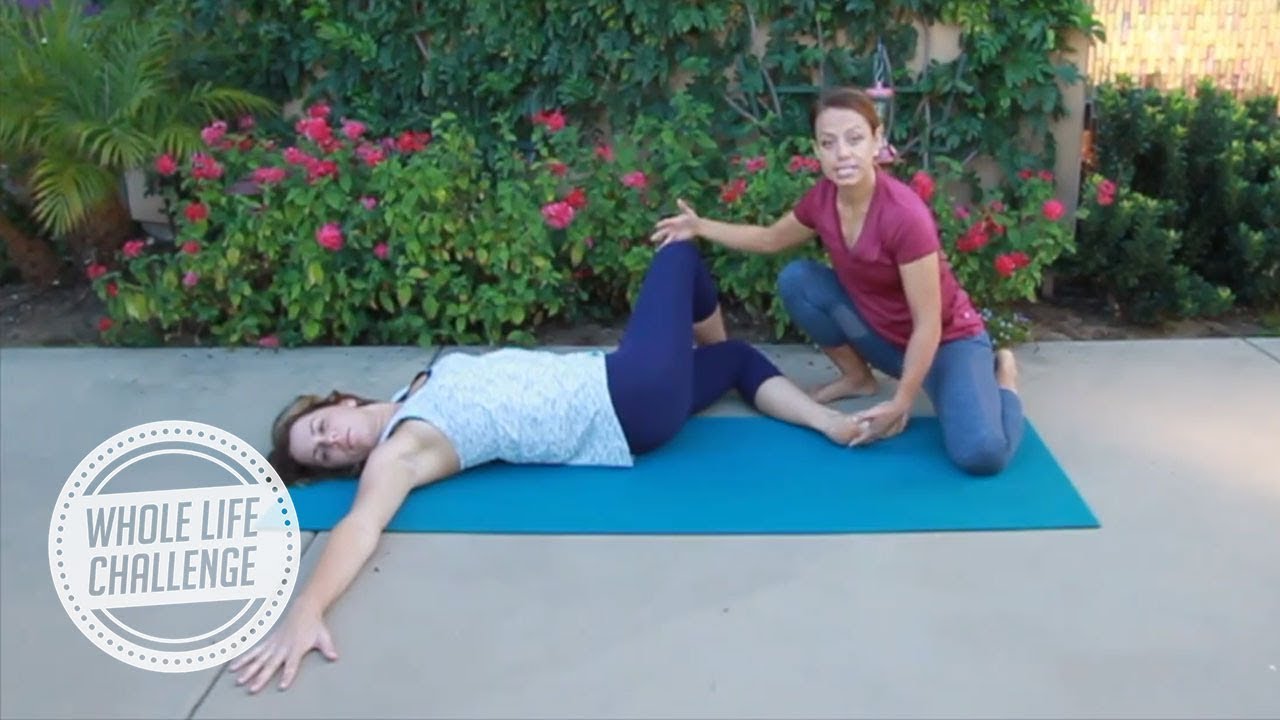
How to do it:
- Lie on your back with both knees bent
- Let both knees fall slowly to one side, keeping your shoulders flat on the floor
- Hold for 30 to 45 seconds, then rotate to the other side
If lower back tightness is something you deal with regularly, my full lower back stretches for runners guide covers this in much more detail.
11. Lateral Hip and Glute Stretch
Why it matters: This stretch targets the gluteus medius and the lateral hip, both of which work overtime during running to keep your pelvis level. When these muscles are tight, you'll often see a Trendelenburg drop (hip dipping to one side) which creates a cascade of problems down the leg.
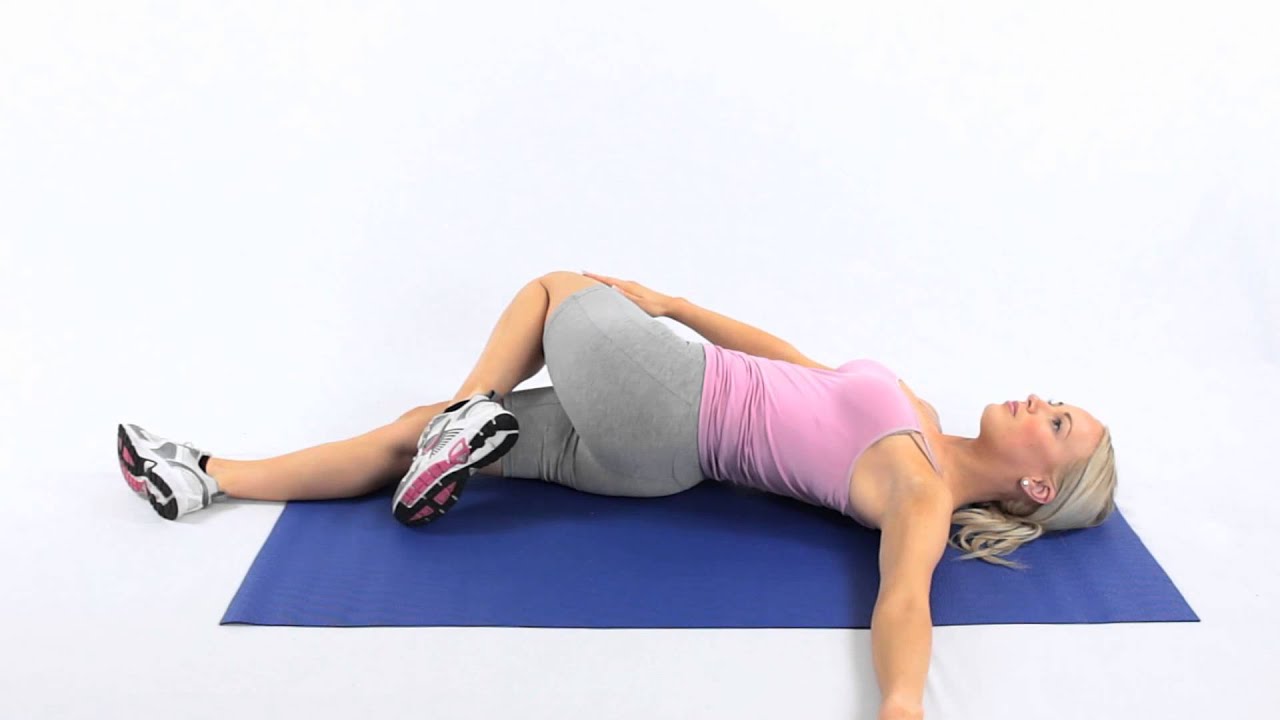
How to do it:
- Lie on your back
- Bring one knee across your body towards the opposite shoulder
- Keep the opposite shoulder flat on the floor
- Hold for 30 to 45 seconds per side
I've got a specific guide to the lateral hip and low back stretch for runners if you want to explore this further.
12. Standing Forward Fold (Hamstrings and Lower Back)
Why it matters: This is a great all-in-one stretch that targets the hamstrings, calves, and lower back simultaneously. It's also one of the easiest to do anywhere, which makes it a great option when you're short on time or space.

How to do it:
- Stand with your feet hip-width apart
- Slowly hinge forward from the hips, letting your arms hang towards the floor
- Bend your knees slightly if your hamstrings are very tight
- Let your head and neck relax completely
- Hold for 30 to 45 seconds
The key here is to hinge from the hips rather than rounding through the lower back. Think about leading with your chest as you fold forward.
13. Downward-Facing Dog
Why it matters: This yoga pose is one of the best full-posterior-chain stretches a runner can do. It targets the calves, hamstrings, glutes, and thoracic spine all at once. I recommend it to runners who want to get more done in less time.
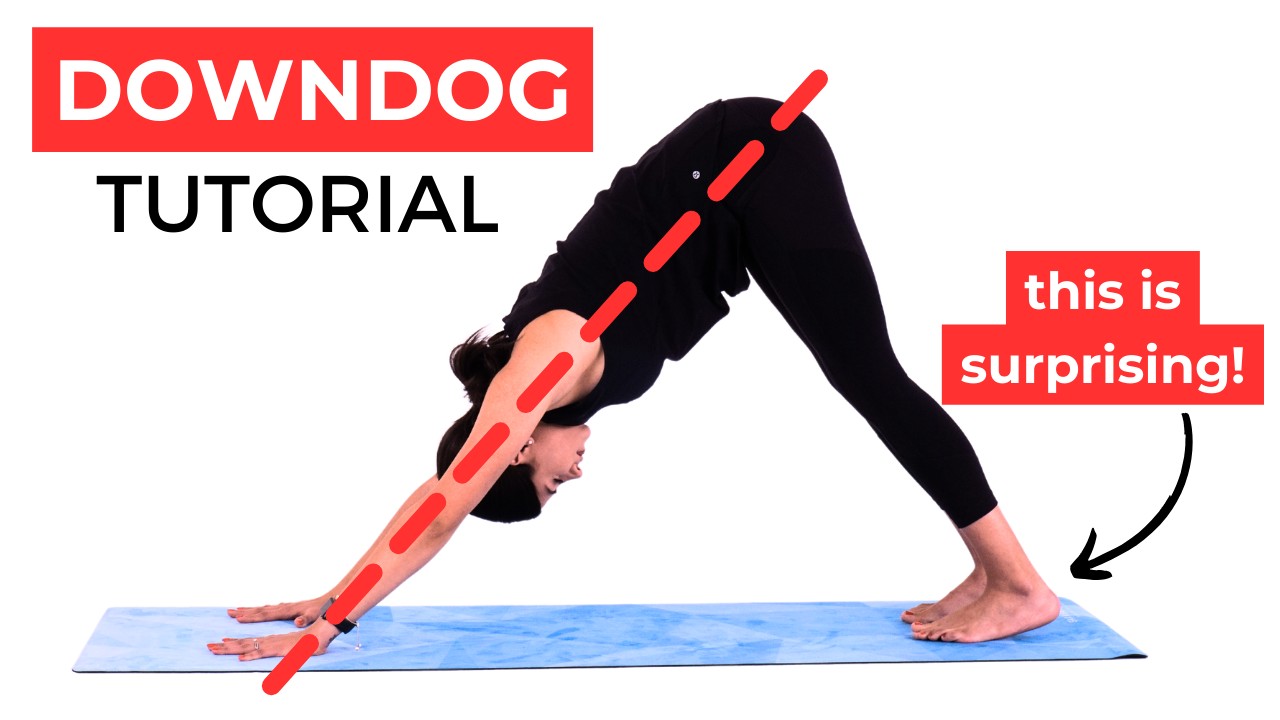
How to do it:
- Start on all fours with your hands shoulder-width apart
- Press through your hands and lift your hips up and back
- Try to straighten your legs and press your heels towards the floor
- Alternate bending one knee at a time to pedal through the calves
- Hold for 30 to 60 seconds
14. Upper Back and Thoracic Spine Stretch
Why it matters: This one surprises a lot of runners. Most people focus entirely on the legs, but your upper back posture directly affects your running economy. A stiff thoracic spine limits your arm drive and forces your lower back to compensate. Over time, this creates fatigue and pain.
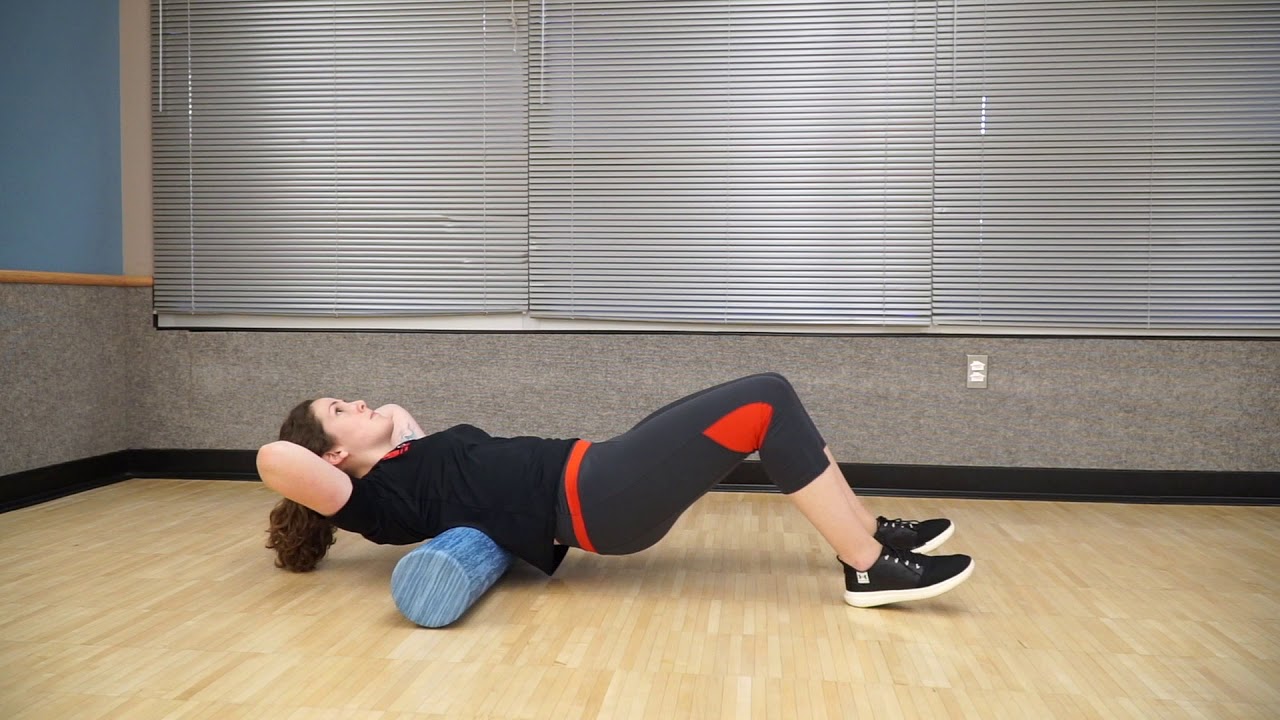
How to do it:
- Sit on the floor with your knees bent and feet flat
- Place your hands behind your head and gently arch backwards over your hands
- Alternatively, use a foam roller placed horizontally under your mid-back and gently extend over it
- Hold each position for 20 to 30 seconds
I've written a full guide to the upper back stretch for runners if this is an area you want to work on. And for a broader approach to spinal mobility, my back mobility exercises for runners article is a great starting point.
15. Ankle and Shin Stretch
Why it matters: Ankle mobility is one of the most overlooked areas in runner flexibility. Restricted ankle dorsiflexion (the ability to pull your toes towards your shin) alters your foot strike, loads your Achilles more heavily, and can even contribute to knee and hip problems further up the chain.
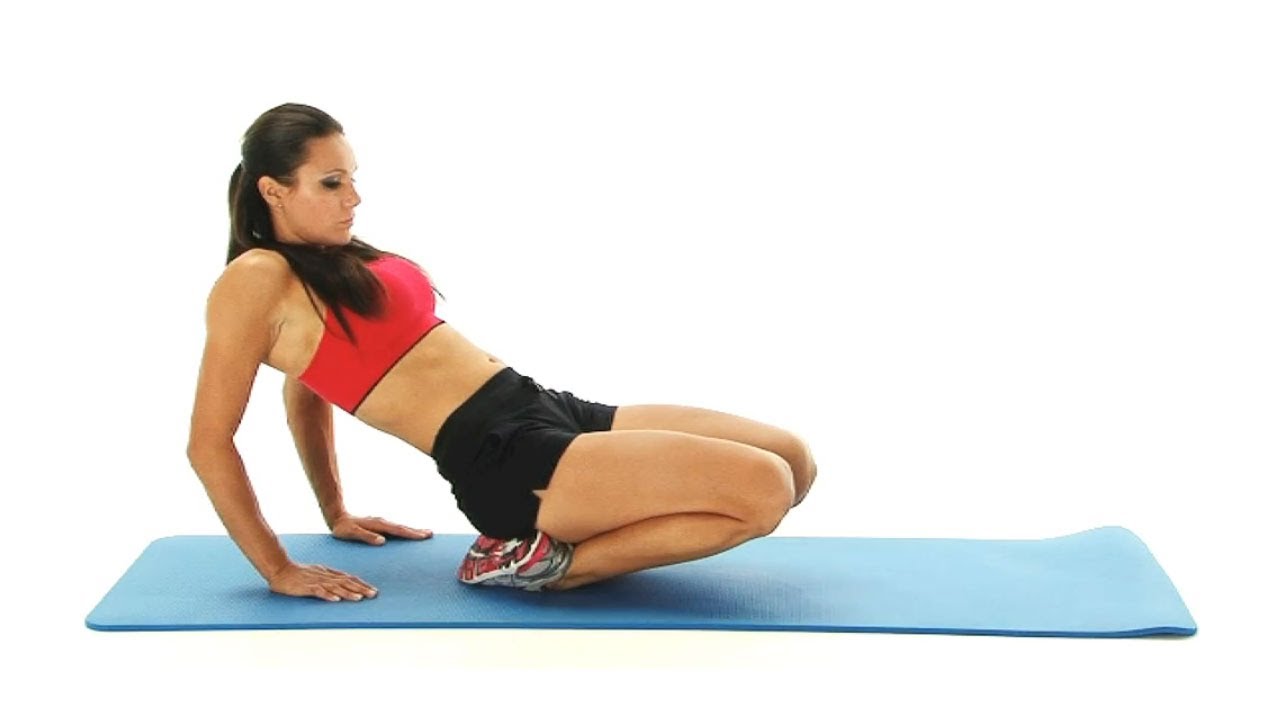
How to do it:
- Kneel on the floor and sit back towards your heels (heel sits)
- This stretches the shins and the top of the foot
- For the ankle itself, kneel with one foot forward and gently drive your knee over your toes
- Hold each position for 20 to 30 seconds per side
For more ankle-specific work, my quick ankle mobility exercises for runners and foot and ankle mobility drill are both worth bookmarking.
Pre-Run Dynamic Stretches: A Quick Routine
Now that we've covered post-run static stretches, here's a quick dynamic warm-up routine you can do before every run. Each movement should take 30 to 60 seconds.
- Leg swings (front to back): 10 to 15 reps per leg, holding a wall for balance
- Leg swings (side to side): 10 to 15 reps per leg
- Walking lunges: 10 reps per leg, focusing on a full hip extension at the back
- Hip circles: 10 reps each direction per leg
- High knees: 20 to 30 seconds at a controlled pace
- Ankle circles and calf raises: 10 to 15 reps per foot
For a more structured pre-run warm-up, take a look at my multiplanar hamstring and hip flexor stretches guide, which adds an important three-dimensional element to your warm-up.
Common Mistakes Runners Make When Stretching
I've watched thousands of runners stretch over the years. Here are the mistakes I see most often:
- Stretching cold muscles: Static stretching before your run, without warming up first, increases injury risk. Always warm up first or save static stretches for after.
- Bouncing through stretches: Ballistic or bouncy movements trigger the stretch reflex and can cause micro-tears. Move slowly and hold steadily.
- Holding stretches for too long before a run: Even if you do static stretches after a warm-up, holding them for more than 60 seconds can temporarily reduce muscle power. Keep it to 30 seconds pre-run.
- Ignoring one side: Most runners have a tighter side. Spend a little extra time on it rather than rushing through both sides equally.
- Stretching through pain: A gentle pull is fine. Sharp or stabbing pain is not. If something hurts, stop and get it assessed.
- Skipping the upper body: Runners are not just legs. Your thoracic spine, shoulders, and even your chest affect your running posture and economy.
Should You Stretch Every Day?
Yes, if you can. Even on rest days, 10 minutes of gentle stretching keeps your tissues pliable and your joints mobile. Think of it as maintenance, not just recovery.
The runners I've coached who make the biggest long-term progress are almost always the ones who treat their mobility work with the same respect as their running sessions. It's not glamorous. But it works.
If you want to go beyond stretching and build real resilience as a runner, pair your flexibility work with a structured strength training programme for distance runners. Flexible muscles that are also strong are far more resistant to injury than flexible muscles alone.
Stretching for Runners Over 40
Here's something I tell every masters runner I work with: flexibility becomes more important, not less, as you get older. The research backs this up. Connective tissue becomes less elastic with age, and recovery takes longer. That means your post-run stretching routine deserves more attention as the years go by, not less.
If you're a runner over 40, I'd suggest extending your post-run stretching to 15 to 20 minutes and paying particular attention to hip flexors, calves, and thoracic spine mobility. These three areas tend to deteriorate fastest with age and have the biggest impact on running economy.
Frequently Asked Questions
Should I stretch before or after running?
Do dynamic stretches before running to warm up your muscles and prepare your joints. Save static stretches for after your run when your muscles are warm and pliable. Doing prolonged static stretches before a run can temporarily reduce muscle power and may increase injury risk on cold muscles.
How long should I hold a stretch when running?
Hold static post-run stretches for 30 to 45 seconds per side. This is long enough to allow the muscle to relax and lengthen without causing discomfort. For particularly tight areas, you can extend to 60 seconds. Anything shorter than 20 seconds is unlikely to produce a lasting flexibility benefit.
What are the best stretches for runners with tight hips?
The kneeling hip flexor stretch, pigeon pose, figure-four glute stretch, and cobbler's pose (adductor stretch) are the four most effective stretches for tight hips in runners. Combine these with glute strengthening exercises to address the root cause of hip tightness, not just the symptom.
Can stretching prevent running injuries?
The evidence is mixed, but stretching can help maintain range of motion, reduce muscle tension, and support recovery between sessions. Combined with strength training and good running form, regular stretching is part of a well-rounded injury prevention strategy. Stretching alone is not a magic bullet, but ignoring flexibility entirely is a mistake most experienced runners learn to regret.
Is it okay to stretch every day as a runner?
Yes. Daily stretching is safe and beneficial for most runners. On easy or rest days, a gentle 10 to 15 minute routine targeting your tightest areas is ideal. You don't need to do every stretch every day. Focus on what your body needs most on a given day, and listen to how you feel.
Build Your Post-Run Stretching Routine
You don't need to do all 15 stretches after every single run. That's not realistic, and it's not necessary. Instead, build a core routine of 5 to 7 stretches that target your personal tight spots, and rotate through the full list weekly.
Here's a simple 10-minute post-run routine to get you started:
- Standing calf stretch (gastrocnemius): 45 seconds each side
- Bent-knee calf stretch (soleus): 45 seconds each side
- Kneeling hip flexor stretch: 45 seconds each side
- Supine hamstring stretch: 45 seconds each side
- Figure-four glute stretch: 45 seconds each side
- Lying knee crossover (lower back): 30 seconds each side
That's it. Six stretches. Ten minutes. Done consistently after every run, this routine will make a meaningful difference to how you feel, how you move, and how quickly you recover.
The best stretches for runners are the ones you actually do. Start simple, be consistent, and build from there. Your future self, the one who's still running strong at 50, 60, or beyond, will thank you for it.