Can I Run With Runner's Knee? Your Complete Guide to Running Through PFPS
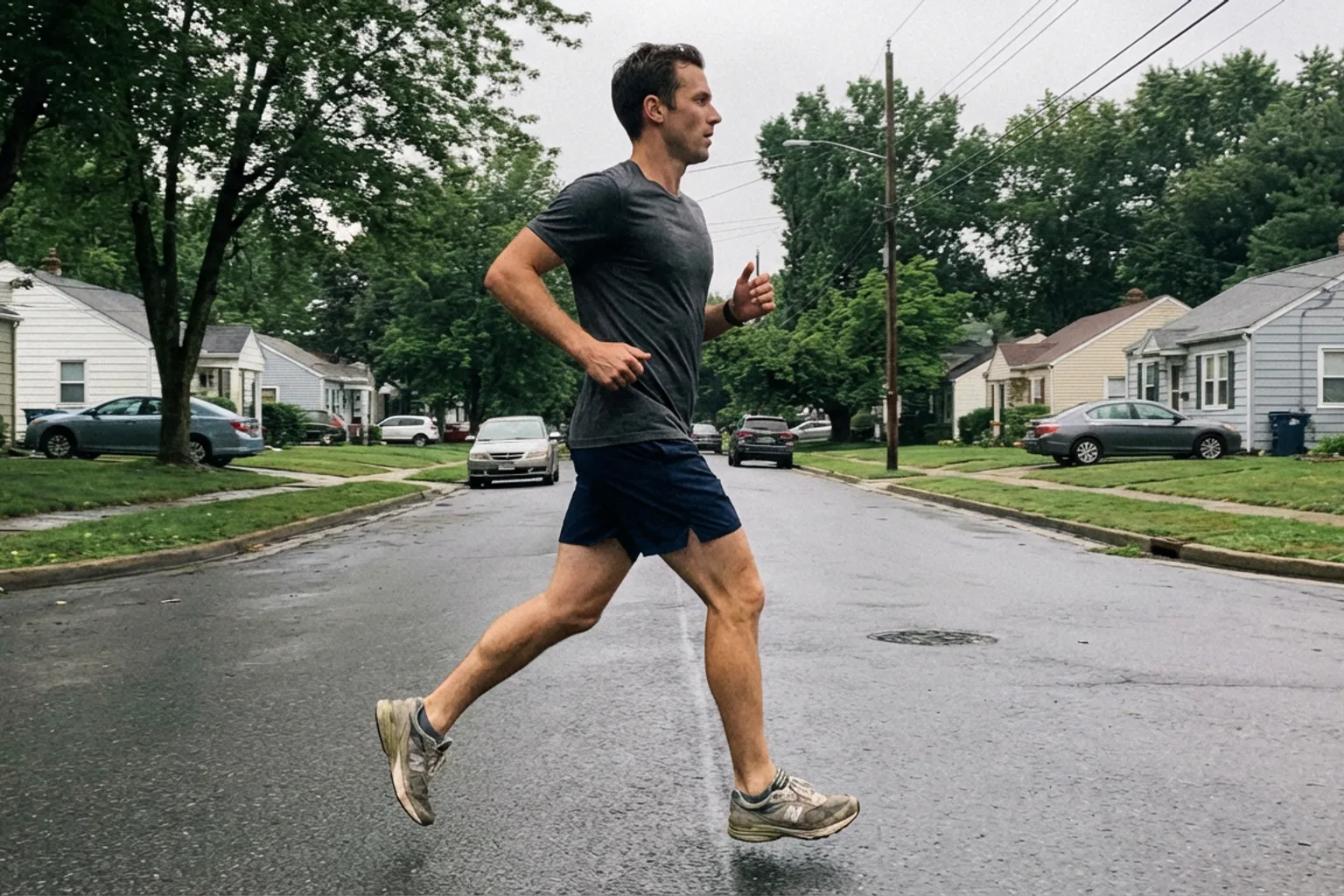
You've felt it. That dull, nagging ache around your kneecap that shows up mid-run or lingers on the stairs afterwards. And now you're staring at your training plan wondering: can I run with runner's knee, or do I need to stop completely?
I get it. I've coached hundreds of runners through this exact situation, and the frustration is real. You've got a race on the horizon, a training streak you don't want to break, or you simply love running and the thought of stopping feels awful.
Here's the honest answer: sometimes you can keep running, and sometimes you really shouldn't. The difference matters enormously. Get it wrong and you can turn a two-week setback into a three-month nightmare. I've seen it happen more times than I'd like.
This guide will walk you through exactly how to make that call, what to do right now to ease the pain, and how to build back properly so runner's knee stops coming back. If you want a full structured programme to tackle this once and for all, I'd also point you towards Bulletproof Runners, my online training membership built specifically to help runners like you get strong, stay healthy, and run for the long term.
But first, let's make sure we're talking about the right injury.
What Is Runner's Knee?
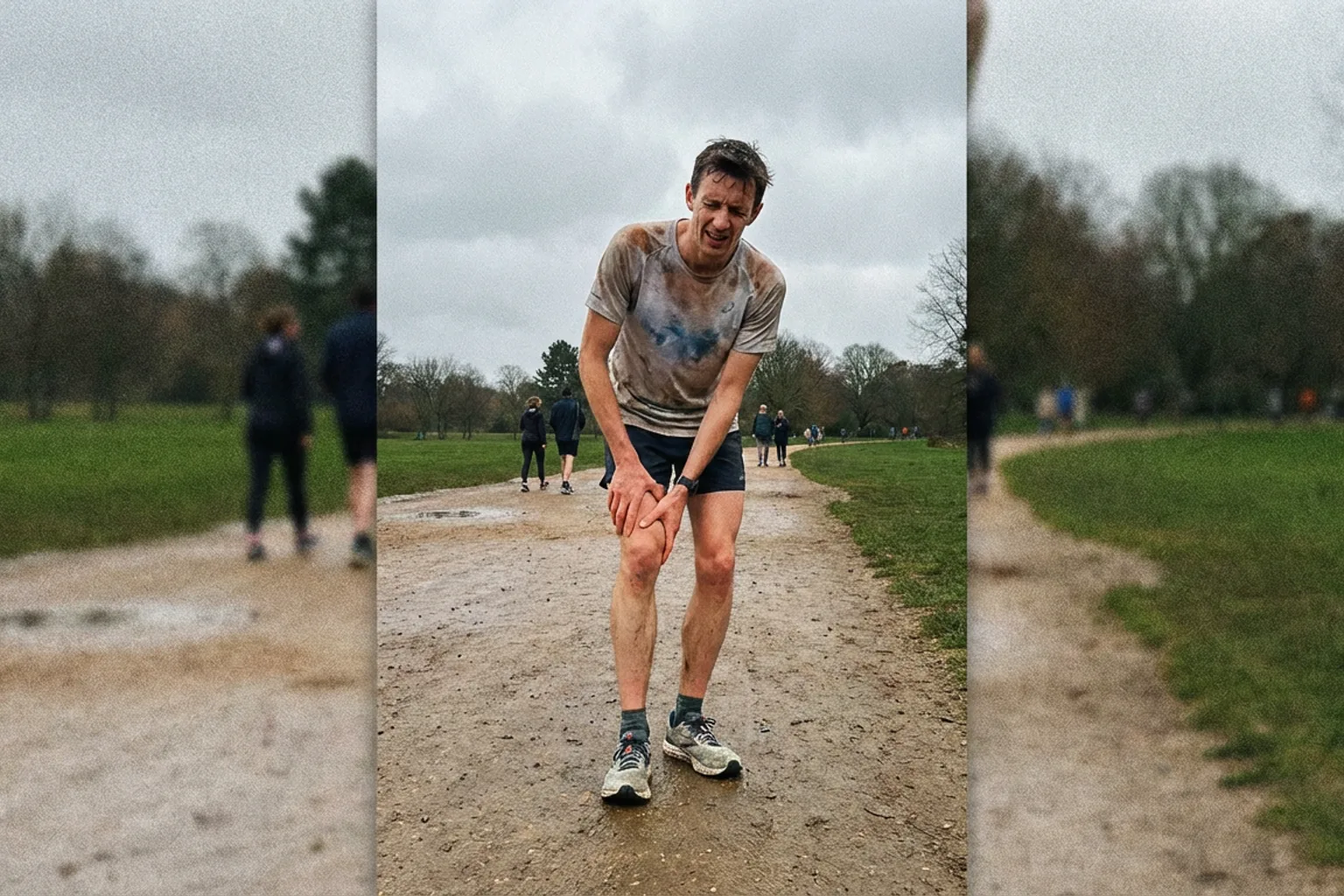
Runner's knee is the common name for patellofemoral pain syndrome (PFPS), a condition that causes pain around or behind the kneecap where it meets the thigh bone (femur). It's one of the most frequently seen running injuries out there, affecting somewhere between 19 and 30% of female runners and 13 to 25% of male runners according to published research.
The kneecap sits in a groove on the femur and glides up and down as your knee bends and straightens. When that tracking goes wrong, even slightly, the cartilage on the underside of the kneecap gets irritated. Over time, that irritation becomes pain. Pretty simple mechanism, but the knock-on effects aren't simple at all.
One thing worth flagging: "runner's knee" gets used pretty loosely to describe several different knee problems. Here, I'm talking specifically about patellofemoral pain syndrome. If you're not sure whether that's what you have, check out my guide on runner's knee or something else before going any further. No point spending weeks treating the wrong thing.
What Does Runner's Knee Feel Like?
The symptoms are usually pretty recognisable. You'll typically notice:
- A dull, aching pain at the front of the knee, around or behind the kneecap
- Pain that gets worse going downstairs or downhill
- Discomfort after sitting for a long time with bent knees (sometimes called the "cinema sign")
- Tenderness when you press directly on or around the kneecap
- Pain that builds during a run, especially as you get tired
- Occasional clicking, grinding, or popping around the knee
- Stiffness after rest that eases as you warm up
For a deeper look at how PFPS presents, read my article on what patellofemoral pain syndrome feels like.
What Causes Runner's Knee?
This is where most articles give you a vague list and leave you none the wiser. I'd rather be more specific, because understanding your cause is the key to fixing it. There's genuinely no point just treating the knee in isolation.
For a thorough breakdown, read my full article on what causes runner's knee. But here's the short version.
Weak Glutes and Hip Muscles
This is the big one, to be honest. Weak glutes mean your hip drops and your thigh rotates inward when you land. That shifts the load on your kneecap sideways, and the tracking goes wrong. I've written an entire piece on whether stronger glutes reduce your risk of runner's knee, and the research is pretty convincing.
Weak Quads, Especially the VMO
The vastus medialis oblique (VMO) is the teardrop-shaped muscle on the inner side of your thigh. It plays a key role in keeping your kneecap tracking correctly. When it's weak relative to the outer quad, the kneecap gets pulled off course. This is also covered in my guide on common deficits associated with patellofemoral pain.
Poor Foot Mechanics
Flat feet, excessive pronation, or limited ankle mobility can all shift load up the chain to the knee. Orthotics for runner's knee can help in some cases, though they're rarely the complete solution on their own.
Training Errors
Ramping up mileage too fast is probably the most common trigger I see in my coaching work. The 10% rule exists for a reason. Adding too much too soon, especially hills or speed work, overwhelms the patellofemoral joint before it's ready for it.
Running Form Issues
Overstriding, excessive forward lean, or a narrow step width can all increase stress on the kneecap. Gait retraining is genuinely effective for PFPS, which I cover in detail in my article on gait retraining for runner's knee.
Tight Tissues
Tight hip flexors, a tight IT band, or tight lateral retinaculum (the connective tissue on the outside of the kneecap) can all pull the patella off-track. Flexibility work helps, but it's rarely enough on its own. Don't make it your whole strategy.
Can I Run With Runner's Knee? The Honest Answer
Here's the thing most articles dance around: the answer depends entirely on your pain level and how your knee responds to running.
I use a simple traffic light system with the runners I coach. It's not complicated, but it works.
Green Light: Mild Pain (0-3 out of 10)
If your pain is mild, doesn't get worse during the run, and settles back to your normal baseline within 30 minutes of finishing, you can usually continue running with modifications. Cut your mileage, avoid hills and speed sessions, and run on softer surfaces where possible.
The key phrase there is "doesn't get worse during the run." If pain starts at a 2 and stays at a 2, that's manageable. If it starts at a 2 and climbs to a 5 by mile three, you need to stop. Sounds straightforward, but you'd be amazed how many runners talk themselves out of following that rule.
Amber Light: Moderate Pain (4-6 out of 10)
Take a few days off running. Use this time to focus on strength work and low-impact cross-training like cycling or swimming. Return to running only when your pain has dropped back into the green zone. Trying to push through moderate pain almost always extends your total recovery time. Not ideal, but that's the reality.
Red Light: Severe Pain (7 out of 10 or above)
Stop running. Full stop. Severe pain means the joint is significantly irritated, and continuing will make things worse. See a physiotherapist as soon as you can.
The rule I give every runner I coach: if you're limping, compensating, or altering your gait to manage the pain, you should not be running. Running through a limp doesn't just risk your knee. It creates new problems elsewhere in the body. I've seen runners develop hip issues, calf strains, and plantar fasciitis all because they kept going on a painful knee. Don't go there.
Red Flags: When to Stop Running Immediately
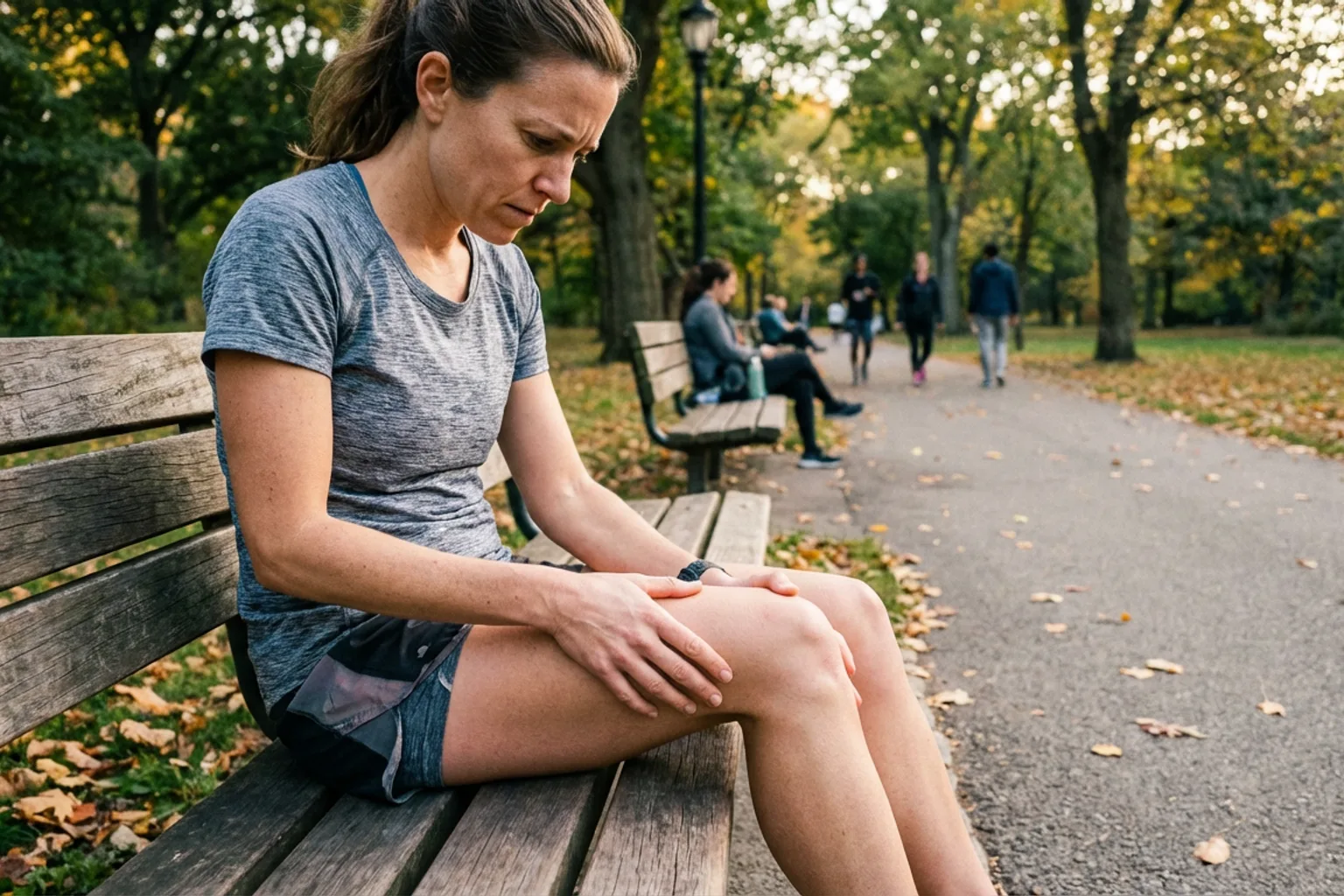
Beyond the pain scale, there are specific warning signs that mean you should stop running and get assessed by a professional. Don't ignore these.
- Swelling around the knee joint
- A feeling of the knee "giving way" or buckling
- Locking or catching in the knee
- Sharp, stabbing pain rather than a dull ache
- Pain that significantly worsens during a run
- Pain that doesn't settle within an hour of finishing
- Night pain that wakes you from sleep
- Pain affecting your normal daily walking
These symptoms may point to something other than PFPS, such as a meniscus problem or cartilage damage, and they need proper diagnosis. My article on warning signs of runner's knee covers this in more detail.
Do This Right Now: Immediate Steps to Ease Runner's Knee
If your knee is flaring up today, here's what to do before anything else.
Step 1: Reduce Load Immediately
Cut your mileage by at least 50%. If you were planning a 10-mile run, do 5 miles at an easy pace on a flat route. If it still hurts, stop and walk home. This isn't giving up. It's smart management, and it'll save you weeks in the long run.
Step 2: Ice the Knee
Apply an ice pack wrapped in a cloth for 15 to 20 minutes after any activity that aggravates the knee. Two or three times a day during an acute flare is plenty. Ice reduces inflammation and gives short-term pain relief. Just don't apply it directly to skin.
Step 3: Avoid the Aggravators
For the next few days, avoid:
- Stairs where possible (or go one step at a time)
- Deep squats and lunges
- Sitting with knees bent for long periods (get up and move every 30 minutes)
- Downhill running
- Kneeling
Step 4: Try Kinesiology Taping
Patellar taping can give meaningful short-term pain relief and allow you to keep exercising while the underlying cause is being addressed. I've put together a full guide on runner's knee taping techniques with video demonstrations. Worth a try, honestly.
Step 5: Start Gentle Strengthening
Don't just rest passively. Gentle strengthening, especially of the glutes and quads, helps settle the joint down and starts addressing the root cause. More on this below.
How to Run With Runner's Knee: 7 Practical Modifications
If you're in the green zone and cleared to run, these modifications will help you keep training without making things worse.
1. Shorten Your Stride
A shorter stride reduces the impact load on the patellofemoral joint with every single step. Try increasing your cadence by about 5 to 10% (a metronome app helps with this). This is one of the most evidence-backed gait changes for PFPS, and a good chunk of runners notice a difference almost immediately.
2. Run on Flat, Soft Surfaces
Hills, especially downhills, massively increase patellofemoral joint stress. Stick to flat routes on grass or trail surfaces while you're recovering. Save the hills for when you're pain-free. They'll still be there.
3. Warm Up Properly
Never head straight out the door cold. Spend five to ten minutes doing dynamic warm-up exercises: leg swings, glute bridges, clamshells, bodyweight squats. Get the muscles firing before you ask them to do their job. This one step makes a bigger difference than most runners expect.
4. Run Shorter, More Frequent Sessions
Instead of one long run, split your planned distance across two or three shorter sessions. Shorter bouts mean less cumulative load on the joint before fatigue sets in and form breaks down. Your knee will thank you.
5. Slow Down
Faster running increases patellofemoral joint load. Keep your easy runs genuinely easy, well within your comfort zone. This isn't the time for tempo runs or intervals. Trust me on this.
6. Walk Breaks Are Fine
A run/walk strategy during recovery isn't a step backwards. It's a smart way to keep moving while managing load. Try 5 minutes running, 1 minute walking, and see how your knee responds. Some runners feel a bit embarrassed about this, but I'd rather you run-walk for a few weeks than not run at all for months.
7. Monitor Your Response
Rate your pain before, during, and 30 minutes after every run. If the pattern is stable or improving, you're on the right track. If pain is trending upward over several sessions, you need to back off further. Keep it simple.
Runner's Knee Treatment: What Actually Works
Rest alone rarely fixes runner's knee. The research is pretty clear on this. You need to address the underlying causes, and that means a combination of load management and targeted strengthening. Passive rest buys you time; it doesn't buy you a fix.
Strengthening Exercises for Runner's Knee
These are the exercises I use most consistently with runners dealing with PFPS. Start with two to three sessions per week and build from there.
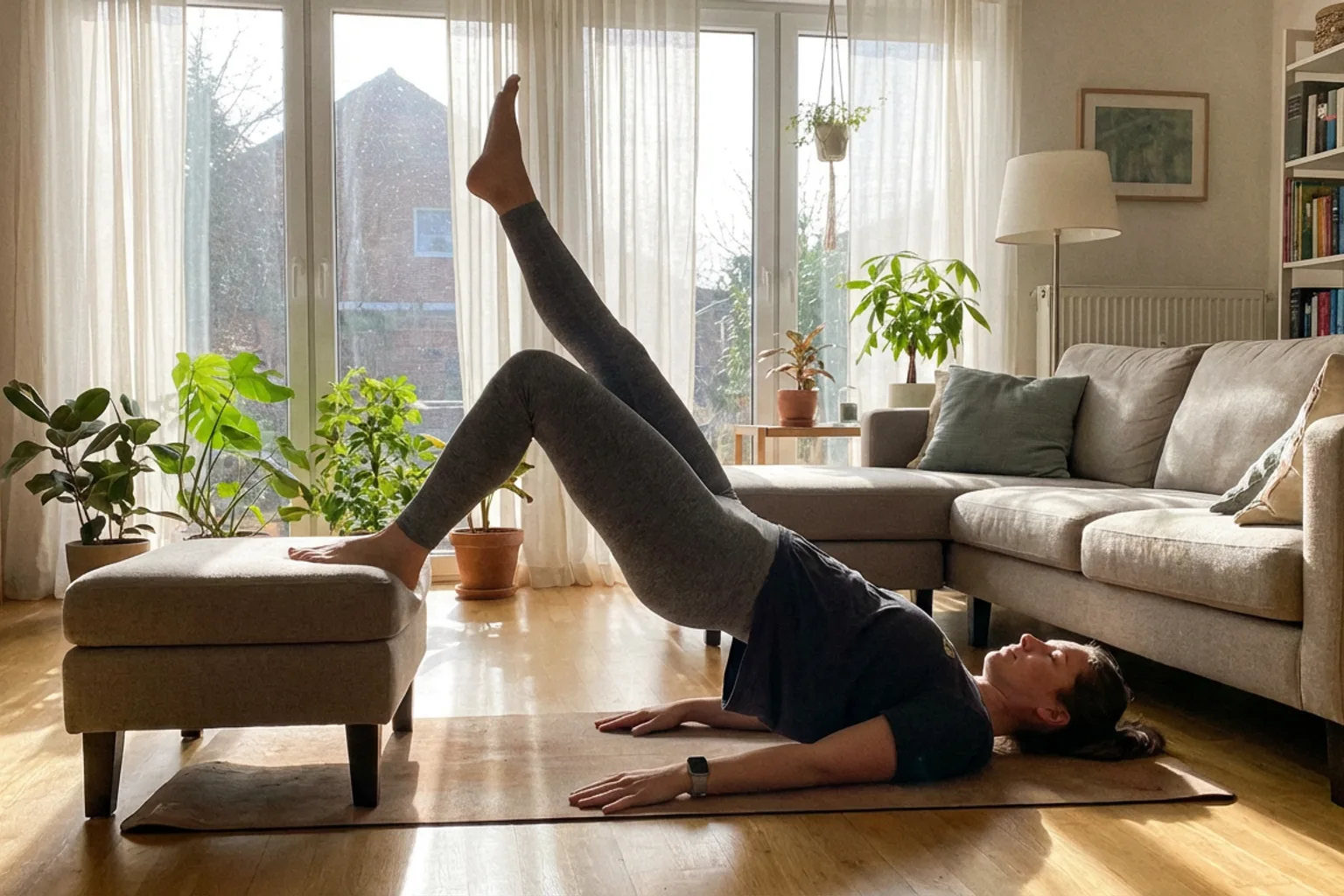
Glute Bridges: Lie on your back with knees bent. Drive your hips up, squeezing your glutes hard at the top. Hold for two seconds, lower slowly. Do 3 sets of 15 reps. Progress to single-leg bridges as you get stronger.
Clamshells: Lie on your side with knees bent at 45 degrees. Keeping your feet together, rotate your top knee upward like a clamshell opening. Do 3 sets of 20 reps each side. Simple, but genuinely effective.
Wall Sits: Slide your back down a wall until your thighs are parallel to the floor, or as far as pain-free range allows. Hold for 30 to 45 seconds. Do 3 sets. This builds quad endurance in a controlled way without loading the joint through a big range of movement.
Terminal Knee Extensions (TKEs): Loop a resistance band around a fixed point at knee height. Step into the band so it sits behind your knee. Stand with a slight bend in the knee, then straighten it fully against the band resistance. This specifically targets the VMO. Do 3 sets of 15 reps.
Step-Ups: Step onto a box or step with one foot, drive through that heel to lift your body up, then lower slowly. The slow lowering phase, the eccentric bit, is the key part. Do 3 sets of 10 to 12 reps each leg.
Single-Leg Squats: Once you're stronger, single-leg squats are excellent for building the hip and quad control that protects the kneecap. Check my guide on mastering single-leg squats for knee control to get your technique right before adding load.
For a ready-made routine, my 10-minute runner's knee rehab routine gives you a structured sequence you can do at home with no equipment.
Cross-Training During Recovery
Cross-training lets you maintain cardiovascular fitness while the knee settles down. The best options for PFPS are:
- Cycling: Low patellofemoral load, especially at higher cadence and lower resistance. Adjust your saddle height so your knee doesn't bend past 90 degrees.
- Swimming: Zero impact. Great for aerobic fitness with no knee stress at all.
- Pool running (aqua jogging): Mimics the running motion without impact. Underrated and genuinely effective for maintaining running-specific fitness.
- Elliptical trainer: Low impact and running-like. Most runners find this comfortable even with moderate PFPS.
Avoid rowing machines and step machines during a flare-up. Both can load the patellofemoral joint significantly, which is the last thing you need right now.
Should You See a Physiotherapist?
Yes, if any of the following apply:
- Your pain has been present for more than four to six weeks
- You've tried rest and basic rehab but symptoms aren't improving
- You have any of the red flag symptoms listed above
- You're not sure whether this is actually PFPS
- You have an important race coming up and need a clear plan
A good sports physio will assess your movement patterns, identify your specific contributing factors, and give you a targeted plan. Don't just guess at your diagnosis and hope for the best. I know it's tempting to self-diagnose and crack on, but if something isn't adding up, get it checked.
Some runners also ask about cortisone injections. I've written a detailed piece on cortisone injections for runner's knee if that's something you're considering.
How Long Does Runner's Knee Take to Recover?
This is the question everyone wants answered. I'll be straight with you: it varies a lot, and anyone who gives you a precise number without knowing your situation is guessing.
Mild cases, caught early and managed well, can resolve in two to four weeks. More established cases typically take six to twelve weeks of consistent rehab. Chronic, long-standing PFPS that's been ignored for months can take considerably longer. The earlier you act, the better.
The factors that most influence your recovery time are:
- How long you've had the problem before addressing it
- How consistently you do your rehab exercises
- Whether you address the root cause, not just the symptoms
- Whether you manage your running load sensibly during recovery
For a full breakdown of what to expect, read my article on runner's knee recovery time.
One thing I see constantly: runners who rest for two weeks, feel better, jump straight back into full training, and end up back at square one within a fortnight. Pain-free doesn't mean healed. Keep doing your strengthening work for at least four to six weeks after symptoms resolve. That bit matters just as much as the rehab itself.
Running Form Changes That Help Runner's Knee
Beyond load management and strengthening, changing how you run can make a significant difference to patellofemoral pain. The research on gait retraining for PFPS is genuinely encouraging, and it's an area I find really interesting to work on with runners.
Increase Your Step Rate
Running at a higher cadence reduces the load on the patellofemoral joint. Most recreational runners benefit from aiming for around 170 to 180 steps per minute. Even a 5% increase makes a measurable difference. Small change, meaningful impact.
Land With Your Foot Closer to Your Body
Overstriding, landing with your foot far ahead of your centre of mass, dramatically increases knee stress. Think about landing underneath yourself rather than reaching forward with each step. It feels odd at first, but you adapt quickly.
Focus on Hip Drive
Driving your hip back and using your glutes to propel you forward takes load off the knee. This connects directly to why glute strengthening is so central to fixing PFPS. The strength work and the form work reinforce each other.
Consider Your Foot Strike
There's some evidence that a midfoot or forefoot strike pattern reduces patellofemoral joint stress compared to heavy heel striking. I've explored this in my article on whether forefoot running is better for your knees. It's not a magic fix, but it's worth understanding.
For a comprehensive guide to running form changes specifically for PFPS, my article on running gait re-education in PFPS rehab goes deep on the evidence.
Preventing Runner's Knee From Coming Back
Getting rid of runner's knee is one thing. Keeping it away is another. Here's what I tell every runner once they're back to full training.
Build Your Mileage Slowly
The 10% rule (never increase weekly mileage by more than 10% from one week to the next) is a guideline, not a law, but it's a sensible one. After a period of reduced running, be especially conservative when you ramp back up. Your cardiovascular fitness recovers faster than your tendons and joints. Keep that in mind.
Keep Strength Training in Your Programme
Look, this is non-negotiable. Runners who stop their rehab exercises the moment they feel better are the ones who come back to me six months later with the same problem. Two strength sessions per week, focused on glutes, hips, and quads, should be a permanent part of your training. My strength training guide for time-pressed runners shows you how to fit this in without it taking over your life.
Don't Neglect Recovery
Sleep, easy days, and proper nutrition matter. Patellofemoral pain is an overuse injury. Overuse means the load exceeds your capacity to recover. Protecting your recovery is just as important as the training itself. A lot of runners focus all their attention on what they do in sessions and almost none on what happens between them.
Address Foot and Ankle Issues
If your foot mechanics are contributing to your knee pain, it's worth getting a proper assessment. Limited ankle dorsiflexion is a surprisingly common contributor to PFPS. I've got a simple ankle dorsiflexion mobilisation that's worth adding to your warm-up routine.
Rotate Your Running Shoes
Running in the same pair of shoes every day means the cushioning compresses and never fully recovers. Rotating between two pairs extends the life of both and gives your joints slightly different loading patterns. Small thing, but worth doing.
Listen to Your Body Early
The runners who recover fastest are the ones who act at the first sign of trouble, not after three weeks of pushing through. If you notice that familiar ache starting to build, cut your load immediately. A three-day cutback now beats a three-month layoff later every single time.
For more on this, my guide on 10 tips to prevent knee pain when running is worth bookmarking.
A Note on Knee Pain That Isn't Runner's Knee
Not all knee pain in runners is PFPS. It's worth being aware of the other possibilities so you don't spend weeks treating the wrong thing.
| Condition | Location of Pain | Key Features |
|---|---|---|
| Runner's Knee (PFPS) | Around or behind the kneecap | Worse on stairs, after sitting, during long runs |
| IT Band Syndrome | Outer side of the knee | Worse at a specific point in a run, sharp pain |
| Patellar Tendinopathy | Just below the kneecap | Worse after activity, tender on the tendon |
| Meniscus Problem | Inner or outer joint line | Locking, giving way, swelling |
| Chondromalacia Patella | Under the kneecap | Grinding sensation, similar to PFPS but structural |
If you're not certain what you're dealing with, read my article on runner's knee or something else and consider getting a professional diagnosis. I also have a specific guide on running with chondromalacia patella if that's a possibility for you.
The Bigger Picture: Why Runner's Knee Keeps Coming Back
Here's something I say to almost every runner I work with who has chronic PFPS: the pain in your knee is rarely the whole story. It's usually the symptom of a weakness or movement pattern problem somewhere else in the chain. The knee is often just the messenger.
The runners who fix runner's knee for good are the ones who treat the cause, not just the symptom. They build genuine hip and glute strength. They address their running form. They manage their training load intelligently. They don't just ice their knee and hope for the best. Actually, that's not entirely fair, because ice and rest do have a role early on. But they're the start of the process, not the whole thing.
If you want a structured, proven system to do all of this properly, that's exactly what Bulletproof Runners is built for. It's my online membership programme for runners who want to get strong, stay injury-free, and run well for years to come. Inside, you'll find strength and conditioning programmes designed specifically for runners, injury rehab guidance, and coaching support to keep you on track. If runner's knee keeps derailing your training, it's worth taking a look.
Frequently Asked Questions
Can I run with runner's knee if the pain is mild?
Yes, in many cases. If your pain is 3 out of 10 or below, doesn't worsen during the run, and settles within 30 minutes of finishing, you can usually continue with reduced mileage and modified training. Avoid hills, speed work, and back-to-back hard days. Monitor your symptoms closely after every session and back off if pain trends upward.
How long should I rest runner's knee before running again?
There's no single answer, but for a moderate flare-up, three to five days of reduced or no running is a reasonable starting point. Use this time for gentle strengthening and cross-training. Return to running only when pain has dropped below a 3 out of 10. Mild cases may need just a few days; more severe cases may need two to four weeks off running entirely.
Does running make runner's knee worse?
It can, if you continue without modification. Running through significant pain, or ignoring warning signs, typically prolongs recovery and can worsen the underlying irritation. But carefully managed running with appropriate load reduction doesn't necessarily make PFPS worse and can actually be part of a graduated return-to-run programme.
What is the fastest way to recover from runner's knee?
Reduce your running load immediately, start targeted strengthening exercises for your glutes and quads, address any gait issues, and be consistent with your rehab. Most runners who do this properly see meaningful improvement within two to four weeks for mild cases. The biggest mistake is resting passively without addressing the underlying weakness.
Should I stretch for runner's knee?
Stretching has a limited role in treating PFPS compared to strengthening, but it can help if tight tissues are contributing to your problem. Hip flexor stretches, quad stretches, and calf stretches are all worth including. Check out my full guide to stretches for runners for technique guidance. But don't rely on stretching alone as your treatment strategy. It won't be enough.
Can runner's knee go away on its own?
Sometimes mild cases settle with rest and reduced activity. But without addressing the underlying cause, such as weak glutes or poor running form, runner's knee almost always comes back. True resolution means fixing what caused it in the first place, not just waiting for the pain to ease.
Runner's knee is frustrating, but it's not a death sentence for your running. With the right approach, most runners make a full recovery and come back stronger than before. Act early, be smart about your load, do the strength work consistently, and don't try to run through pain that's telling you to stop.
If you're dealing with runner's knee that keeps coming back despite your best efforts, start with my full series beginning at how to cure runner's knee, and consider joining Bulletproof Runners for the structured support that makes the difference between temporary relief and lasting results.