Stages of Plantar Fasciitis in Runners: Complete Guide
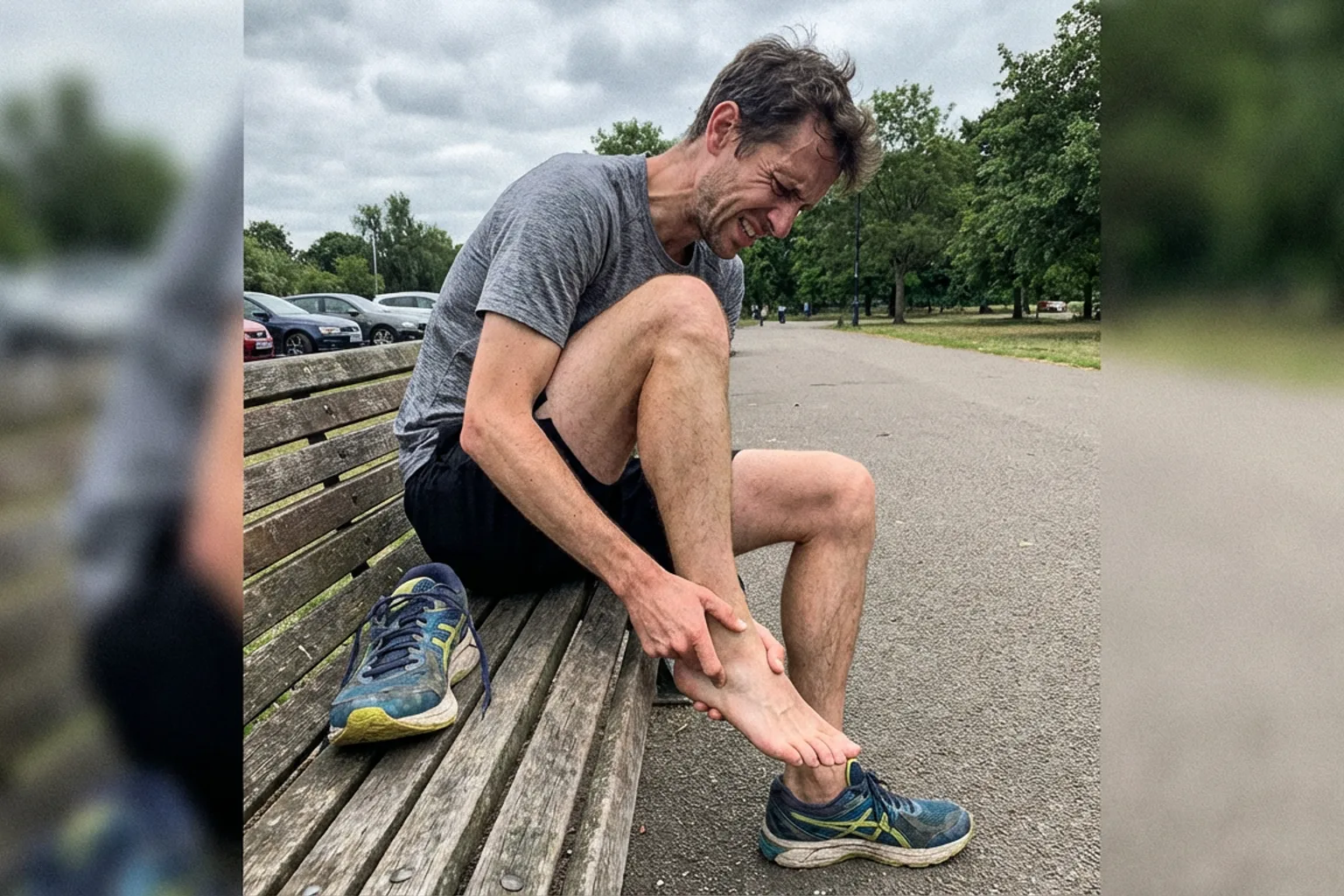
The stages of plantar fasciitis in runners matter more than most people realise. Knowing which stage you're in changes everything about how you should manage it. The wrong approach at the wrong stage can turn a two-week niggle into a six-month nightmare. I've seen it happen dozens of times with runners I coach.
Here's the short answer: plantar fasciitis progresses through three broad stages, from early reactive irritation, through a failed healing response, to full degenerative change. Each stage looks different, feels different, and needs a different approach.
Quick answer: Stage 1 is early-stage reactive plantar fasciitis with mild morning heel pain. Stage 2 is a failed healing response with persistent pain throughout the day. Stage 3 is chronic, degenerative plantar fasciitis where the tissue has structurally changed and simple rest no longer helps.
Let me walk you through each one properly.
What Is Plantar Fasciitis? (And Why "Fasciitis" Is Actually the Wrong Word)
Before we talk stages, let's get clear on what we're actually dealing with. The plantar fascia is a thick band of connective tissue that runs along the sole of your foot, connecting your heel bone to the base of your toes. It plays a huge role in foot arch mechanics and helps your foot absorb and return energy with every stride.
Here's the thing most people don't know: the plantar fascia isn't really a ligament. It behaves much more like a tendon, both in its structure and in how it responds to load and stress. That distinction matters enormously, because it changes how we should think about the stages of this injury.
The term "fasciitis" implies inflammation, but research tells us that in most cases, especially persistent ones, there's very little true inflammation present. What we actually see under imaging is degenerative change in the collagen fibres, thickening of the tissue, and a failed healing response. This is exactly what we see in tendinopathy conditions like Achilles tendinopathy or patellar tendinopathy.
So when I talk about the stages of plantar fasciitis with my runners, I use a framework very similar to the reactive-to-degenerative continuum that clinicians use for tendon injuries. It's a more accurate and more useful way to think about it.
If you want to understand more about what happens after a plantar fasciitis diagnosis, read my guide on what to do when you have plantar fasciitis.
The Plantar Fascia as a Tendon: Why This Changes Everything
Tendons respond to load in a very specific way. Too little load and they weaken. Too much load too fast and they break down. The sweet spot is progressive, well-managed loading that stimulates the tissue to adapt and strengthen.
The plantar fascia follows the same rules. This is why complete rest rarely fixes the problem long-term. And it's why understanding which stage you're in is so critical. The tissue needs very different things at each stage.
Think of it like this. A brand-new rope starts to fray at one spot. If you keep pulling hard on it, the fraying spreads. But if you ease off and protect that spot while gradually reintroducing tension, the fibres can reorganise and strengthen. Leave it too long without any tension at all, though, and the rope becomes stiff and brittle in a different way.
That's roughly what happens inside your plantar fascia across the three stages.
Stages of Plantar Fasciitis in Runners: The Three-Stage Model
I find it most useful to think about plantar fasciitis in runners using three stages that mirror the tendinopathy continuum: reactive, failed healing, and degenerative. These aren't perfectly clean categories with sharp edges between them. But they give you a genuinely useful framework for understanding where you are and what to do about it.
Stage 1: Reactive Plantar Fasciitis
This is the early stage. The tissue is responding to a sudden increase in load. Think of a runner who has just ramped up mileage quickly, added speed sessions, or changed footwear. The plantar fascia hasn't had time to adapt, so it becomes acutely irritated.
What it feels like:
- Sharp or aching pain in the heel, especially with your first steps in the morning
- Pain that eases after 5 to 10 minutes of walking or easy movement
- Discomfort at the start of a run that settles once you're warmed up
- Pain that returns after sitting for a long period and then standing up
- Tenderness when you press into the inside edge of your heel
The key feature of Stage 1 is that the pain eases with movement. That's the tissue responding well to gentle load. The structure is irritated but not yet significantly damaged.
What's happening in the tissue: The plantar fascia is swelling slightly, almost like a reactive thickening. This is a protective response. The tissue is trying to cope with more load than it's currently conditioned for. There's some cellular activity and fluid change in the tissue, but the collagen structure is still largely intact.
What runners typically do wrong here: They either push through it and ignore it, or they stop completely. Both responses make things worse. Pushing through without modifying load keeps the irritation going. Complete rest removes the stimulus the tissue needs to adapt. The right answer is load management, not load elimination.
At this stage, recovery can be relatively quick, often two to six weeks with the right approach. This is the easiest stage to turn around.
 calf raises on a step outdoors, natural daylight, casual running gear, sl" style="max-width:100%;height:auto;border-radius:8px;margin:1.5rem 0" loading="lazy" />
Stage 2: Failed Healing Response (Reactive-on-Degenerative)
This is where most runners end up when they've either ignored Stage 1 or managed it poorly. The tissue tried to heal, but the healing process was disrupted, usually by continued overloading. The result is a disorganised attempt at repair that hasn't quite worked.
What it feels like:
- Morning pain that takes longer to ease, sometimes 20 to 30 minutes or more
- Pain during runs, not just at the start, that doesn't fully settle with warm-up
- Discomfort that lingers for hours after running
- Arch pain as well as heel pain
- Noticeable stiffness after any period of rest, not just overnight
- Pain that varies day to day, sometimes feeling better for a few days and then spiking again
That last point is really important. The on-off nature of Stage 2 fools runners into thinking they're recovering. They have a good week, push the training back up, and then get hit with a flare. This cycle can go on for months.
What's happening in the tissue: The collagen fibres are starting to become disorganised. Instead of running in neat parallel lines, they're beginning to look more chaotic under imaging. The tissue may be thickening. There's increased activity from cells called tenocytes (the same cells found in tendons), which are trying to lay down new collagen but doing so in a disorganised way. This is the "failed healing" part of the name.
What runners typically do wrong here: They rest for a week or two, feel better, and go straight back to full training. The tissue hasn't had time to reorganise and strengthen. Within days, the pain is back, often worse than before.
At this stage, you need a more structured rehabilitation approach. Progressive loading exercises, particularly soleus strengthening and calf work, become essential. Recovery typically takes six to twelve weeks with consistent effort.
For a realistic picture of how long this can take, read my article on how long plantar fasciitis lasts.
Stage 3: Degenerative Plantar Fasciitis
This is chronic plantar fasciitis. The tissue has undergone significant structural change. On imaging, you'd see a thickened, disorganised plantar fascia. Some areas may show calcification. The collagen structure is substantially compromised.
What it feels like:
- Persistent pain that doesn't fully go away, even with rest
- A dull, deep aching that's present much of the day
- Morning pain that takes a long time to ease, or doesn't ease much at all
- Pain with normal daily activities, not just running
- Possible sharp pain with any sudden increase in load
- A history of plantar fasciitis that has come and gone for more than six months
What's happening in the tissue: The collagen has degenerated significantly. In some areas, the normal collagen structure has been replaced by disorganised, weaker tissue. You may see calcification, which is the body's attempt to stabilise a structurally compromised area. Blood vessel ingrowth into the tissue (neovascularisation) is common at this stage, which can actually contribute to pain.
Here's the important nuance: rest does very little at Stage 3. The tissue isn't inflamed in the traditional sense. It's structurally changed. The only way to drive meaningful adaptation is through carefully graded loading, exactly as we'd approach a chronic tendinopathy.
What runners typically do wrong here: They keep trying the same things that didn't work at Stage 2, or they pursue passive treatments like repeated cortisone injections without addressing the underlying loading issues. Cortisone can actually weaken already compromised tissue at this stage.
Recovery at Stage 3 is a longer process, often three to six months or more, and almost always requires professional guidance. But it is achievable. I've worked with runners who had chronic plantar fasciitis for over a year and got back to full training with the right programme.
How to Tell Which Stage You're In
The most reliable indicator is the behaviour of your pain, not just its intensity. Use these questions to help figure out where you are:
- How long does morning pain take to ease? Under 10 minutes suggests Stage 1. 10 to 30 minutes points to Stage 2. Over 30 minutes or pain that doesn't ease much at all indicates Stage 3.
- Does the pain settle during a run? If it eases once warmed up and doesn't return until after you stop, that's more Stage 1. If it persists during the run or worsens, you're likely in Stage 2 or 3.
- How long have you had it? Under six weeks is typically Stage 1. Six weeks to six months is often Stage 2. Over six months with persistent symptoms suggests Stage 3.
- Does rest make it better? If a few days off running gives you significant relief, you're probably in Stage 1 or early Stage 2. If rest makes little difference, Stage 3 is more likely.
- Has it come back before? Recurrent plantar fasciitis that keeps returning after apparent recovery is a hallmark of Stage 2 or 3 tissue that hasn't been properly rehabilitated.
One important caveat: if you're unsure, get it assessed. A physiotherapist or sports medicine doctor can use ultrasound imaging to actually look at the tissue and tell you what's going on. That information is genuinely useful and can save you months of guessing.
Can You Keep Running Through Each Stage?
This is the question I get asked most often. The answer depends almost entirely on which stage you're in.
Stage 1: Yes, with modifications. Reduce volume, avoid speed work and hills, and monitor your pain response carefully. If your pain is no worse than 3 out of 10 during a run and returns to baseline within 24 hours, you can usually continue running. I've written a full guide on whether you can run with plantar fasciitis that goes into this in more detail.
Stage 2: Possibly, but with significant modifications and careful monitoring. Many runners need to reduce volume by 50% or more. Some need a short break of one to two weeks to allow the reactive flare to settle before reintroducing load. Cross-training like cycling or pool running can help maintain fitness without loading the plantar fascia heavily.
Stage 3: This needs individual assessment. Some runners with well-managed Stage 3 can continue running at reduced volume. Others need a period of complete rest from running while they work through a loading programme. The key is that you must be doing progressive rehabilitation exercises regardless of whether you're running or not.
Why Runners Get Stuck Between Stages
The most common pattern I see is a runner cycling between Stage 1 and Stage 2 for months without ever fully recovering. They rest, feel better, go back to running, get a flare, rest again. Sound familiar?
The reason this happens is that feeling better is not the same as being better. When pain eases, it means the reactive component has settled. But the underlying tissue quality may still be poor. Without progressive loading to drive proper collagen remodelling, the tissue never actually gets stronger. It just sits in a fragile state, waiting to be overloaded again.
This is exactly what happens with tendinopathies. A runner with Achilles tendinopathy who rests until pain-free and then goes straight back to training will almost always relapse. The same principle applies to the plantar fascia.
The solution is a structured loading programme that continues even when you feel fine. That's the part most runners skip, and it's the reason so many end up with chronic plantar fasciitis.
For a broader understanding of how strength work fits into injury prevention, take a look at my guide on strength training for distance runners.

The Role of Load Management Across All Stages
Load management is the foundation of plantar fasciitis recovery at every stage. Here's what that actually means in practice.
Reduce Provocative Load
Identify what makes your pain worse and reduce that first. For most runners, that means cutting mileage, removing hills and speed sessions, and potentially switching to softer surfaces temporarily. It does not mean stopping all activity.
Introduce Therapeutic Load
Progressive loading exercises stimulate the plantar fascia to adapt and remodel. The most effective exercises target the calf and foot complex, particularly the soleus. Heavy, slow loading, like slow calf raises with a bent knee, has strong evidence behind it for tendon rehabilitation and works equally well for the plantar fascia.
My 10-minute ankle strengthening routine is a good starting point for Stage 1. For Stage 2 and 3, you'll need a more progressive programme built around your specific capacity.
Monitor the 24-Hour Pain Response
After any run or exercise session, check in with your pain the following morning. If it's no worse than it was before, you're within a safe loading range. If it's significantly worse, you've done too much. Adjust accordingly.
Address Contributing Factors
Load management alone isn't always enough. You also need to look at what caused the overload in the first place. Common contributing factors include:
- Rapid mileage increases (the classic "too much, too fast" mistake)
- Calf and soleus tightness or weakness
- Reduced ankle mobility limiting shock absorption
- Weak hip and glute muscles that increase load on the foot
- Footwear changes, including switching to minimalist shoes too quickly
- Running gait issues, particularly overstriding
Addressing glute and hip strength is more relevant than many runners realise. Weak glutes alter your running mechanics in ways that increase load on the lower leg and foot. My four essential glute exercises for runners are worth adding to your rehabilitation programme.
Ankle mobility is another commonly overlooked factor. Reduced dorsiflexion range increases strain on the plantar fascia with every step. These ankle mobility exercises can make a meaningful difference.
Common Treatment Approaches by Stage
Here's a practical overview of what tends to work at each stage. This isn't a substitute for individual assessment, but it gives you a useful starting framework.
| Treatment Approach | Stage 1 | Stage 2 | Stage 3 |
|---|---|---|---|
| Reduce running volume | Yes, moderate | Yes, significant | Yes, possibly complete break |
| Ice after activity | Helpful | Helpful for flares | Limited benefit |
| Calf and soleus loading exercises | Yes, gentle | Yes, progressive | Yes, heavy slow loading |
| Stretching (calf and plantar fascia) | Helpful | Use cautiously | Limited benefit alone |
| Night splint | Occasionally useful | Often helpful | Can help manage symptoms |
| Supportive footwear or orthotics | Helpful | Often necessary | Often necessary |
| Physiotherapy | Useful if not improving | Strongly recommended | Essential |
| Cortisone injection | Rarely indicated | Occasionally used | Use with caution |
| Shockwave therapy | Not typically needed | Consider if not improving | Good evidence at this stage |
A Note on Stretching: It's Not Always the Answer
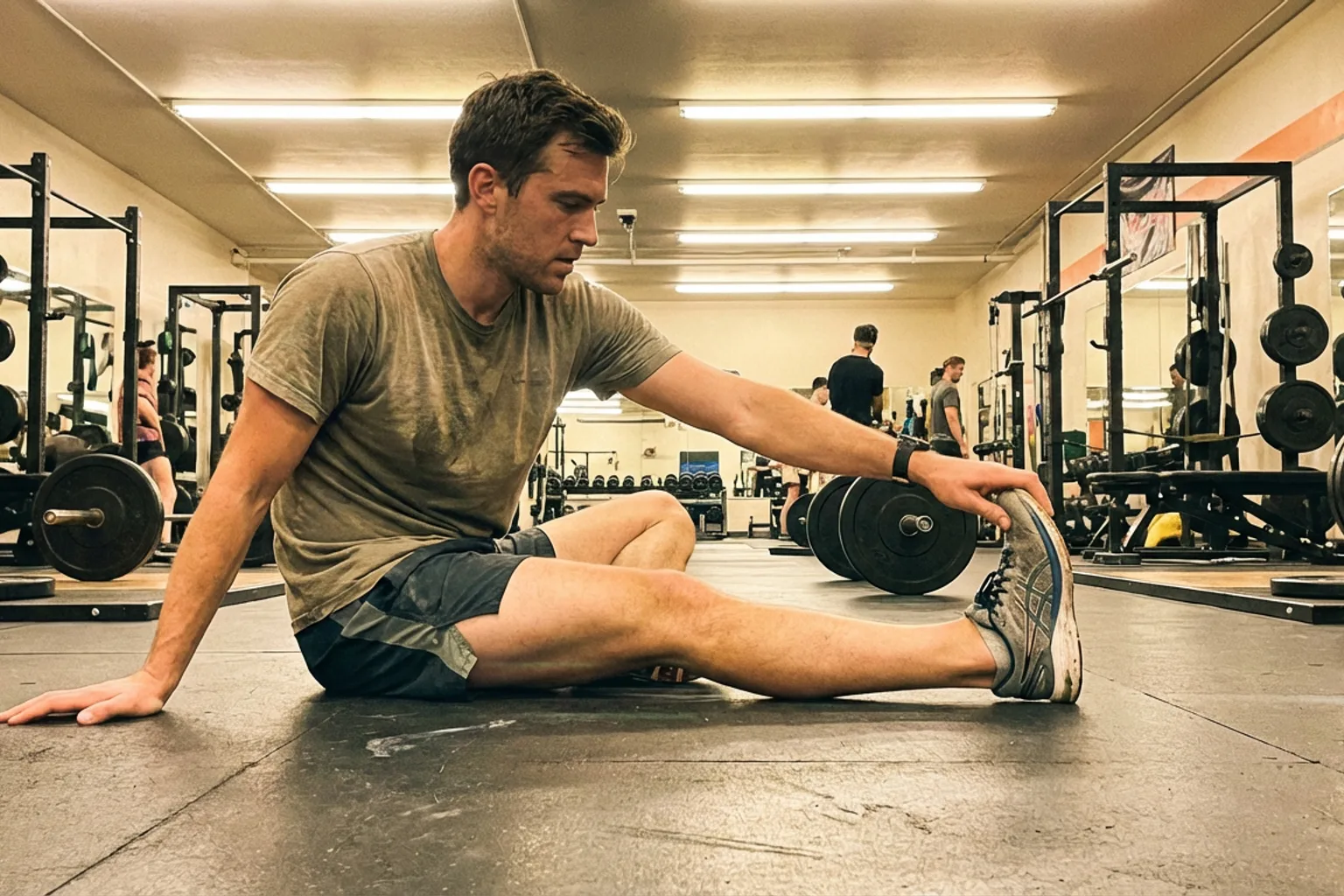
Stretching is the first thing most runners reach for with plantar fasciitis. And at Stage 1, gentle calf stretching and plantar fascia stretching can be genuinely helpful. But at Stage 2 and especially Stage 3, aggressive stretching of already compromised tissue can actually make things worse.
This mirrors what we know about tendinopathy. Aggressive stretching of a degenerated tendon increases compressive load on the tissue and can provoke pain and further breakdown. The same logic applies to the plantar fascia.
At Stage 2 and 3, loading exercises are far more important than stretching. Strengthen the tissue rather than just pulling on it.
If you want to understand more about the limits of stretching for running injuries, my article on why stretching doesn't always work is worth a read.
How Long Does Each Stage Take to Recover?
I want to be honest with you here, because I think runners deserve realistic expectations rather than false reassurance.
- Stage 1: With the right approach, two to six weeks. Some runners recover faster, especially if they catch it very early and manage load well from day one.
- Stage 2: Six to twelve weeks with consistent rehabilitation. Runners who keep relapsing through poor load management often extend this significantly.
- Stage 3: Three to six months, sometimes longer. This is not a quick fix. But with a properly structured programme, full return to running is absolutely achievable.
The single biggest factor in recovery time is how quickly you start doing the right things. Every week you spend pushing through Stage 1 without addressing it increases the risk of progressing to Stage 2. Every cycle of rest-and-relapse in Stage 2 increases the risk of pushing into Stage 3.
Act early, act smart, and be consistent. That's the formula.
Preventing Plantar Fasciitis From Progressing
The best time to address plantar fasciitis is at Stage 1, before the tissue has undergone significant change. Here's what I recommend to all my runners as a preventive and early-intervention strategy.
Build Mileage Gradually
The 10% rule is a reasonable guideline. Don't increase your weekly mileage by more than 10% from one week to the next. Your plantar fascia needs time to adapt to increasing loads, just like any other tissue.
Strengthen Your Foot and Calf Complex Consistently
Regular calf raises, particularly with a bent knee to target the soleus, are one of the best investments you can make for plantar fascia health. Add them to your routine now, not just when you're injured. My soleus strength exercises for runners are a great place to start.
Don't Neglect Your Hips and Glutes
Strong glutes reduce the load that reaches your foot with every stride. Runners with weak hips tend to compensate in ways that increase stress on the plantar fascia. Regular hip and glute work is one of the most underrated plantar fasciitis prevention strategies I know. Check out my glute activation guide for runners for practical exercises.
Monitor Your Pain Response
Get into the habit of rating your heel pain on a simple 0 to 10 scale every morning. If your morning pain starts creeping up over several days, that's your early warning signal. Reduce load before it becomes a problem, not after.
Respect Footwear Transitions
Switching to a lower-drop or more minimalist shoe increases the demand on your plantar fascia significantly. Make any footwear change gradually over eight to twelve weeks, not overnight.
Frequently Asked Questions
What are the early signs of plantar fasciitis in runners?
The earliest sign is sharp or aching heel pain with your first steps in the morning that eases within 5 to 10 minutes. You might also notice discomfort at the start of a run that settles as you warm up. Tenderness when pressing the inside edge of your heel is another early indicator. Catch it at this stage and recovery is much faster.
Can plantar fasciitis get worse if you keep running?
Yes, absolutely. Continuing to run without modifying your load at Stage 1 significantly increases the risk of progressing to Stage 2 or 3. The tissue needs a chance to adapt. That doesn't always mean stopping running entirely, but it does mean managing your training load carefully and monitoring your pain response after every session.
Is plantar fasciitis the same as a heel spur?
Not exactly. A heel spur is a bony growth that can develop where the plantar fascia attaches to the heel bone. It's often found alongside chronic plantar fasciitis but isn't always the cause of pain. Many people have heel spurs with no pain at all. The plantar fascia tissue itself, rather than the spur, is usually the primary source of symptoms.
Why does my plantar fasciitis keep coming back?
Recurring plantar fasciitis almost always means the underlying tissue quality was never fully restored. Feeling pain-free is not the same as having a healthy, well-conditioned plantar fascia. Without a progressive loading programme to drive proper tissue remodelling, the fascia remains vulnerable. Returning to full training before completing rehabilitation is the most common reason for relapse.
When should I see a doctor or physio about plantar fasciitis?
If your symptoms haven't improved after two to three weeks of sensible load management, see a physiotherapist or sports medicine doctor. If your pain is severe, affecting normal daily activities, or getting worse despite rest, seek assessment sooner. Ultrasound imaging can tell you a lot about which stage you're in and guide your treatment decisions.
The Bottom Line on Plantar Fasciitis Stages
Understanding the stages of plantar fasciitis gives you a real advantage as a runner. It helps you know why your symptoms behave the way they do, what's actually happening inside the tissue, and most importantly, what to do about it at each point in the journey.
The key takeaways are these. Act early at Stage 1 and you can usually turn this around quickly. Get stuck in the rest-and-relapse cycle of Stage 2 and recovery becomes much harder. Progress to Stage 3 and you're looking at a longer rehabilitation process, but one that absolutely can work with the right approach.
Think of your plantar fascia the way you'd think of a tendon. It needs progressive, well-managed load to adapt and strengthen. Rest alone isn't the answer. Neither is pushing through pain. The solution is smart, consistent rehabilitation that respects where the tissue is right now and gradually builds it to where it needs to be.
If you're currently dealing with the stages of plantar fasciitis and not sure where to start, read my guide on what to do when you have plantar fasciitis and take a look at my strength training programme for runners short on time. Both will give you practical, actionable steps to move forward.