Glute Activation Exercises for Runners: The Complete Warm-Up Guide

Your glutes are the most powerful muscle group in your body. They drive you forward with every stride, stabilise your pelvis, and protect your knees, hips and lower back from injury. And yet, for most runners, they're chronically underused.
I see it constantly with the runners I coach. Strong-looking athletes who, when I watch them run, are barely using their glutes at all. Their hamstrings and lower back are doing all the heavy lifting instead. It's one of the most common and most fixable problems in recreational running.
The good news? A few targeted glute activation exercises before your run can make a real difference, fast.
In this guide, I'll show you exactly which exercises to use, how to do them correctly, and how to build them into a simple pre-run warm-up routine that takes under 10 minutes.
Quick Answer: The best glute activation exercises for runners are the banded glute bridge, hip hitch drill, crab walk, clamshell, fire hydrant, donkey kick, side-lying leg raise, and single-leg glute bridge. Perform 2-3 of these for 2 sets each before your run to fire up your glutes and reduce injury risk.
What Are the Glute Muscles?
Before we get into the exercises, it helps to know what you're actually working. Your glutes aren't just one muscle. They're a group of three:
- Gluteus maximus: The largest muscle in your body. It powers hip extension, which is the backward drive of your leg as you push off the ground when you run.
- Gluteus medius: Sits on the outer side of your hip. It stabilises your pelvis every time your foot hits the ground. Without it, your hip drops and your knee collapses inward.
- Gluteus minimus: The smallest of the three. It sits beneath the medius and helps with hip abduction and internal rotation.
All three muscles work together every time you run. That's why your glute activation routine needs to target all of them, not just the big one.
For a deeper look at how these muscles work, read my guide to understanding the gluteal muscles.
Why Glute Activation Matters for Runners
Here's the problem most runners face. You sit at a desk for eight hours, get in the car, sit some more, then head out for a run. Your glutes have been switched off all day. Your hip flexors have been shortened and tight. And then you expect your body to suddenly use your glutes efficiently the moment you start moving.
It doesn't work like that.
When your glutes aren't firing properly, other muscles compensate. Your hamstrings work overtime. Your lower back tightens up. Your knees take on extra load. Over time, that compensation pattern leads to injury.
Runners with weak or inhibited glutes are significantly more likely to develop:
- Runner's knee (patellofemoral pain)
- ITB syndrome
- Calf strains
- Lower back pain when running
- Gluteal tendinopathy
Research published in the International Journal of Sports Physical Therapy confirms that targeted glute activation exercises significantly improve gluteus maximus recruitment during subsequent movement. In other words, doing these exercises before you run genuinely helps your body use its glutes more effectively.
Want to understand how this connects to your running form? Read my article on how to engage your glutes when running.
Signs Your Glutes Aren't Firing Properly
Not sure if this applies to you? Here are the telltale signs I look for when I analyse a runner's gait:
- Your hip drops to one side as you run (known as contralateral pelvic drop)
- Your knees cave inward, especially when you're tired
- You feel your hamstrings or lower back more than your glutes during squats or lunges
- You've had recurring knee, hip or lower back injuries
- You feel tightness in your hip flexors most of the time
If any of those sound familiar, the exercises below are exactly what you need.
Glute Activation Exercises: The Complete Routine for Runners
These are my go-to glute activation exercises for runners. I've used them with athletes at every level, from complete beginners to marathon runners chasing personal bests. Work through them in the order listed for best results.
You'll need a mini resistance band for several of these. It's probably the single best piece of kit you can own as a runner. Cheap, portable, and genuinely effective.
1. Banded Glute Bridge
The glute bridge is where I start almost every runner. It's simple, low-risk, and highly effective at waking up gluteus maximus before a run.
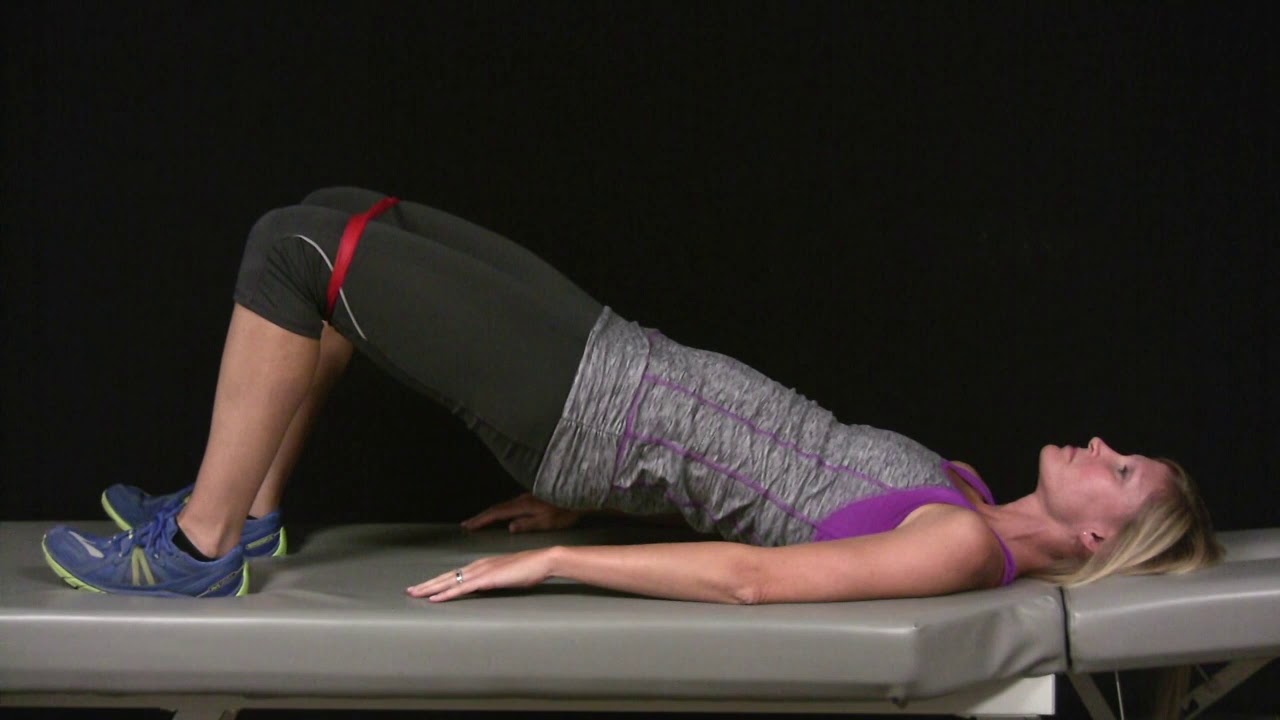
Place a mini band just above your knees. Lie on your back with your knees bent and feet flat on the floor. Drive your hips up until your body forms a straight line from shoulders to knees. Hold for 10 seconds, then lower slowly.
Sets and reps: 10 reps of 10-second holds.
The band adds resistance that forces your glute medius to work alongside your maximus. If you feel this mainly in your hamstrings, push your knees slightly outward against the band as you hold the top position. That small cue makes a big difference.
Research shows this banded variation does an excellent job of engaging gluteus maximus, the muscle responsible for hip extension, abduction and external rotation during running.
Once you're comfortable with this, try the single-leg glute bridge variation to challenge each side independently.
2. Hip Hitch Drill
This one targets gluteus medius specifically. It's a muscle that most runners completely neglect, and it's often the root cause of hip drop, knee pain, and ITB problems.
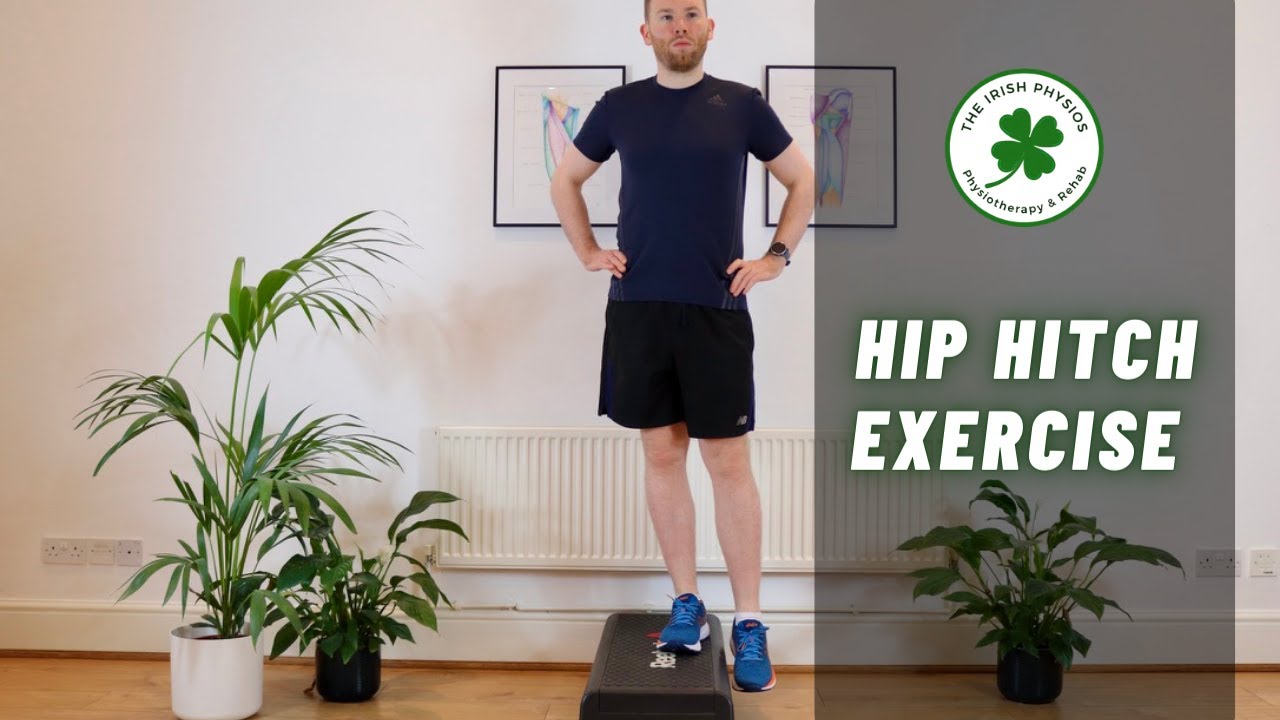
Stand on a step with one foot hanging off the edge. Let your non-standing hip drop slightly, then use your standing hip to hitch it back up. That upward movement is your glute medius working. Control it both ways.
Sets and reps: 2 to 3 sets of 15 reps on each leg.
If you run with a hip drop gait or you've had ITB syndrome, this exercise is non-negotiable in your warm-up. I can't stress that enough.
3. Resistance Band Crab Walk
The crab walk combines resistance with upright, weight-bearing movement. That's important because running is a weight-bearing activity. You need your glutes to fire while you're on your feet, not just while you're lying on the floor.
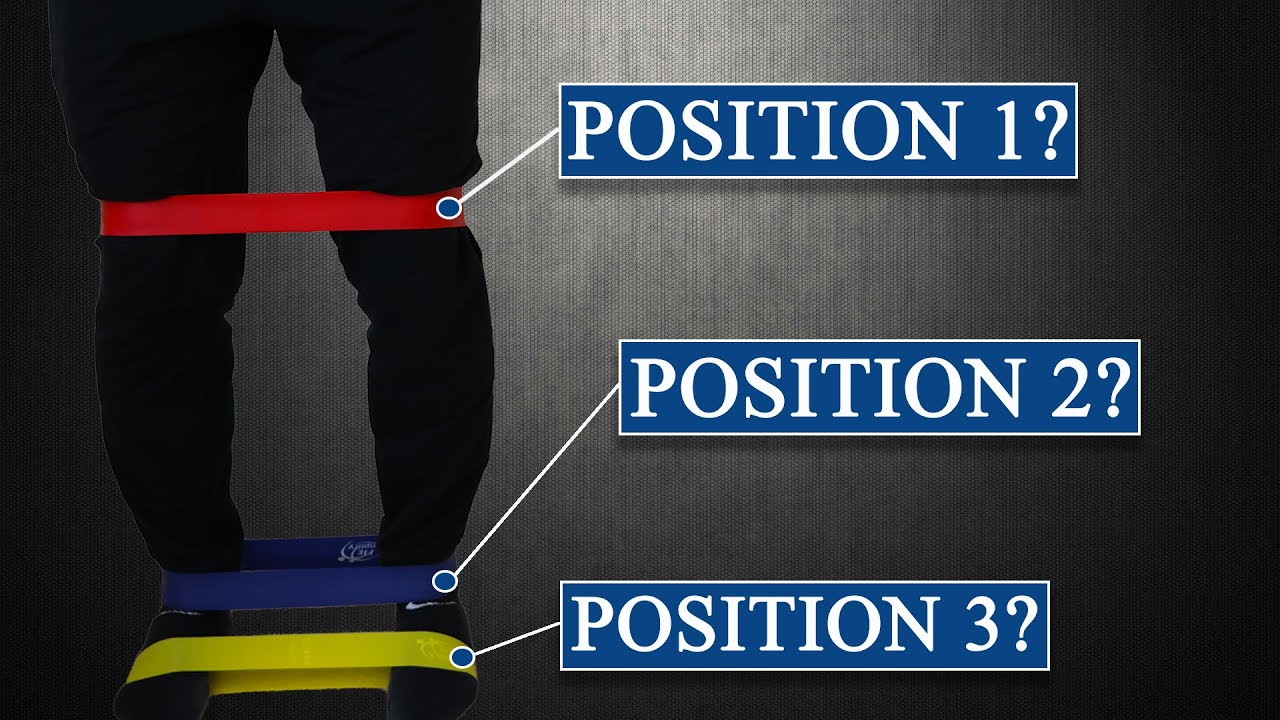
Place the band just above your knees. Stand with feet hip-width apart and a slight bend in your knees. Step sideways, keeping tension in the band throughout. Take 10 steps to the right, then 10 steps back to the left.
Sets and reps: 2 sets of 60 seconds.
This drill targets all three gluteal muscles at once: maximus, medius and minimus. It's one of the most efficient glute activation exercises you can do before a run.
4. clamshell exercise
The clamshell is a classic for good reason. It isolates glute medius in a controlled position, which makes it brilliant for runners who struggle to feel their glutes working at all.
Lie on your side with your hips stacked, knees bent to about 45 degrees. Place a mini band just above your knees. Keeping your feet together, rotate your top knee upward like a clamshell opening. Hold briefly at the top, then lower with control.
Sets and reps: 2 sets of 15 reps on each side.
The key mistake I see here is letting the hip roll backward as the knee lifts. Keep your pelvis still throughout. If your hip is moving, the weight is too heavy or you're going too fast.
5. Fire Hydrant
The fire hydrant works hip abduction and external rotation together, which mirrors what your glutes need to do during the stance phase of running.
Start on all fours with your hands under your shoulders and knees under your hips. Place a band just above your knees. Keeping your knee bent at 90 degrees, lift one knee out to the side until your thigh is roughly parallel to the floor. Lower with control.
Sets and reps: 2 sets of 12 to 15 reps on each side.
Don't let your lower back arch or rotate as you lift. The movement comes entirely from the hip.
6. Donkey Kick
The donkey kick targets gluteus maximus through hip extension, which is the exact movement pattern you use to push off the ground when you run.
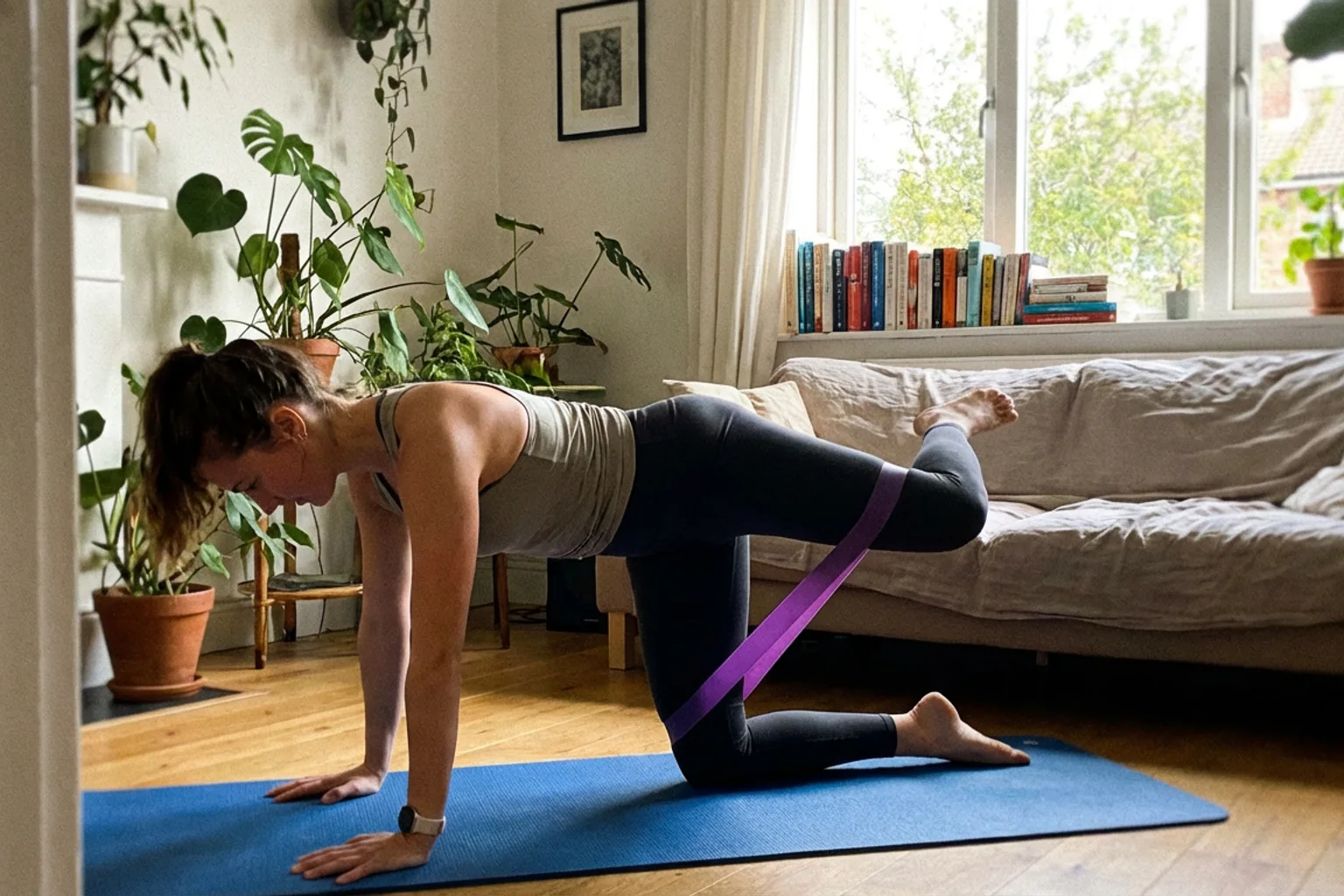
Stay on all fours. Keeping your knee bent at 90 degrees, drive one heel straight up toward the ceiling. Squeeze your glute hard at the top. Lower slowly and repeat.
Sets and reps: 2 sets of 12 to 15 reps on each side.
Add a band above your knees to increase the challenge. Focus on squeezing the glute at the top of each rep rather than just swinging your leg up.
7. Side-Lying Straight Leg Raise
This is a great starting point if you're new to glute activation or coming back from injury. It teaches you to feel glute medius working before you progress to more demanding exercises.
Lie on your side with your body in a straight line. Keep your top leg straight and your foot flexed. Lift the leg to about 45 degrees, hold for a second, then lower slowly. Don't let your hip roll forward or backward.
Sets and reps: 2 sets of 15 reps on each side.
Once this feels easy, add a band above the ankle for more resistance, or move on to the hip hitch drill above.
8. Single-Leg Glute Bridge
This is a progression from the standard banded bridge. It challenges each glute independently and also demands more pelvic stability, which transfers directly to running.
Lie on your back with both knees bent. Extend one leg straight out. Drive through the heel of your planted foot to lift your hips. Hold for 2 to 3 seconds at the top, then lower slowly.
Sets and reps: 2 sets of 10 reps on each side.
If your hips twist or drop to one side, your glute medius needs more work. Stick with the standard banded bridge until you can hold the top position steadily.
You can also try the glute march variation to add a rotational control challenge to this exercise.
Glute Activation vs Glute Strength: What's the Difference?
This is a question I get asked a lot, so it's worth clearing up.
Glute activation is about waking up the muscle and establishing the mind-muscle connection before you run or train. These are low-load exercises. The goal isn't to fatigue the muscle. It's to get it firing so it's ready to work during your run.
Glute strength is built through heavier, progressive resistance training. Think squats, deadlifts, hip thrusts and Bulgarian split squats. These exercises build the actual capacity of the muscle over weeks and months.
You need both. Activation without strength is like warming up a car engine that has no fuel. Strength without activation means you might not actually use those muscles when it counts.
For a full strength programme, check out my four essential glute exercises for runners and my strength training guide for distance runners.
How to Build a Pre-Run Glute Activation Routine
Here's the thing: you don't need to do all eight exercises before every run. That would take forever and you'd stop doing it within a week.
Pick three or four exercises that target both gluteus maximus and gluteus medius. Rotate them so you're not always doing the same ones. Keep the whole routine under 10 minutes.
Here's a simple structure that works well:
| Exercise | Sets | Reps / Duration | Target |
|---|---|---|---|
| Banded Glute Bridge | 2 | 10 x 10-second holds | Gluteus Maximus |
| Clamshell | 2 | 15 reps each side | Gluteus Medius |
| Hip Hitch Drill | 2 | 15 reps each side | Gluteus Medius |
| Crab Walk | 2 | 60 seconds | All three glutes |
Do this before your run, straight after a light 5-minute walk or jog. Your muscles need to be slightly warm before activation work. Cold muscles don't respond as well.
For a full warm-up structure, read my guide on running warm-up exercises.
Best Glute Exercises to Build Long-Term Strength
Once you've got your activation routine dialled in, you'll want to build real glute strength through your regular training sessions. Here are the exercises I recommend most often to the runners I coach:
- Hip thrust: The gold standard for gluteus maximus strength. Load it progressively over time.
- Bulgarian split squat: Brilliant for single-leg strength and hip stability at the same time.
- Single-leg deadlift: Challenges glute strength and balance together. Very specific to running.
- Barbell squat: A classic for overall lower body strength. Get your technique checked before loading it up. Trust me on that one.
- Lateral and crossover lunges: Target the glutes in multiple planes of movement, which is exactly how they work when you run.
I also recommend checking out my full 10-minute glute activation and stability workout for a structured session you can do at home.
If you're dealing with a specific injury, read my article on whether stronger glutes really reduce your risk of runner's knee.
How Often Should You Do Glute Activation Exercises?
For activation work before running, do it every single time you run. It takes less than 10 minutes and the benefit is immediate.
For glute strengthening sessions, two to three times per week is ideal for most runners. You need enough recovery time between sessions for the muscles to adapt and grow stronger.
Not sure how to fit it all in? My article on how often runners should do strength and mobility exercises gives you a practical framework.
Glute Activation Exercises: FAQ
How long should glute activation take before a run?
Your glute activation warm-up should take 8 to 10 minutes. Choose 3 to 4 exercises and do 2 sets of each. You don't need to do every exercise every time. Consistency matters more than volume. Do it before every run and you'll notice the difference within a few weeks.
Why can't I feel my glutes working during these exercises?
This is very common. It usually means your glute medius or maximus is inhibited, often from prolonged sitting. Start with the side-lying leg raise and clamshell before progressing to harder exercises. Focus on squeezing the muscle consciously at the top of each rep. That mind-muscle connection takes practice but it does come.
Can glute activation exercises help with runner's knee?
Yes, significantly. Weak or inactive glutes cause the knee to track inward during the stance phase of running, which loads the patellofemoral joint unevenly. Research consistently links poor glute strength to runner's knee. Activating and strengthening your glutes is one of the most effective things you can do to prevent knee pain when running.
Should I do glute activation exercises every day?
Activation exercises are low-load enough to do daily if you want to. Many runners benefit from doing a short glute routine on non-running days too, especially if they sit for long periods at work. Strengthening exercises need rest days between sessions, but activation work is gentle enough to repeat daily without issue.
What's the difference between glute activation and a glute workout?
Glute activation uses light resistance and low reps to wake up the muscles and build the mind-muscle connection before exercise. A glute workout uses heavier loads and progressive overload to build actual muscle strength over time. Both matter for runners. Activation prepares you to run well today. Strength training makes you more resilient over the long term.
Start Here: Your Next Steps
If you've been running without doing any glute activation work, start simple. Pick the banded glute bridge, the clamshell and the crab walk. Do them before your next three runs. Notice how your hips feel. Notice whether your glutes actually engage when you're running.
Most runners are genuinely surprised by how much of a difference it makes, even in that first week.
From there, build your routine gradually. Add exercises. Progress to single-leg variations. Start incorporating heavier glute strength work two or three times a week.
Strong, well-activated glutes are one of the best investments you can make in your running. They'll help you run faster, stay injury-free, and keep you on the road for years to come.
Ready to take the next step? Read my complete guide on how to engage your glutes when running, or explore the full resistance band routine for runners to build on what you've started here.