How to Fix Plantar Fasciitis Fast: 7 Steps That Actually Work
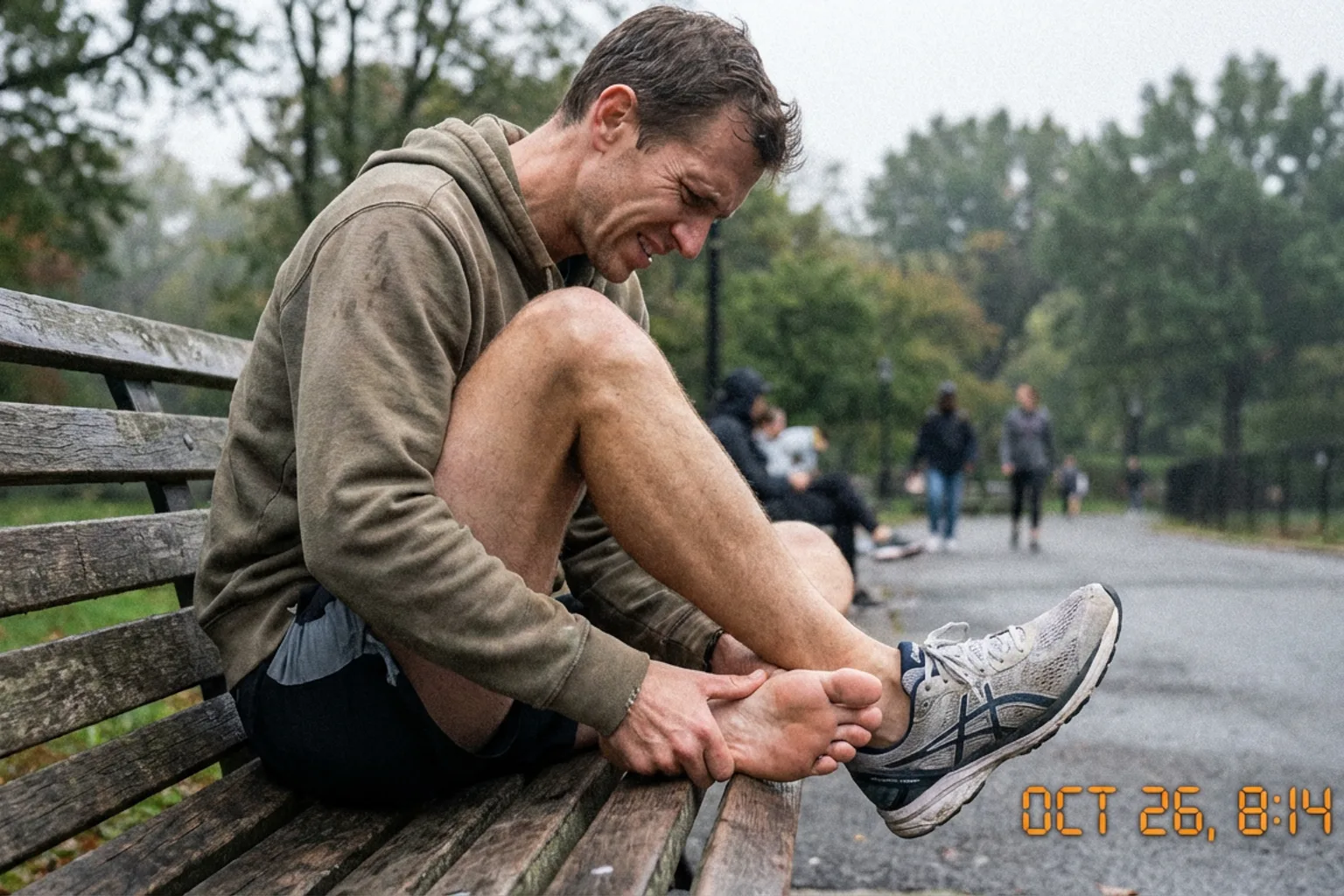
That first step out of bed in the morning. You know the one. Your heel hits the floor and a sharp, stabbing pain shoots through the bottom of your foot. You hobble to the bathroom, wincing, wondering how something so small can hurt so much.
If that sounds familiar, you've got plantar fasciitis. And you want to know how to fix plantar fasciitis fast, not in six months, not "eventually." Now.
I've worked with hundreds of runners dealing with this exact problem. The good news? You can get on top of it quickly if you do the right things in the right order. The bad news? Most people waste weeks on approaches that only treat the symptoms, not the cause.
Quick answer: To fix plantar fasciitis fast, you need to combine immediate pain relief (ice, rest, anti-inflammatories) with targeted stretching, foot strengthening exercises, and load management. Do all of these together, consistently, and most runners see significant improvement within 2 to 4 weeks.
If you want a structured programme that walks you through this step by step, including the strength and mobility work that actually fixes the underlying problem, check out Bulletproof Runners. It's the programme I built specifically to help runners like you get out of pain and stay out of pain for good.
But first, let's get into the detail. Here's exactly what to do.
What Is Plantar Fasciitis? (And Why It Hurts So Much)
The plantar fascia is a thick band of connective tissue that runs along the bottom of your foot, from your heel bone to the base of your toes. Its job is to support your arch and absorb shock every time your foot hits the ground.
When this tissue gets overloaded, tiny tears develop. Your body responds with inflammation. That inflammation causes the pain you feel, especially those first agonising steps in the morning after the tissue has tightened up overnight.
Here's what most articles won't tell you: plantar fasciitis isn't just an inflammation problem. It's a loading problem. The tissue is being asked to handle more stress than it can cope with. That might be because of a sudden spike in training mileage, weak foot and calf muscles, poor foot mechanics, or all three at once.
That's why simply resting and icing, while helpful short-term, rarely fixes it for good. You need to address the root cause.
To understand how serious your case might be and what stage you're at, read my guide on the stages of plantar fasciitis in runners. It'll help you calibrate how aggressively you need to approach treatment.
How to Fix Plantar Fasciitis Fast: Your 7-Step Plan
Work through these steps in order. The first two give you fast relief. Steps three through seven fix the underlying problem so it doesn't come back.
Step 1: Reduce the Load Immediately
This doesn't mean stop moving entirely. Complete rest often makes plantar fasciitis worse, not better, because the tissue becomes even less tolerant to load.
What it does mean:
Cut your running volume by 50 to 70% for the first week
Avoid walking barefoot on hard floors, especially first thing in the morning
Stop any high-impact activity that causes pain during or after
Swap painful runs for swimming or cycling to maintain fitness without loading the foot
If you're unsure whether you should keep running at all right now, I've written a full guide on whether you can run with plantar fasciitis that'll help you make that call.
The key rule: if your pain is above 3 out of 10 during a run, and it doesn't settle within 24 hours, you're doing too much.
Step 2: Use Ice and Anti-Inflammatories Strategically
Ice works. But most people use it wrong.
The frozen water bottle trick is the best method I know. Fill a 500ml water bottle, freeze it, then roll the bottom of your foot over it for 10 to 15 minutes. You get cold therapy and a gentle massage at the same time. Do this two to three times a day during the acute phase.
Alternatively, fill a shallow bowl with ice water and soak your heel for 10 minutes. Keep your toes out of the water if possible.
Over-the-counter anti-inflammatories like ibuprofen can help reduce swelling in the first one to two weeks. Take them with food and follow the packet instructions. Don't rely on them long-term, though. They mask pain rather than fix the problem.
One thing I want to be clear about: ice and anti-inflammatories are a bridge, not a destination. Use them to get comfortable enough to do the real work in steps three through seven.
Step 3: Do the Morning Stretch Before You Take a Single Step
This is the single most impactful habit you can build. Here's why it works.
Overnight, your plantar fascia tightens as it heals in a shortened position. The moment you stand up and put weight through it, you're suddenly stretching cold, stiff tissue. That's where the worst morning pain comes from.
Before your feet touch the floor, do this:
Sit up in bed and cross one foot over the opposite knee
Grab your toes and gently pull them back towards your shin
Hold for 30 seconds, feeling the stretch along the bottom of your foot
Repeat 3 times on each foot
Then do the same stretch standing, with your toes against a wall
A study published in Foot and Ankle International found that 83% of patients reported significant improvement using this specific stretch protocol. That's a remarkable result for something that takes two minutes and costs nothing.
Do this stretch again before standing after any prolonged period of sitting. Those "second step" moments after lunch or after driving are almost as painful as the morning ones for many runners.
Step 4: Stretch Your Calves Every Day
Tight calves are one of the most common contributors to plantar fasciitis that gets overlooked. The gastrocnemius and soleus muscles attach to your heel via the Achilles tendon. When they're tight, they pull on the heel bone and increase tension through the plantar fascia.
You need to stretch both muscles separately:
Gastrocnemius stretch (straight leg):
Stand facing a wall, hands on the wall at shoulder height
Step one foot back about a metre, keeping it flat on the floor
Keep your back knee straight and lean your hips towards the wall
Hold 45 seconds, repeat 3 times each side
Soleus stretch (bent knee):
Same starting position as above
This time, bend your back knee slightly while keeping your heel on the floor
Hold 45 seconds, repeat 3 times each side
Do both stretches twice a day. I'd suggest pairing them with your morning plantar fascia stretch and doing them again in the evening. My complete guide to stretches for runners has more detail on calf flexibility work if you want to go deeper.
For targeted calf work, also check out this super targeted calf stretch for runners that hits different areas of the lower leg.
Step 5: Strengthen Your Foot Intrinsic Muscles
Here's where most plantar fasciitis treatment programmes fall short. They stretch the fascia but never strengthen the muscles that support it.
The small muscles inside your foot, your intrinsic muscles, act like a built-in suspension system for your arch. When they're weak, the plantar fascia has to pick up the slack. Over time, that overloads it.
These three exercises target those muscles directly:
1. Towel scrunches
Sit barefoot with a small towel on the floor in front of you
Use your toes to scrunch the towel towards you
3 sets of 15 repetitions, daily
2. Marble pickups
Place 10 to 15 marbles on the floor
Pick each one up with your toes and drop them into a cup
2 sets per foot, daily
3. Short foot exercise
This is my favourite and the most effective. Sit with your foot flat on the floor. Without curling your toes, try to shorten your foot by drawing the ball of your foot towards your heel. You'll feel the arch lift slightly. Hold 5 seconds, release. Do 3 sets of 10 reps per foot.
It feels strange at first. Stick with it. After two weeks of daily practice, most of my athletes notice a real difference in foot stability.
Step 6: Load the Plantar Fascia Progressively with Calf Raises
This step surprises a lot of runners. Load the painful tissue? Really?
Yes. And here's why.
Research on tendon and fascial tissue consistently shows that controlled, progressive loading is the most effective way to promote healing and increase tissue tolerance. Passive rest allows the tissue to heal in a weakened state. Progressive loading rebuilds its capacity to handle the demands of running.
Start with this protocol:
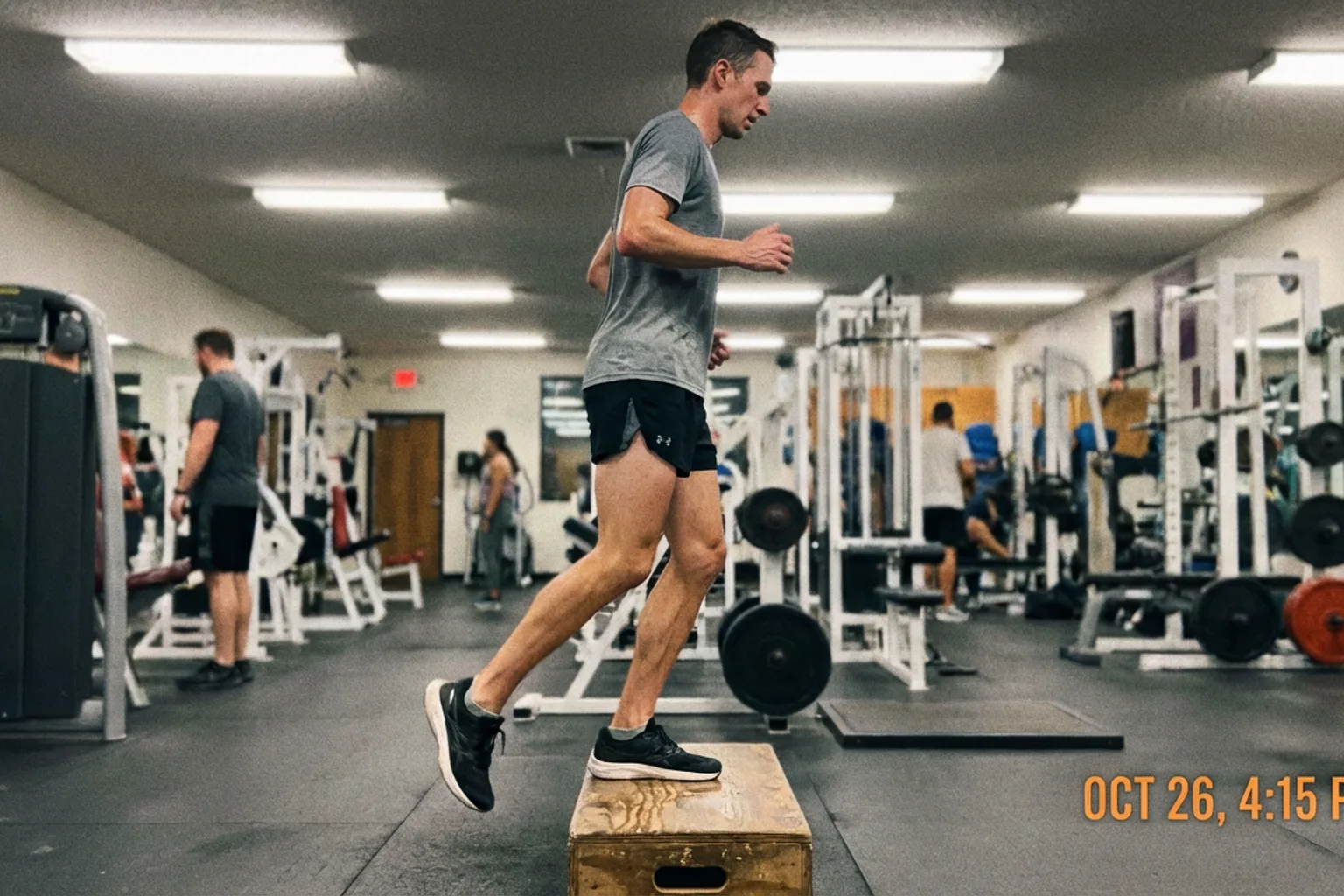
Week 1 to 2: Double-leg calf raises
Stand on both feet on a step, heels hanging off the edge
Rise up onto your toes slowly (3 seconds up)
Lower slowly (3 seconds down)
3 sets of 15 reps, once daily
Stop if pain exceeds 4 out of 10
Week 3 to 4: Single-leg calf raises
Same movement, but on one leg only
3 sets of 12 reps per leg, once daily
Expect mild discomfort but not sharp pain
Week 5 onwards: Loaded single-leg calf raises
Hold a dumbbell or wear a loaded backpack
3 sets of 10 to 12 reps per leg
Increase load by 5% each week as tolerated
This progressive loading protocol is backed by solid research and is something I use with almost every runner I work with who has plantar fasciitis. It's also a cornerstone of the Bulletproof Runners programme, where I build it into a fully structured weekly training plan so you don't have to guess what to do next.
Step 7: Fix the Root Cause So It Doesn't Come Back
Pain relief is step one. Staying pain-free is the real goal.
In my experience, plantar fasciitis comes back in runners who don't address why it happened in the first place. Here are the most common root causes I see:
Training load spike: Did you suddenly increase your weekly mileage? Add a new session? The 10% rule exists for a reason. Your tissues need time to adapt. If you ramped up too fast, you need to build back more gradually. My guide on how to prevent running injuries covers this in detail.
Worn-out shoes: Running shoes lose their cushioning and support long before they look worn out. Most shoes need replacing every 500 to 800 kilometres. If you're not tracking this, start now.
Weak hips and glutes: This one surprises runners. When your glutes don't fire properly, your lower leg muscles work harder to compensate. That extra tension travels down through the calf and into the plantar fascia. Strengthening your glutes is a genuine fix for persistent plantar fasciitis. Check out my four essential glute exercises for runners to get started.
Poor running form: Overstriding, landing with a heavy heel strike, and running with a low cadence all increase impact forces through the foot. Even small tweaks to your running foot strike can make a meaningful difference to how much load your plantar fascia absorbs with every step.
Insufficient strength training: Runners who only run are more vulnerable to overuse injuries. Adding two sessions of strength training per week builds the resilience your body needs to handle training load without breaking down.
Your Daily Plantar Fasciitis Routine: Week by Week
Here's a practical schedule you can follow from day one. Adapt it to your own schedule, but try to keep the key elements consistent.
Phase | Timeframe | Daily Focus | Running Volume |
|---|---|---|---|
Acute relief | Days 1 to 7 | Ice (2x daily), morning stretch, calf stretches, intrinsic foot exercises | Reduce by 50 to 70% |
Early loading | Weeks 2 to 3 | Morning stretch, calf stretches, double-leg calf raises, foot exercises | Maintain reduced volume if pain-free |
Progressive loading | Weeks 3 to 5 | Morning stretch, single-leg calf raises, glute and hip work, foot exercises | Gradually rebuild by 10% per week |
Return to full training | Weeks 5 to 8 | Loaded calf raises, full strength programme, running form cues | Back to normal with load monitoring |
This timeline assumes you're consistent. Skip days and it takes longer. Most of my athletes who follow this properly see real improvement within two to three weeks and are back to full training within six to eight weeks.
For a detailed breakdown of what to expect at each stage of recovery, read my guide on how long plantar fasciitis lasts.
What to Do First Thing Every Morning
Morning is the most important time of day when you have plantar fasciitis. Here's your exact morning routine. It takes under 10 minutes.
Before you stand: Do the seated toe-pull stretch, 3 x 30 seconds per foot
Sitting on the edge of the bed: Roll a frozen water bottle under each foot for 2 minutes
Standing: Do the wall calf stretch (straight leg), 3 x 45 seconds per side
Standing: Do the wall calf stretch (bent knee), 3 x 45 seconds per side
Standing: Do 10 short foot exercises per foot
Then: Put on supportive footwear before walking around the house
That last point matters more than you'd think. Walking barefoot on hard floors is one of the worst things you can do with plantar fasciitis. Keep a pair of supportive slippers or trainers next to your bed and put them on before you take more than a few steps.
Plantar Fasciitis Treatments That Don't Work (Or Only Help a Little)
Look, there's a lot of noise out there about plantar fasciitis treatments. Let me give you my honest take on some of the popular ones.
Cortisone injections: Can provide fast pain relief, but the evidence suggests they don't speed up long-term recovery and may actually weaken the tissue if used repeatedly. I'd treat them as a last resort, not a first response.
Dry cupping and TENS therapy: Some people get temporary relief from these. The evidence is limited. I wouldn't prioritise them over the steps I've outlined above.
KT tape: Can offload the fascia slightly and provide some short-term relief. Worth trying as an adjunct. Not a substitute for the real work.
Toe separators: Minimal evidence for plantar fasciitis specifically. Some benefit for general foot health. Low priority.
The bottom line? Most passive treatments give you temporary relief. Active treatments, stretching, strengthening, progressive loading, give you lasting results.
Plantar Fasciitis and Running: How to Manage Both
One of the most common questions I get is: "Can I still run?"
The honest answer is: it depends. I've written a full guide on running with plantar fasciitis that covers this in detail, but here's the short version.
You can often continue running at a reduced volume if:
Your pain during the run is 3 out of 10 or below
Your pain doesn't worsen during the run
Your pain returns to baseline within 24 hours of running
You should stop running if:
Pain is above 4 or 5 out of 10 and rising during the run
You're limping or changing your gait to compensate
Symptoms are getting progressively worse week on week
Also worth knowing: running with plantar fasciitis can sometimes make you compensate with your stride, which puts extra stress on your knee, hip, or lower back. If you're already dealing with any of those issues, check out my guides on running with runner's knee and lower back pain when running.
When to See a Doctor or Physio
Most cases of plantar fasciitis respond well to the self-treatment approach I've outlined. But there are situations where you need professional input.
See a physio or sports medicine doctor if:
You've been doing everything right for 6 to 8 weeks and seeing no improvement
The pain is severe and stopping you from walking normally
You have pain on the top of your foot or in your ankle (could be a stress fracture or different diagnosis)
You have numbness or tingling in your foot (could indicate nerve involvement)
The pain came on suddenly after a specific incident rather than gradually
A good physio will confirm the diagnosis, rule out other causes of heel pain like Achilles tendinopathy or a heel stress fracture, and tailor the rehabilitation to your specific situation.
Frequently Asked Questions
How long does plantar fasciitis take to heal?
Most cases improve significantly within 6 to 8 weeks with consistent treatment. Full recovery typically takes 3 to 6 months. Runners who address the root cause and do the strengthening work recover faster than those who only rest and ice. For a full breakdown, see my guide on plantar fasciitis recovery time.
What is the fastest way to fix plantar fasciitis?
The fastest results come from combining morning stretching, progressive calf loading, intrinsic foot strengthening, and load management all at once. Doing just one of these in isolation is much slower. Consistency matters more than intensity. Daily effort for 4 to 6 weeks beats sporadic intense treatment every time.
Does plantar fasciitis go away on its own?
Sometimes, but it's unreliable and slow. Studies suggest that without treatment, plantar fasciitis can persist for 12 to 18 months. With targeted exercise and load management, most runners recover in 6 to 12 weeks. Don't wait and hope. Act now and you'll recover much faster.
Should I stretch plantar fasciitis or rest it?
Both, done correctly. Rest from aggravating activities is important early on, but complete rest without stretching or strengthening slows recovery. The morning plantar fascia stretch and progressive calf loading are the two most evidence-backed approaches. Start both as soon as possible, even in the first week.
Can tight calves cause plantar fasciitis?
Yes, tight calves are a major contributing factor. The gastrocnemius and soleus pull on the heel bone via the Achilles tendon, increasing tension through the plantar fascia. Stretching both calf muscles twice daily is one of the most important things you can do alongside foot-specific work. Don't skip this step.
The Bottom Line
Plantar fasciitis is frustrating. I know that. I've seen it derail marathon training blocks, sideline runners for months, and knock the confidence out of people who just want to get back to doing what they love.
But it's also very fixable when you approach it the right way.
To recap how to fix plantar fasciitis fast: reduce load immediately, use ice strategically, do the morning stretch before your first step, stretch your calves twice daily, strengthen your intrinsic foot muscles, progressively load the plantar fascia with calf raises, and fix the root cause so it doesn't come back.
Do all seven steps together, every day. That's what gets results.
And if you want a complete, structured programme that takes all the guesswork out of this, including the exact exercises, progressions, and return-to-running plan, that's exactly what Bulletproof Runners is built for. It's the programme I created to help runners build the kind of resilience that keeps injuries like plantar fasciitis from ever slowing them down again. Hundreds of runners have used it to get back on the road stronger than before. I'd love for you to be next.
You've got this. Start today.