Why Your Runners Knee Won't Go Away (and How to Fix It)
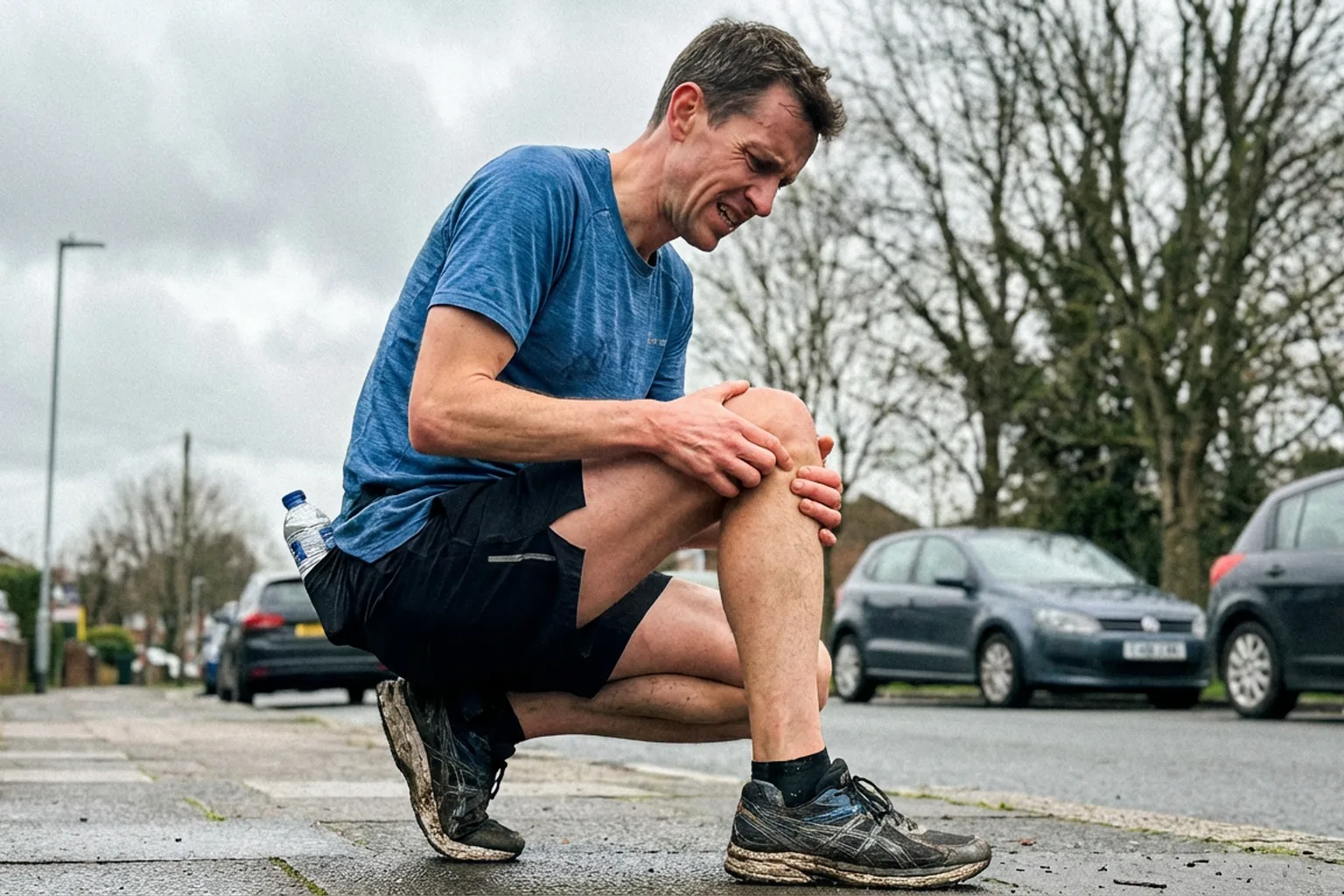
If your runner's knee won't go away, you're not alone, and you're not imagining it. I hear this from runners every single week. They rest for a few weeks, the pain settles, they head back out the door, and within a mile or two it's right back. It's one of the most frustrating injury cycles in running.
Here's the hard truth: rest doesn't fix runner's knee. It just quiets it down temporarily. If you keep returning to the same training without addressing the underlying cause, you'll keep getting the same result.
In this guide, I'm going to explain exactly why runner's knee persists, what's really driving it, and what you need to do differently to get lasting relief. I've spent over 20 years working with runners on this specific problem, and the answer is almost never what people expect.
If you want a structured, step-by-step programme to work through this properly, I'd strongly recommend checking out Bulletproof Runners. It's the programme I built specifically to help runners like you fix the root causes of injuries like this one and get back to running strong.
What Is Runner's Knee?
Runner's knee, or patellofemoral pain syndrome (PFPS), is pain at the front of the knee around or behind the kneecap. It happens when the kneecap doesn't track smoothly in its groove on the thighbone. That creates friction and pressure on the cartilage underneath, which causes the familiar dull ache most runners know all too well.
The pain typically gets worse when you run, go downstairs, squat, or sit for a long time with your knee bent. Some runners also notice a grinding or clicking sensation under the kneecap.
It's worth knowing that runner's knee isn't one single injury. It's a term that covers several related problems, all producing similar symptoms. That's part of why a one-size-fits-all treatment approach so often fails. For a deeper look at what's actually happening in the joint, read my article on what causes runner's knee.
Studies suggest PFPS affects between 13% and 30% of runners, making it the most common overuse running injury there is. If it's happening to you, you're in very crowded company.
Why Runner's Knee Won't Go Away: The Real Reason
This is the bit most articles skip over, so I want to spend some proper time here.
The reason runner's knee keeps coming back is almost always because the underlying mechanical cause has never been addressed. Rest reduces inflammation and pain. But it does nothing about the movement pattern, muscle weakness, or structural issue that caused the problem in the first place.
Think of it this way. Imagine you have a slow puncture in a tyre. You pump it up, it feels fine, you drive on it. A few miles later, it's flat again. Rest is the pump. The actual fix is finding and patching the hole.
I've worked with runners who've had persistent runner's knee for two, three, even five years. In almost every case, they'd been resting and returning rather than actually fixing the cause. Once we identified and addressed their specific driver, the improvement was often dramatic and fast.
So what are those drivers? Let's go through them properly.
Runner's Knee Causes: Why Yours Keeps Coming Back
1. Weak Glutes and Hip Muscles
This is the big one. I'd say weak or poorly activated glutes are a contributing factor in the majority of persistent runner's knee cases I see.
Your glutes control the position of your femur (thigh bone) during every single stride. When they're weak or slow to fire, your thigh tends to rotate inward and your knee drops towards the midline. That shifts the kneecap off its ideal tracking path and creates exactly the kind of friction that causes PFPS.
Research backs this up clearly. Studies show that runners with PFPS consistently display weaker hip abductor and external rotator strength compared to pain-free runners. And when you strengthen those muscles, symptoms improve significantly.
My article on whether stronger glutes really reduce your risk of runner's knee digs into the evidence in detail. It's worth a read.
Start with targeted glute work. My glute activation and stability workout and the four essential glute exercises for runners are good places to begin.
2. Poor Quad Strength and Control
The quadriceps are the primary muscles that control kneecap movement. If they're weak, especially the inner quad (VMO, or vastus medialis oblique), the kneecap can drift outward and track poorly.
But here's the thing many people miss: it's not just about strength in isolation. It's about neuromuscular control, your ability to activate the right muscles at the right time during dynamic movement. A runner might test reasonably well on a leg press but still have poor quad control during a single-leg squat or at foot strike.
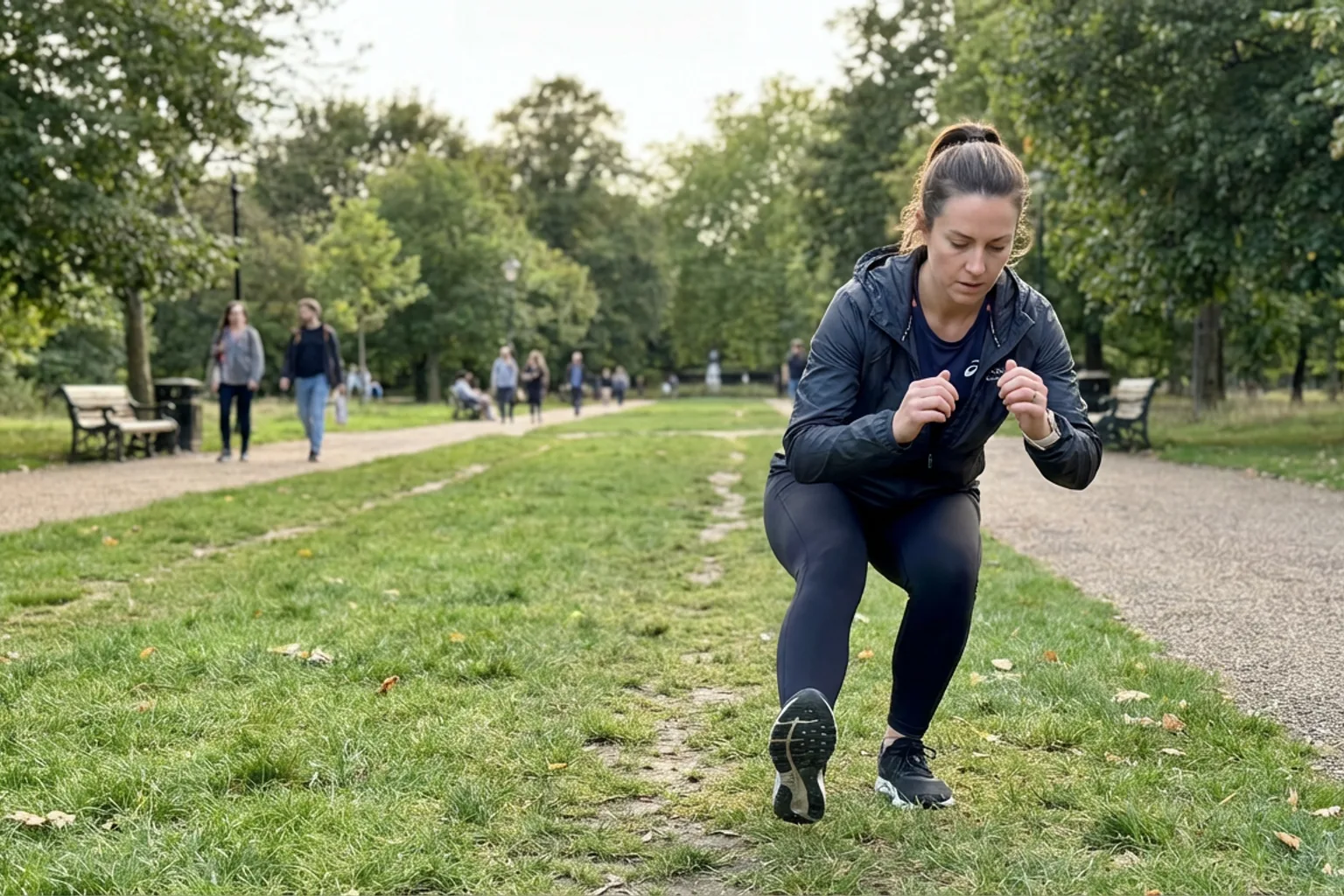
That's why exercises like single-leg squats with good knee control are so valuable. They train strength and movement quality at the same time.
3. Tight IT Band and Lateral Structures
Tightness in the iliotibial band and the lateral retinaculum (the tissue on the outer side of the knee) can pull the kneecap off to the side. This is a very common contributor to abnormal patellar tracking.
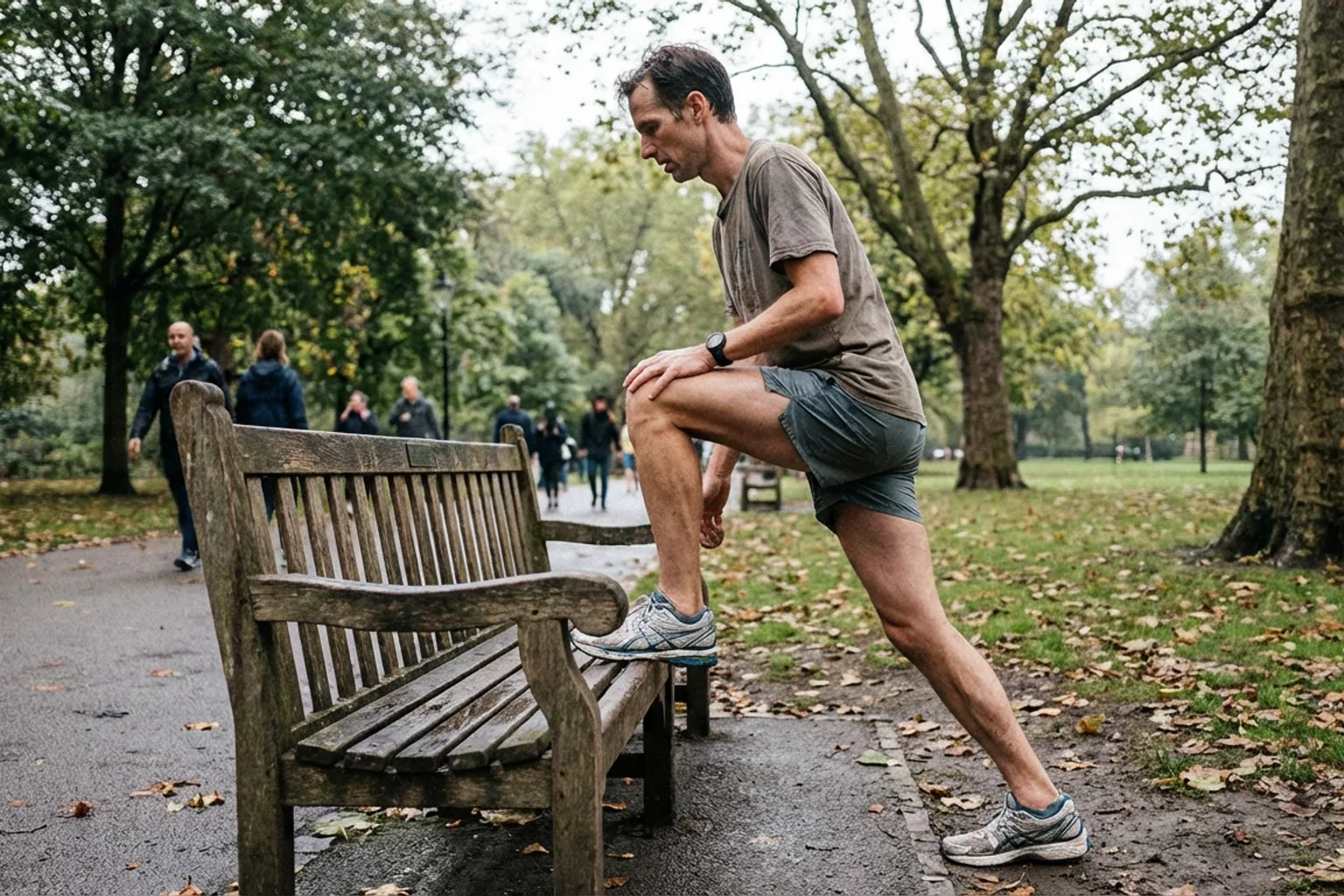
foam rolling and stretching the outer hip and thigh can help reduce this tension. My TFL stretch for runners is one I regularly prescribe for this exact issue.
4. Weak Hamstrings
People focus so much on quads and glutes that they often overlook the hamstrings. But your hamstrings play a key role in controlling knee flexion and deceleration during running. Weakness here puts more load on the front of the knee.
I've written specifically about hamstring strengthening exercises for running knee pain. These are often a missing piece in runner's knee rehab programmes.
5. Foot and Ankle Mechanics
What happens at the foot directly affects what happens at the knee. Excessive pronation (inward rolling of the foot) causes the lower leg to rotate inward, which in turn causes the knee to collapse inward. That's a direct line to kneecap tracking problems.
Limited ankle mobility compounds this. If your ankle can't dorsiflex properly, your body compensates by collapsing the arch and rotating the knee inward during loading. My ankle mobility exercises for runners address this directly.
6. Running Gait Faults
Your movement pattern matters enormously. Specific gait faults that load the patellofemoral joint include:
Cross-over gait (stepping across the midline with each stride)
Excessive forward trunk lean
Knee valgus (knee caving inward) at foot strike
Overstriding, which increases impact forces at the knee
Low cadence, which tends to increase knee flexion angle at foot strike
Gait retraining has strong evidence behind it for PFPS. My guide to gait retraining for runner's knee covers this in detail. And if cross-over gait is your issue, my stride width exercises are a practical starting point.
7. Training Load Errors
Sometimes the cause really is too much, too soon. A sudden spike in weekly mileage, adding back-to-back long runs, or ramping up hill work can all overload the patellofemoral joint before it's ready.
But here's where I'd push back on the idea that runner's knee is purely an overuse injury. In my experience, load is often the trigger, not the root cause. The root cause is usually the mechanical issue underneath. The load just exposed it.
That said, managing training load is still an essential part of recovery. You can't fix a mechanical issue while simultaneously overloading the joint.
Runners Knee Won't Go Away: The Treatment Mistakes Keeping You Stuck
Let's talk about what doesn't work, because I see runners making the same mistakes over and over.
Mistake 1: Relying on Rest Alone
I've already covered this above, but it bears repeating. Rest is not a treatment. It's a temporary pain management strategy. If you rest for four weeks and then return to running without changing anything, you'll be back here reading this article again in a month.
Mistake 2: Using Ice and NSAIDs as a Long-Term Fix
Anti-inflammatories like ibuprofen and regular icing will reduce pain and swelling. That's genuinely useful in the short term. But they don't address the mechanical cause. There's also emerging evidence that long-term NSAID use may actually interfere with tissue healing. Use them to manage symptoms while you do the real work, not instead of it.
On cortisone injections specifically: I've written a full article on cortisone injections for runner's knee that's worth reading before you go down that route. The short version is that they can provide temporary relief but carry real risks with repeated use, including potential cartilage damage.
Mistake 3: Only Treating the Knee
The knee is where you feel the pain, but it's rarely where the problem originates. Treating only the knee, with knee-specific exercises and knee braces, misses the hip, foot, and movement pattern issues that are driving the problem. A good runner's knee rehab programme works the entire kinetic chain.
Mistake 4: Doing Generic Exercises Without Progression
Clam shells and straight-leg raises have their place. But if that's all you're doing three months in, you're not progressing. Your rehab needs to evolve from basic activation work to functional, load-bearing exercises that replicate the demands of running. If your exercises aren't getting harder over time, you're not building the capacity you need.
Mistake 5: Returning to Running Too Soon
Pain-free walking is not the same as being ready to run. Pain-free running on flat ground is not the same as being ready for hills or speed work. Graded return to running matters. Jumping back to full training the moment symptoms ease is one of the most common reasons runner's knee becomes a recurring problem.
How Long Does Runner's Knee Last?
The honest answer is: it depends entirely on what you do about it.
With early intervention and a proper rehab programme, many runners see significant improvement within four to six weeks. Mild cases with good compliance to a structured plan can resolve even faster.
But persistent or severe cases, especially those where the root cause hasn't been identified, can drag on for months or even years. I've seen runners struggle with this for the better part of a decade because they kept repeating the same rest-and-return cycle without ever fixing the underlying issue.
Here's a rough guide to what you might expect:
| Severity | Typical Recovery Time | Key Factors |
|---|---|---|
| Mild (pain only during running) | 2 to 6 weeks | Early action, load management, targeted exercises |
| Moderate (pain during and after running) | 6 to 12 weeks | Structured rehab, gait assessment, strength work |
| Severe (pain with daily activities) | 3 to 6 months or more | Professional assessment, comprehensive rehab, patience |
| Chronic (recurring over months or years) | Variable, often 3 to 12 months | Root cause identification, full kinetic chain rehab |
For a more detailed breakdown, see my dedicated article on how long it takes to recover from runner's knee.
What Actually Works: A Proper Approach to Fixing Runner's Knee
Here's what a genuinely effective approach looks like, based on both the research and my experience working with hundreds of runners through this exact problem.
Step 1: Identify Your Specific Driver
Not every runner's knee case has the same cause. Before you start a generic rehab programme, you need to understand what's actually driving your symptoms. Is it weak glutes? Poor ankle mobility? A gait fault? Tight lateral structures? The answer shapes everything that follows.
If you're not sure, a session with a physio or running coach who understands biomechanics is worth every penny. It's far more efficient than guessing.
Step 2: Manage Load Intelligently
You don't necessarily have to stop running completely. But you do need to reduce the load on the patellofemoral joint while you're rehabbing. That might mean cutting mileage, avoiding hills and stairs, or switching to flatter terrain temporarily. The goal is to stay active without aggravating the joint.
Cross-training options like swimming and cycling (on a properly fitted bike) can maintain fitness without loading the knee in the same way as running.
Step 3: Work the Full Kinetic Chain
Your rehab programme needs to address the hip, knee, and ankle together. Here's a framework of the key exercise categories:
Glute activation and strength: single-leg bridges, single-leg deadlifts, lateral band walks
Quad control: single-leg squats, step-downs, terminal knee extensions
Hip stability: glute medius exercises, lateral and rotational hip control work
Ankle mobility: ankle mobility drills, soleus strengthening
Core stability: side planks, core work specific to runners
My dedicated runner's knee rehab routine pulls many of these together into a practical ten-minute session. Start there if you want a structured starting point.
Step 4: Address Your Running Form
Once symptoms settle enough to run, gait retraining becomes important. Key cues to focus on include increasing your step rate slightly (aim for around 170 to 180 steps per minute), keeping your knee tracking over your second toe, and avoiding cross-over gait.
My knee stability exercises for runners help you build the neuromuscular control to support better form under fatigue.
Step 5: Progress Gradually and Test Under Load
As symptoms improve, gradually increase training load. Test your knee under progressively greater demands before declaring yourself fully recovered. A pain-free five-kilometre run is not the same as being ready for marathon training.
Use a simple rule: if pain is above a 3 out of 10 during activity, ease back. If it's below 3 and settles within 24 hours, you're likely managing load appropriately.
Should You Use Orthotics for Runner's Knee?
Orthotics can be helpful if foot mechanics are a significant driver of your runner's knee. If you overpronate substantially, a supportive insole or custom orthotic can reduce the inward rotation at the knee and take some load off the patellofemoral joint.
But orthotics are a support tool, not a cure. They work best alongside a strength and mobility programme, not instead of one. I've written a full article on whether orthotics work for runner's knee if you want to dig into this topic.
Taping for Runner's Knee
Patellar taping, particularly McConnell taping, can provide meaningful short-term pain relief by physically guiding the kneecap into a better tracking position. It's not a long-term fix, but it can make exercise more comfortable during the early stages of rehab, which is genuinely useful.
Kinesiology tape (KT tape) is another option some runners find helpful. My guide to runner's knee taping techniques walks you through both approaches.
When to See a Professional
Most runner's knee cases respond well to self-managed rehab if you're consistent and address the right things. But there are situations where you should seek professional assessment sooner rather than later:
Pain that's getting progressively worse despite reducing load
Significant swelling around the knee joint
Sharp or locking sensations in the knee
Pain that's now present during everyday activities like walking or climbing stairs
Symptoms that haven't improved at all after six to eight weeks of consistent rehab
Any concern that this might not be runner's knee at all
On that last point: runner's knee is sometimes confused with other conditions. My article on runner's knee or something else helps you distinguish PFPS from other common knee problems. And if you're concerned about knee pain after running more broadly, that guide covers a wider range of causes.
Can You Run Through Runner's Knee?
This is the question I get asked most often, and the answer is nuanced.
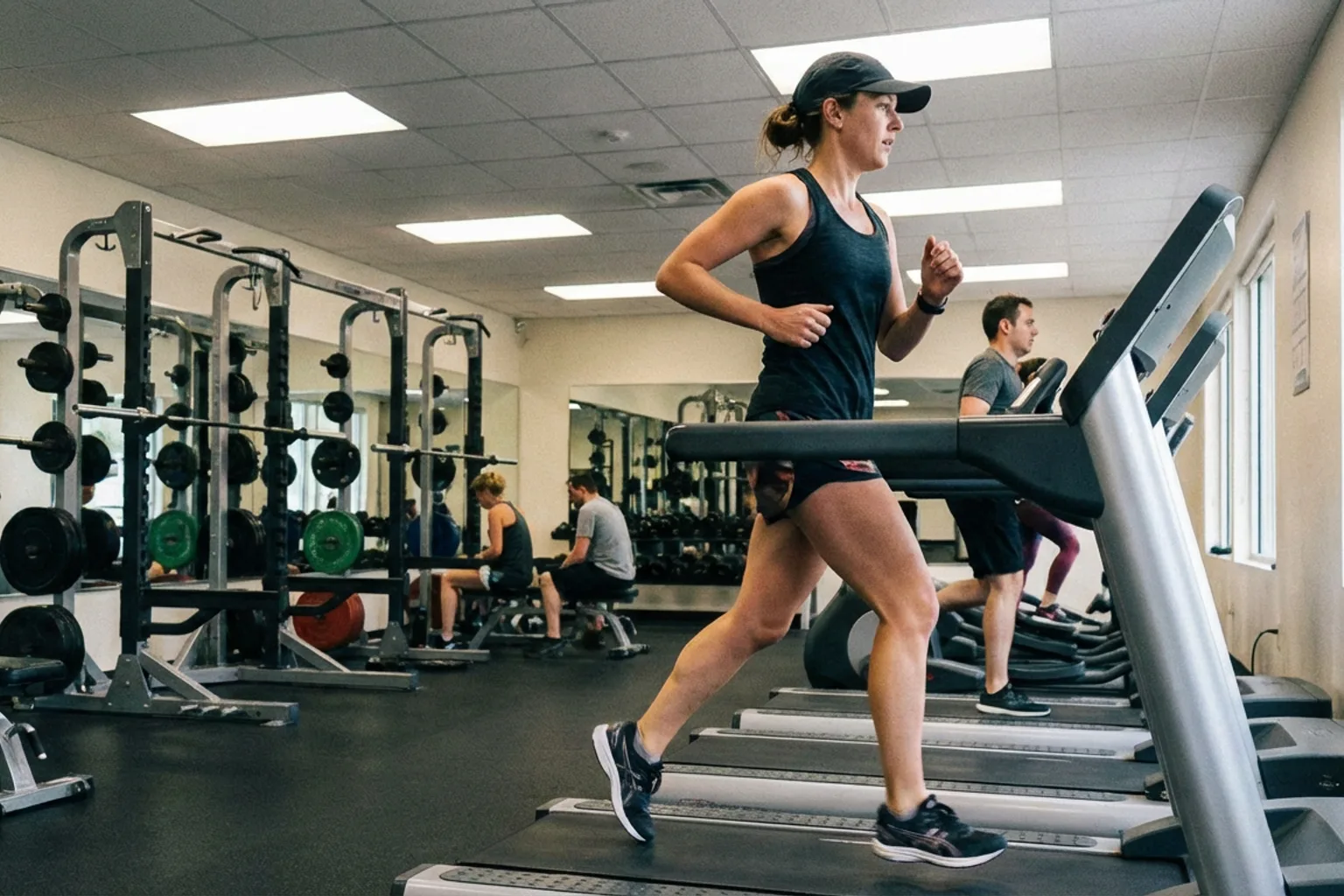
In mild cases, continuing to run at reduced intensity while doing your rehab work is often fine and may actually support recovery better than complete rest. The key is keeping pain below that 3 out of 10 threshold and monitoring how your knee responds in the 24 hours after each run.
In moderate to severe cases, a period of reduced or no running is usually necessary to allow the joint to calm down enough for rehab to be effective. Trying to run through significant pain almost always prolongs recovery.
My guide on running with bad knees covers this in more detail, with practical tips for keeping your training going while managing symptoms.
Preventing Runner's Knee from Coming Back
Once you've got on top of your symptoms, the goal shifts to making sure they don't return. Here's what the evidence and my coaching experience both point to:
Keep up the strength work. Don't stop your glute and hip exercises the moment you feel better. Make them a permanent part of your training routine. How often you should do strength work depends on your training volume, but twice a week is a solid baseline.
Manage your training load carefully. Follow the 10% rule for weekly mileage increases and be especially cautious when adding hills, speed work, or back-to-back long runs.
Warm up properly. A good glute activation warm-up before runs helps ensure the right muscles are firing from the start.
Address mobility restrictions. Tight hips, calves, and quads all contribute to poor knee mechanics. Regular mobility work matters. My 15 best stretches for runners is a good reference.
Review your footwear. Running shoes that no longer support your foot mechanics, or that are worn down unevenly, can contribute to the return of symptoms.
Listen to early warning signs. Know the warning signs of runner's knee and act early when they appear, rather than waiting until you're in significant pain.
Frequently Asked Questions
Why does runner's knee keep coming back after rest?
Rest reduces pain and inflammation but doesn't fix the underlying cause. Runner's knee returns because the mechanical issue driving it, such as weak glutes, poor patellar tracking, or a gait fault, is still there. Until you address the root cause, symptoms will keep recurring every time you return to running.
How do I know if my runner's knee is serious?
Most runner's knee cases aren't serious in a structural sense, but they can become more problematic if ignored. See a professional if your pain is worsening, you have significant swelling, you feel locking or sharp catching sensations, or your symptoms haven't improved after six to eight weeks of consistent rehab work.
Can runner's knee cause permanent damage?
In most cases, no. But if left completely untreated over a long period, repeated friction on the cartilage behind the kneecap can contribute to cartilage breakdown and, eventually, patellofemoral arthritis. This is a reason to take persistent runner's knee seriously rather than just managing pain indefinitely.
Is cycling OK with runner's knee?
Cycling is often well-tolerated with runner's knee, particularly on a properly fitted bike where the seat height prevents deep knee flexion. It's a popular cross-training option during recovery. However, if cycling also aggravates your symptoms, reduce resistance and cadence, or switch to swimming temporarily.
What exercises should I avoid with runner's knee?
Avoid deep squats, lunges, running downhill, and stair climbing while symptoms are significant. These activities load the patellofemoral joint heavily. As your strength and control improve through rehab, you'll gradually reintroduce these movements in a controlled way.
The Bottom Line
If your runner's knee won't go away, the answer isn't more rest. It's identifying and fixing the actual cause, whether that's weak glutes, poor patellar tracking, a gait fault, or something else entirely. Rest buys you time. Targeted rehab buys you your running back.
Work through the full kinetic chain, not just the knee. Progress your exercises over time. Address your running form. And manage your training load intelligently as you return to running.
If you want a complete, structured programme that takes you through all of this step by step, Bulletproof Runners is exactly what I built it for. It covers the strength work, the mobility, the gait cues, and the return-to-running progression, all in one place. Runners who commit to it consistently stop asking why their runner's knee won't go away, because it finally does.